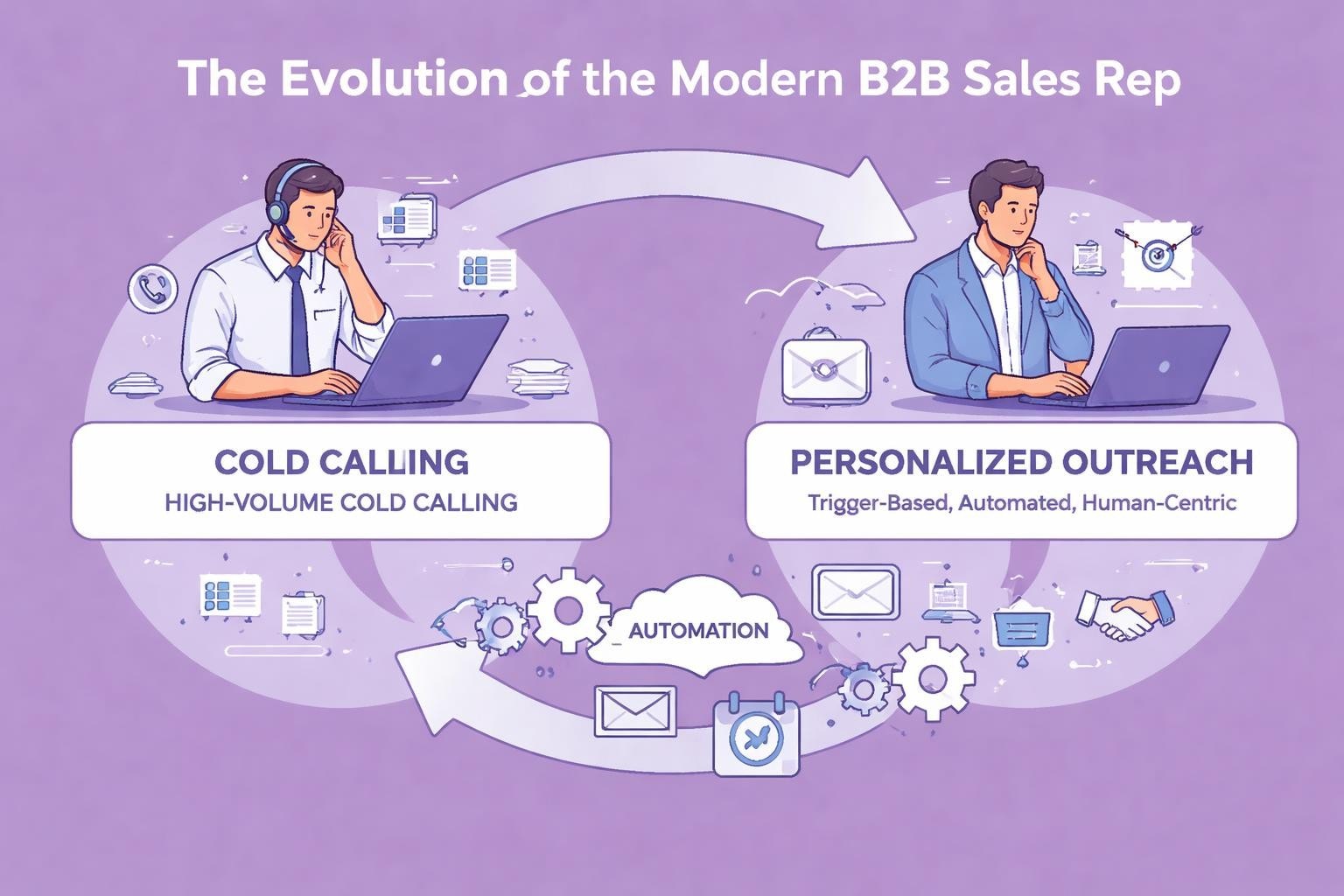
The sales outbound process has evolved dramatically over the past few years, transitioning from volume-based spray and pray tactics to precision-targeted, trigger-driven engagement. For B2B businesses selling high annual contract value (ACV) solutions, understanding how to build a sophisticated, human-centric outbound process isn't just beneficial, it's essential for sustainable growth. This comprehensive guide breaks down the modern sales outbound process, providing actionable frameworks that balance automation with authentic human connection to drive meaningful conversations with your ideal prospects.
Understanding the Modern Sales Outbound Process
The sales outbound process encompasses the systematic approach sales teams use to identify, engage, and convert prospects who haven't directly expressed interest in your solution. Unlike inbound methods where prospects come to you, outbound requires proactive identification and strategic engagement.
Today's effective outbound process differs fundamentally from legacy approaches. Rather than purchasing massive lists and sending identical messages to thousands of contacts, successful B2B teams now focus on precision targeting based on behavioral signals and contextual relevance. This shift reflects a broader market reality: decision-makers at high-value companies receive dozens of generic pitches daily and have developed sophisticated filters to ignore irrelevant outreach.
The Trigger-Based Framework
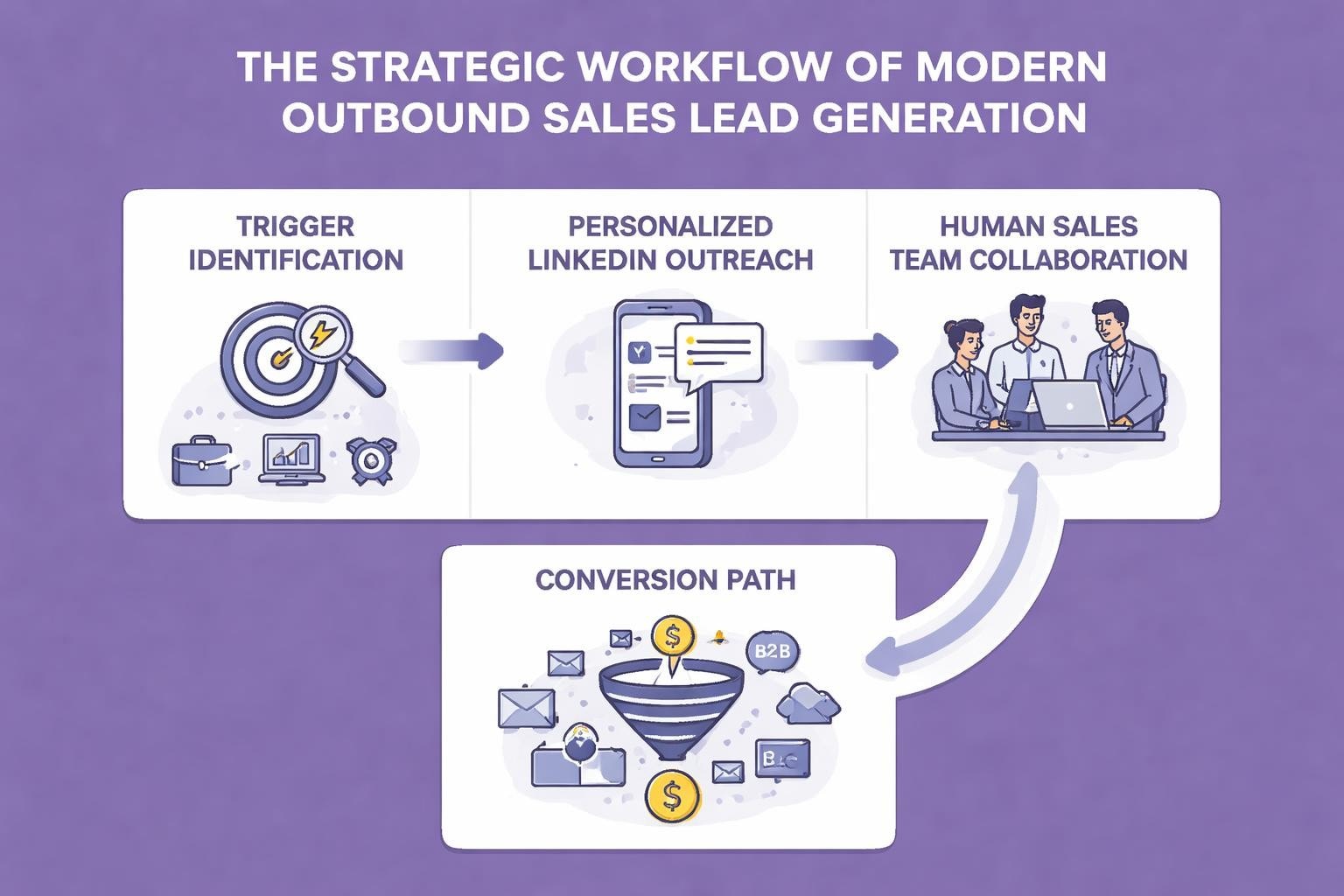
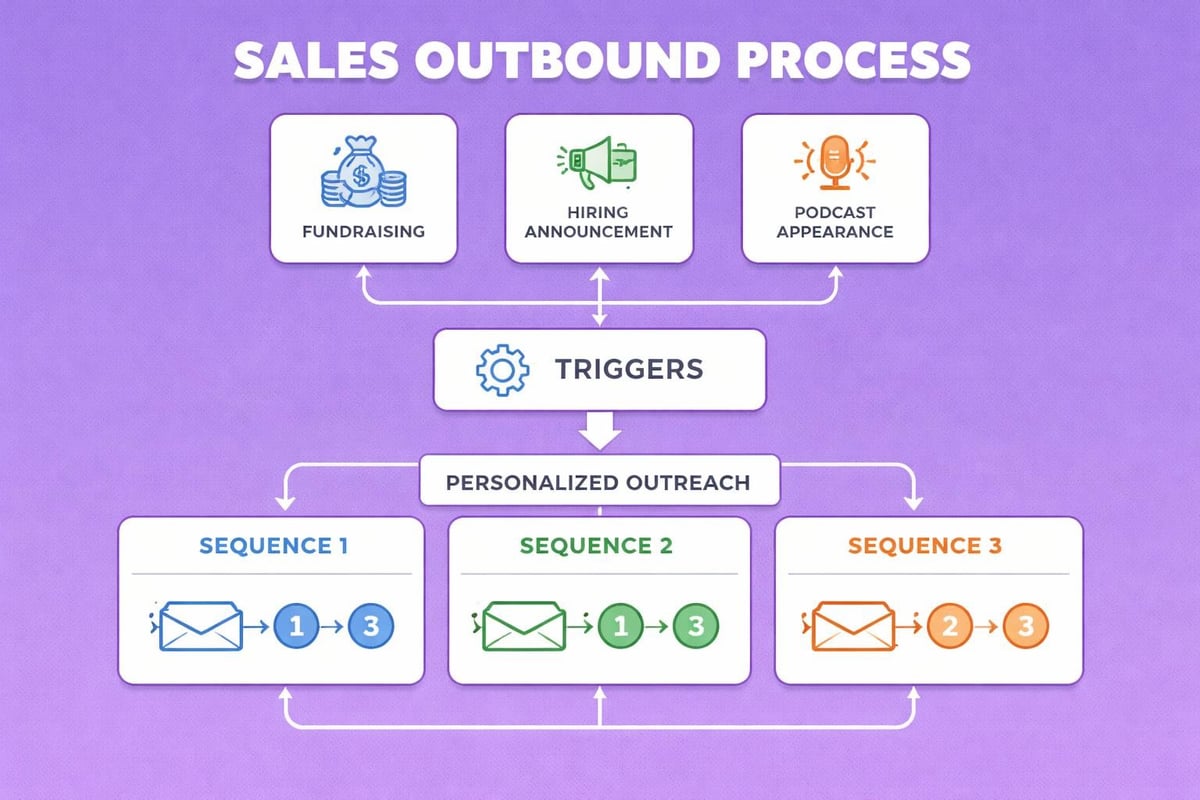
The cornerstone of modern outbound lies in trigger-based prospecting. This approach monitors specific events that indicate a prospect might be receptive to your solution at this particular moment.
Key trigger categories include:
- Fundraising announcements indicating budget availability
- Executive hiring suggesting organizational change
- Podcast appearances revealing strategic priorities
- Industry publication mentions highlighting thought leadership
- Conference speaking engagements demonstrating subject matter expertise
- Product launch announcements signaling growth initiatives
When implemented properly, trigger-based outbound transforms your sales outbound process from interruptive to value-adding. You're reaching out when prospects are most likely to be receptive, not just when your quota deadline approaches.
Building Your Ideal Customer Profile
Before launching any outbound initiative, you must crystallize exactly who you're targeting. An ideal customer profile (ICP) goes far beyond basic firmographics to capture the nuanced characteristics that separate great-fit prospects from time-wasting dead ends.
Your ICP should specify company attributes, individual prospect characteristics, and contextual signals that indicate receptiveness. Many teams make common mistakes when defining their ICP, often casting their net too wide or focusing on surface-level attributes rather than meaningful success predictors.
| ICP Component | What to Include | Why It Matters |
|---|---|---|
| Company Size | Employee count, revenue range | Ensures budget and complexity alignment |
| Technology Stack | Current tools and platforms | Identifies integration opportunities |
| Growth Indicators | Hiring velocity, funding status | Signals budget availability and urgency |
| Pain Point Markers | Specific challenges your solution addresses | Qualifies genuine need versus curiosity |
| Decision-Making Structure | Buying committee composition | Streamlines stakeholder engagement |
The best outbound sales strategies emphasize this foundational work because every subsequent step in your sales outbound process depends on targeting accuracy. When you narrow your focus to truly ideal prospects, your conversion rates increase while your cost per acquisition decreases.
Prospecting and List Building
Once you've defined your ICP, the next phase of the sales outbound process involves systematic prospect identification and list creation. This step separates high-performing teams from those struggling with poor response rates and wasted effort.
Research-Driven Prospecting
Quality prospecting requires multiple data sources and verification steps. Start with intent data platforms that track prospect behavior across the web, then layer in technographic data showing what tools companies currently use. Cross-reference this information with trigger monitoring to identify the precise moment to reach out.
Essential prospecting tools and data sources:
- LinkedIn Sales Navigator for professional information and company updates
- Intent data platforms tracking prospect research behavior
- Technographic databases revealing technology stack details
- News monitoring services identifying trigger events
- Industry-specific databases for niche market intelligence
According to outbound sales best practices, verification represents a critical but often overlooked step. Email verification services reduce bounce rates, while phone number validation ensures your calling efforts aren't wasted on disconnected lines.
Segmentation for Precision
Not all prospects deserve identical treatment within your sales outbound process. Segment your lists based on factors like trigger type, company size, industry vertical, and urgency level. This segmentation enables personalized messaging that resonates with each prospect's specific context.
Consider creating separate sequences for different trigger categories. A prospect whose company just raised Series B funding requires different messaging than one who just published a thought leadership article, even if both fit your ICP perfectly.
Crafting Your Outreach Strategy
The outreach phase represents where most sales outbound processes succeed or fail. Your messaging, timing, channel selection, and personalization depth determine whether prospects engage or delete.
Message Architecture
Effective outbound messages follow a consistent architecture while remaining highly personalized. Begin with a specific, relevant hook that demonstrates you've done your homework. Reference the trigger that prompted your outreach, connect it to a likely business challenge, and offer concrete value rather than requesting a meeting immediately.
Crafting personalized sales messages requires balancing efficiency with authenticity. Templates provide structure, but successful messages include specific details only a human could notice and articulate.
Message components that drive responses:
- Specific trigger reference (not generic flattery)
- Relevant insight demonstrating industry knowledge
- Concrete value proposition tied to their situation
- Low-friction next step
- Authentic tone that sounds human, not robotic
The rise of AI-generated outreach has made genuine personalization more valuable than ever. Prospects can instantly identify generic AI-written messages, making human-crafted, contextually relevant outreach stand out dramatically.
Multi-Channel Orchestration
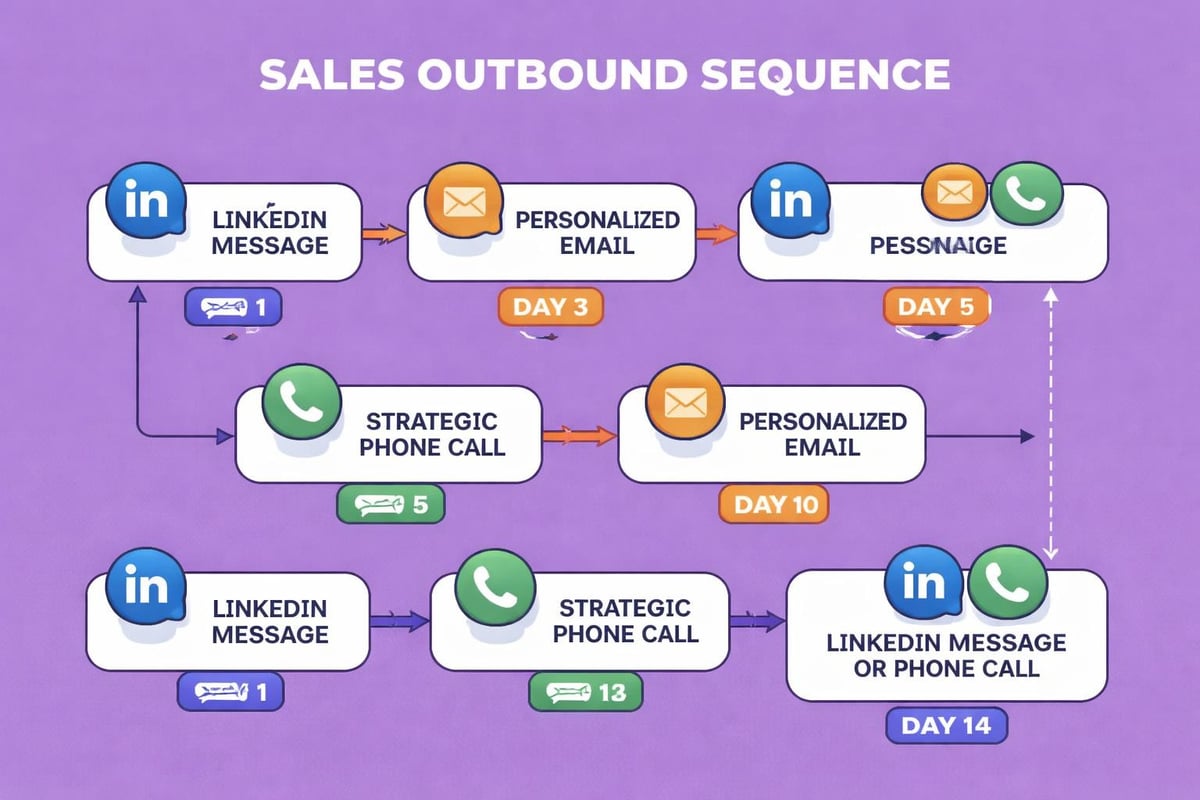
Modern sales outbound processes leverage multiple channels in coordinated sequences rather than relying exclusively on email or phone calls. This omnichannel approach, highlighted in effective outbound sales techniques, recognizes that different prospects prefer different communication methods.
Channel Selection and Timing
For B2B businesses targeting executive buyers, LinkedIn often serves as the primary engagement channel. Executives check LinkedIn regularly for professional updates, making it less interruptive than email and more professional than cold calling.
| Channel | Best Use Case | Timing Considerations |
|---|---|---|
| LinkedIn Message | Initial contact with executives | Send Tuesday-Thursday, 8-10 AM or 2-4 PM |
| Detailed value proposition | Follow LinkedIn after 3-5 days | |
| Phone Call | High-priority prospects showing engagement | After multiple touchpoints show interest |
| Video Message | Differentiation for key accounts | Mid-sequence to break pattern |
| Direct Mail | Account-based plays for enterprise | Coordinated with digital touchpoints |
The key to successful multi-channel outreach lies in coordination, not bombardment. Each touchpoint should build on previous ones, creating a cohesive narrative rather than repeating identical messages across platforms.
Sequence Design
A well-designed sequence for your sales outbound process typically spans 10-15 business days with 5-8 touchpoints across multiple channels. Start with lower-friction channels like LinkedIn, progress to email, and reserve phone calls for prospects showing engagement signals.
When you're increasing response rates on LinkedIn, timing between touchpoints matters as much as message content. Allow sufficient time for prospects to respond without losing momentum, typically 2-3 days between early touches and 4-5 days later in the sequence.
Automation With Human Oversight
The debate between full automation and manual outreach creates a false dichotomy. The most effective sales outbound process combines intelligent automation with strategic human involvement at critical decision points.
What to Automate
Automation excels at repetitive, data-driven tasks that don't require nuanced judgment. Trigger monitoring, initial prospect scoring, sequence enrollment, and basic personalization tokens all benefit from automation without sacrificing quality.
Automation-appropriate activities:
- Monitoring news feeds and company updates for triggers
- Enriching prospect records with publicly available data
- Scheduling and sending templated message sequences
- Tracking engagement metrics and response rates
- Routing qualified responses to appropriate sales reps
- Updating CRM records with interaction history
The rise of AI SDRs promises full automation, but this approach often sacrifices the judgment and adaptability that drive results in complex B2B sales. As discussed in outbound sales best practices, balancing automation with personalization remains essential for maintaining message quality and authentic engagement.
Where Humans Add Value
Human judgment becomes critical when context matters more than volume. Message customization based on specific triggers, response handling, objection addressing, and relationship building all require human intelligence that AI cannot replicate effectively.
Sales professionals should focus their time on high-value activities: researching key accounts, customizing messages for top-priority prospects, engaging in actual conversations, and refining strategy based on market feedback. This approach, which empowers rather than replaces sales teams, delivers superior results while maintaining team morale and expertise development.
Measuring and Optimizing Performance
No sales outbound process improves without systematic measurement and optimization. Tracking the right metrics enables data-driven decisions that compound improvements over time.
Essential Metrics
Different stages of your outbound process require different metrics. Track activity metrics to ensure volume meets expectations, engagement metrics to assess message resonance, and conversion metrics to measure business impact.
| Metric Category | Key Indicators | Target Benchmarks |
|---|---|---|
| Activity | Prospects contacted, sequences initiated | Varies by team size and ICP |
| Engagement | Open rates, response rates, positive replies | 40%+ open, 10%+ response, 5%+ positive |
| Conversion | Meetings booked, opportunities created | 2-5% meeting rate from outreach |
| Efficiency | Cost per meeting, time to first response | Decreasing over time with optimization |
| Quality | Meeting show rate, opportunity value | 70%+ show rate, ACV alignment |
Resources like this guide on killer outbound sales strategies emphasize measuring success through KPIs that align with business objectives rather than vanity metrics that look impressive but don't drive revenue.
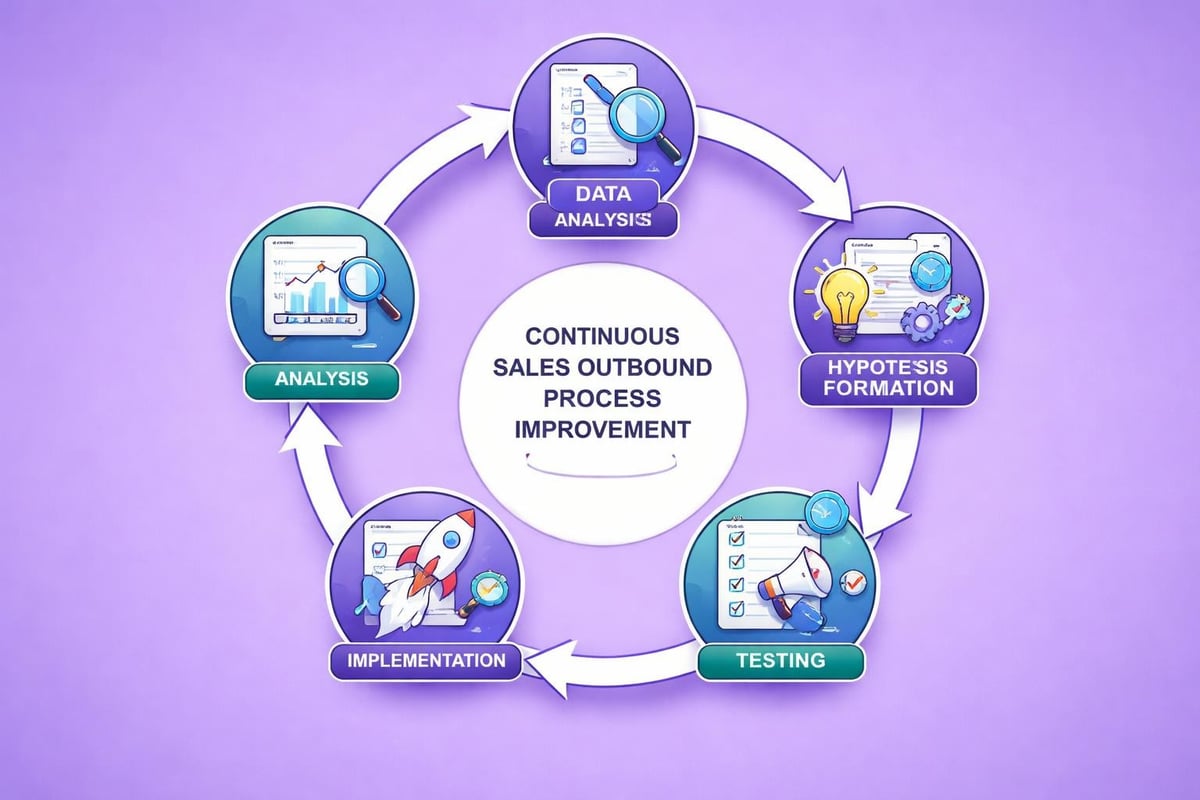
Continuous Improvement Framework
Establish a regular cadence for reviewing performance data and implementing improvements. Weekly reviews should examine tactical execution, while monthly reviews assess strategic direction and quarterly planning should revisit ICP definition and market positioning.
A/B testing represents the most reliable path to optimization within your sales outbound process. Test one variable at a time, from subject lines and call-to-action phrasing to sequence timing and channel mix, allowing statistical significance before declaring winners.
Advanced Tactics for High-ACV Sales
When selling solutions with high annual contract values, your sales outbound process requires additional sophistication. Enterprise buyers demand more research, longer relationship development, and multi-stakeholder engagement.
Account-Based Outbound
For deals exceeding six figures, individual prospect outreach gives way to account-based strategies. This approach coordinates outreach across multiple stakeholders within target accounts, delivering consistent messaging while respecting organizational dynamics.
Identify 3-5 key stakeholders per target account, research their individual priorities and pain points, and craft coordinated messaging that addresses both individual and organizational needs. This high-ticket sales approach requires more preparation but delivers dramatically higher conversion rates for enterprise opportunities.
Executive Engagement Strategies
Reaching C-level executives demands different tactics than engaging mid-level managers. Executives have less time, higher standards for relevance, and different decision-making criteria. Your executive outbound approach must demonstrate immediate business impact rather than focusing on features or capabilities.
Executive engagement principles:
- Lead with business outcomes, not product features
- Reference specific strategic initiatives or public statements
- Demonstrate industry expertise and thought leadership
- Offer insights before requesting meetings
- Respect their time with concise, high-value communication
According to research on improving outbound sales performance, executive engagement succeeds when you position yourself as a strategic advisor rather than a vendor pitching solutions.
Technology Stack Considerations
Your sales outbound process requires supporting technology, but tool proliferation often creates more problems than it solves. Focus on integration, data quality, and user adoption rather than accumulating point solutions.
Core Technology Requirements
Start with foundational tools that enable basic outbound functionality: a CRM system for contact management and pipeline tracking, a sequencing platform for automated outreach, and data enrichment services for accurate prospect information.
Essential technology categories:
- CRM platform (Salesforce, HubSpot, Pipedrive)
- Sales engagement platform (Outreach, SalesLoft, Apollo)
- Data enrichment (ZoomInfo, Clearbit, Apollo)
- Trigger monitoring (Google Alerts, specialized news tracking)
- Email deliverability tools (Mailgun, SendGrid)
- Communication channels (LinkedIn Sales Navigator, phone system)
When you're ready for a change, watch for signs that indicate technology reevaluation. Poor integration, declining engagement metrics, or excessive manual work signal that your current stack no longer serves your needs.
Integration and Workflow
Technology only delivers value when properly integrated into daily workflows. Ensure data flows seamlessly between systems, eliminating manual data entry and reducing the risk of errors or outdated information.
The most effective sales outbound process leverages automation platforms that connect trigger identification, prospect research, sequence enrollment, and performance tracking in a unified workflow. This integration enables sales teams to focus on high-value activities rather than administrative tasks.
Navigating Common Challenges
Even well-designed sales outbound processes encounter obstacles. Understanding common challenges and proven solutions prevents frustration and maintains momentum.
Low Response Rates
When response rates fall below benchmarks, resist the temptation to immediately increase volume. Instead, examine message quality, targeting accuracy, and timing. Often, sending fewer but higher-quality messages to better-qualified prospects yields superior results to increasing volume with mediocre targeting.
According to proven strategies for sales process optimization, refining your ideal customer profile and improving message personalization typically deliver better results than simply sending more messages.
Deliverability Issues
Email deliverability challenges plague many outbound programs. Protect your sender reputation through proper domain setup, gradual sending volume increases, list hygiene, and avoiding spam trigger phrases.
Deliverability best practices:
- Warm up new email addresses gradually
- Maintain low complaint rates through quality targeting
- Authenticate your domain with SPF, DKIM, and DMARC
- Monitor sender reputation scores regularly
- Use dedicated sending infrastructure for outbound
- Clean lists regularly to remove invalid addresses
When deliverability suffers, pause sending to diagnose and resolve underlying issues rather than continuing to damage your sender reputation.
Balancing Quantity and Quality
The perpetual tension between outreach volume and message quality defines modern sales outbound processes. High-ACV B2B sales demand quality, yet sales leaders often pressure teams to increase activity metrics.
Resolve this tension by establishing quality thresholds that every outbound message must meet, then optimizing volume within those constraints. This approach, which prioritizes timely, impactful outbound over spray and pray tactics, delivers superior results while maintaining team morale and market reputation.
Aligning Outbound With Broader Strategy
Your sales outbound process doesn't exist in isolation. Integration with inbound marketing, customer success, and product development creates powerful synergies that multiply effectiveness.
Outbound and Inbound Synergy
Rather than treating outbound and inbound as competing approaches, successful organizations leverage each to strengthen the other. Insights from outbound conversations inform content creation, while inbound-generated content provides social proof that strengthens outbound messaging.
Use outbound to test messaging hypotheses quickly, then scale successful themes through inbound channels. Conversely, leverage inbound content assets in outbound sequences, sharing relevant resources that demonstrate expertise without requiring immediate commitment.
Feedback Loops
Establish systematic processes for capturing and acting on market feedback gathered through outbound interactions. Sales teams engaging prospects daily possess invaluable insights about market needs, competitive positioning, and messaging effectiveness that should inform broader strategy.
Regular sync meetings between sales, marketing, and product teams ensure outbound learnings influence company direction. This alignment transforms your sales outbound process from a revenue generation tactic into a strategic market intelligence operation.
A sophisticated sales outbound process balances automation efficiency with human judgment, prioritizes quality over quantity, and leverages behavioral triggers to engage prospects at optimal moments. By implementing these frameworks and continuously refining your approach based on performance data, you'll build an outbound engine that consistently generates high-quality pipeline for your business. Samplead helps high-ACV B2B companies automate trigger-based prospecting while keeping your sales team in control, delivering timely outreach when prospects are most receptive rather than bombarding them with generic messages.