- What b2b outbound sales means in 2026 and why it matters
- Key new trends: AI, trigger-based prospecting, human-in-the-loop
- Step-by-step strategies for success with data-backed insights
- Actionable tips for teams aiming to scale pipeline and revenue
- FAQ and resource links for further learning
2026 is the year b2b outbound sales gets smarter, more targeted, and more human than ever. The old days of generic cold calls and mass email blasts are gone, replaced by high-precision strategies that drive real results.
Many teams still struggle with outdated, spray and pray approaches that waste valuable time and overlook high-potential prospects. As competition intensifies, sticking to legacy tactics can hold your team back from reaching ambitious revenue goals.
Modern b2b outbound sales is now fueled by AI, automation, and trigger-based outreach. These advances empower organizations to connect with the right prospects at the right time, making every touchpoint more meaningful.
By leveraging these innovations, you can unlock rapid pipeline growth, shorten sales cycles, and boost close rates. The difference between lagging and leading teams is how quickly they adapt to these new tools.
This guide covers the channels, benefits, step-by-step strategies, technologies, and expert answers you need for outbound sales success in 2026. Get ready to transform your approach and outperform the competition.
The Evolution of B2B Outbound Sales: Trends and Challenges in 2026
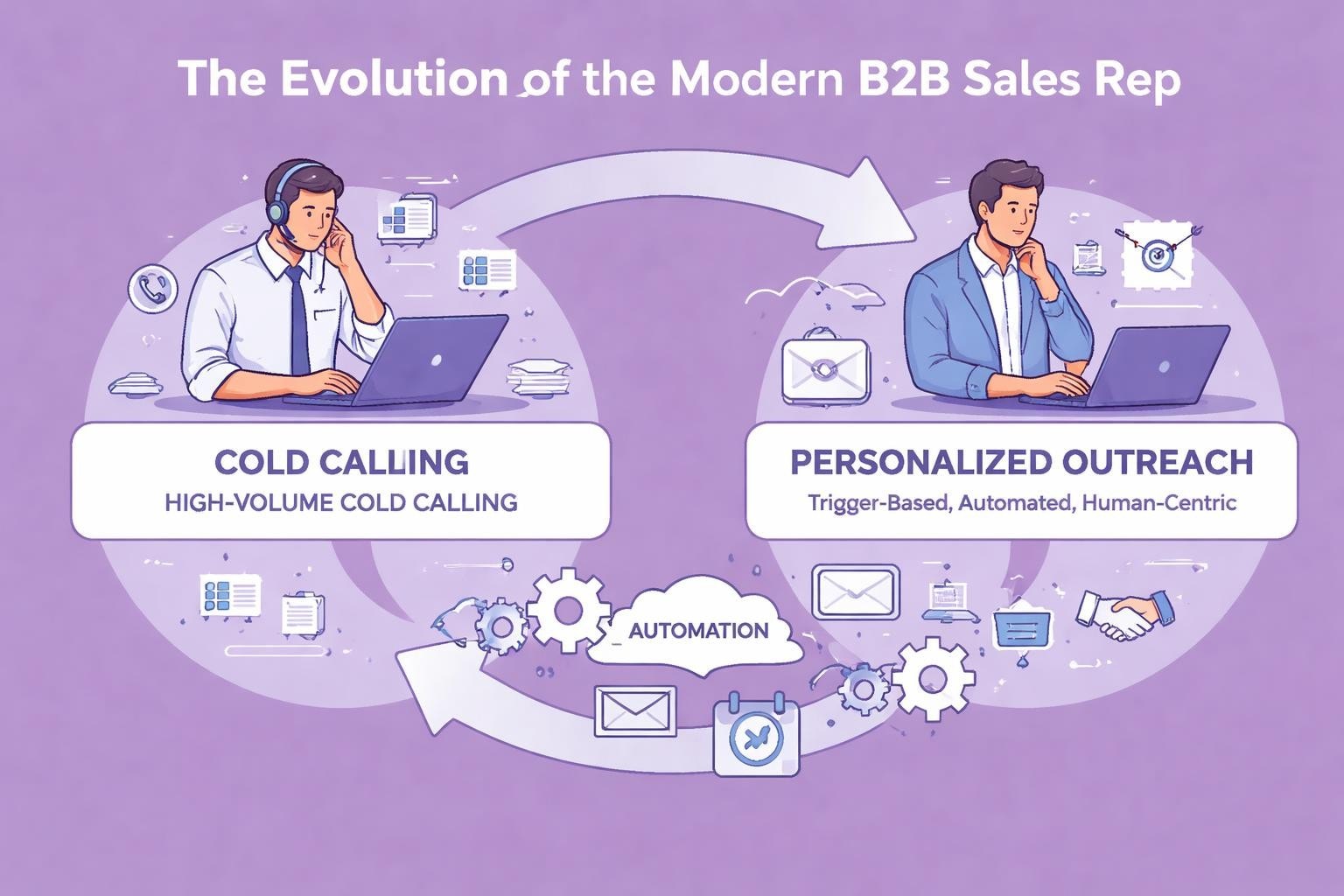
B2B outbound sales have undergone a significant transformation, driven by new technology and shifting buyer expectations. In 2026, the landscape looks nothing like it did just a few years ago. Teams are moving away from outdated tactics in favor of smarter, more targeted approaches that blend data, automation, and human insight.
The Shift from Traditional to Modern Outbound
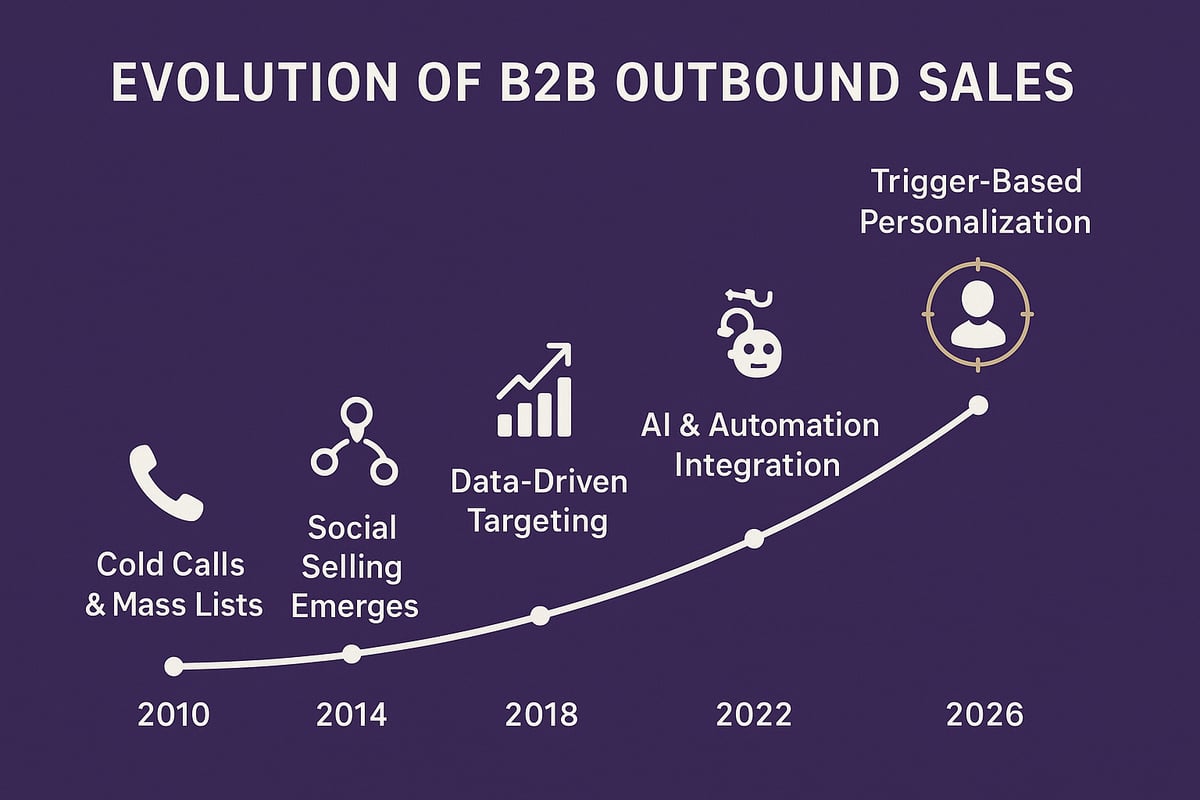
Traditionally, b2b outbound sales meant cold calls, mass email blasts, and generic prospect lists. These scattershot methods often resulted in wasted time and low conversion rates. By 2026, modern outbound has shifted toward hyper-targeted, data-driven outreach that prioritizes quality over quantity.
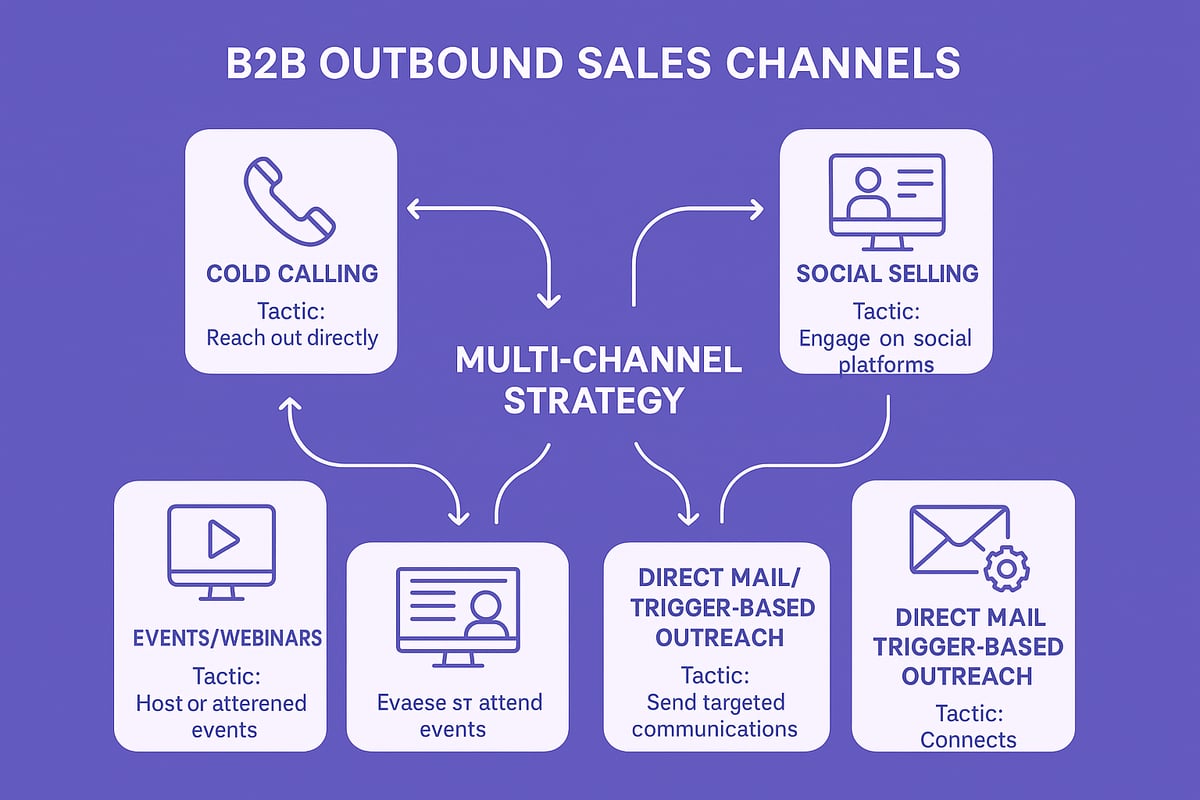
Social selling, once seen as a standalone tactic, is now integrated with phone, email, and direct mail for a multi-channel approach. Organizations are blending inbound and outbound strategies to achieve full-funnel growth. For a detailed comparison of these approaches, see Outbound vs Inbound Lead Generation.
SaaS teams face the choice between splitting roles into SDR/BDR and AE, or opting for full-cycle selling. Each model has its pros and cons, but both rely on balancing efficiency through automation with effectiveness via personalization.
Statistics highlight the impact: 90% of B2B leads come from outbound sales, according to Bold CEO. Companies relying solely on inbound see gradual growth, while those mastering outbound achieve faster, more predictable results. The evolution of b2b outbound sales is not just about technology, but about aligning every channel for maximum impact.
| Aspect | Traditional Outbound | Modern Outbound (2026) |
|---|---|---|
| Prospecting | Static lists, cold calls | Real-time data, trigger events |
| Channels | Phone, email | Multi-channel (phone, email, social, direct mail, events) |
| Personalization | Low | High, AI-driven |
| Effectiveness | Unpredictable | Measurable, scalable |
Technology’s Impact on Outbound
Technology is at the heart of the transformation in b2b outbound sales. AI, automation, and big data now drive prospecting and outreach, making it possible to identify the right contacts at the right time. Sales teams use intelligent platforms to analyze buying signals, surface high-intent prospects, and automate much of the initial outreach.
However, technology alone is not enough. The need for human oversight remains critical to avoid robotic messaging and ensure that outreach feels authentic. Modern tech stacks include CRM systems and robust data sources, serving as the foundation for successful outbound campaigns.
AI SDRs can now automate up to 80% of the outbound workflow, but strategic input from humans is still needed. Upfront costs for these tools are offset by long-term efficiency gains, as AI lowers the barrier to entry and enables even small teams to compete at scale. The impact of technology on b2b outbound sales is measurable: teams using advanced platforms see better targeting, faster response times, and higher close rates.
Core Outbound Challenges for 2026
Despite these advancements, b2b outbound sales teams face significant challenges in 2026. Call screening and sophisticated spam filters make it harder to reach prospects. Buyers are increasingly fatigued by digital noise, expecting every interaction to be relevant and personalized.
Timely outreach is more important than ever. Sales teams must act on real-world triggers, such as funding events or leadership changes, instead of relying on static lists. Still, 52% of outbound marketers say their efforts are ineffective, according to Spotio. Overcoming these obstacles requires a combination of technology, strategy, and a relentless focus on the prospect's needs.
The future of b2b outbound sales will depend on how well teams can adapt to these challenges, leveraging new tools while maintaining the human touch that drives real connections.
Essential B2B Outbound Sales Channels and Tactics
To succeed with b2b outbound sales in 2026, you need to master a mix of channels and tactics. No single approach works alone: top teams blend phone, email, social, events, and even direct mail to reach decision-makers where they are most receptive.
Cold Calling: Still Relevant in 2026
Despite digital advances, cold calling remains a core tactic for b2b outbound sales. Senior buyers, especially C-level and VPs, still value direct phone conversations. In fact, 57% prefer the phone when evaluating new vendors.
Preparation is key. Reps should research prospects, clarify the call objective, and deliver a strong value proposition. AI tools now help sales teams prep quickly, surfacing recent company news or pain points before dialing.
- Focus on quality, not quantity: target the right accounts.
- Use call scripts as guides, but keep conversations natural.
- Leverage call analytics to refine your approach.
Combining AI-driven insights with a human touch makes cold calling more effective than ever.
Cold Emailing: Automation and Personalization
Cold emailing is the backbone of scalable b2b outbound sales. The difference in 2026 is automation paired with hyper-personalization. Multi-step email sequences outperform one-off blasts, nurturing prospects over time.
Subject lines matter: 69% of recipients decide to open emails based on this alone. AI can help personalize at scale, customizing content for each recipient’s industry, role, or recent activity. To learn more about scaling outreach without sacrificing relevance, see Personalizing Outreach at Scale with AI.
- Test subject lines and messaging for better open rates.
- Monitor mailbox health and warm up new domains.
- Avoid spam by focusing on relevance and consent.
Cold emailing works best when treated as a conversation starter, not a numbers game.
Social Selling and Digital Networking
Social selling is now a must-have for b2b outbound sales. LinkedIn is the primary platform, with 82% of B2B marketers agreeing it drives results. But it’s not just about sending connection requests.
Effective social selling means sharing expertise, joining industry conversations, and building genuine relationships. Sales reps should engage with prospects’ posts, comment thoughtfully, and share valuable content.
- Position yourself as a thought leader.
- Use LinkedIn groups and events to expand your reach.
- Partner with influencers to access new networks.
Social selling amplifies other outbound tactics by nurturing trust before direct outreach.
Events, Webinars, and Community Engagement
Events and webinars remain high-impact for b2b outbound sales, both in-person and virtual. They offer direct access to decision-makers, plus the chance to demonstrate expertise.
Effective teams do more than just show up. They start outreach before the event, schedule meetings, and follow up with personalized messages. Hosting webinars can establish your brand as an authority and generate warm leads.
- Invite key prospects to webinars tailored to their interests.
- Use event engagement data to prioritize follow-ups.
- Join industry communities for ongoing networking.
Events and webinars help humanize your outreach and build long-term relationships.
Direct Mail and Trigger-Based Outreach
Physical mailers and trigger-based outreach are making a comeback in b2b outbound sales. Direct mail stands out in a crowded digital space, especially for high-value accounts.
Trigger-based outreach relies on monitoring real-time signals—such as new funding, hiring, or press mentions—to reach out at the perfect moment. This timely approach increases relevance and boosts response rates.
- Send personalized packages to top-tier prospects.
- Set alerts for company milestones or leadership changes.
- Time your outreach to coincide with key business events.
By aligning your message with what matters to the prospect right now, you dramatically increase your chances of starting meaningful sales conversations.
How Trigger-Based Automation is Revolutionizing Outbound Sales
Traditional b2b outbound sales relied on static lists and generic outreach. In 2026, that approach is obsolete. Today, the smartest teams are embracing trigger-based automation to reach prospects at exactly the right moment.
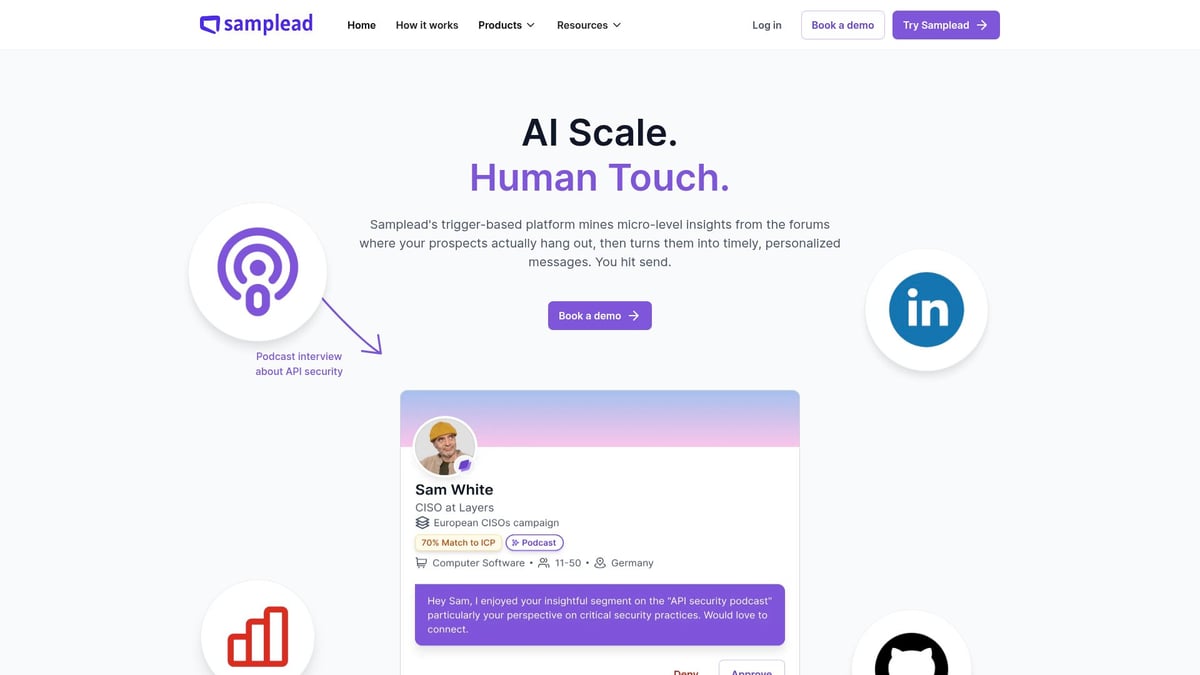
Trigger-based automation is revolutionizing b2b outbound sales by shifting the focus from quantity to quality. Instead of sending thousands of emails to cold contacts, modern platforms monitor real-world signals like funding rounds, leadership changes, or product launches. These triggers indicate when a prospect is most likely to be receptive.
Platforms such as Samplead scan podcasts, news, financial filings, and forums, surfacing high-intent leads that match your Ideal Customer Profile. AI then drafts personalized messages, but crucially, sales reps retain control to review and tailor communications. This blend of automation and human touch ensures every message feels authentic.
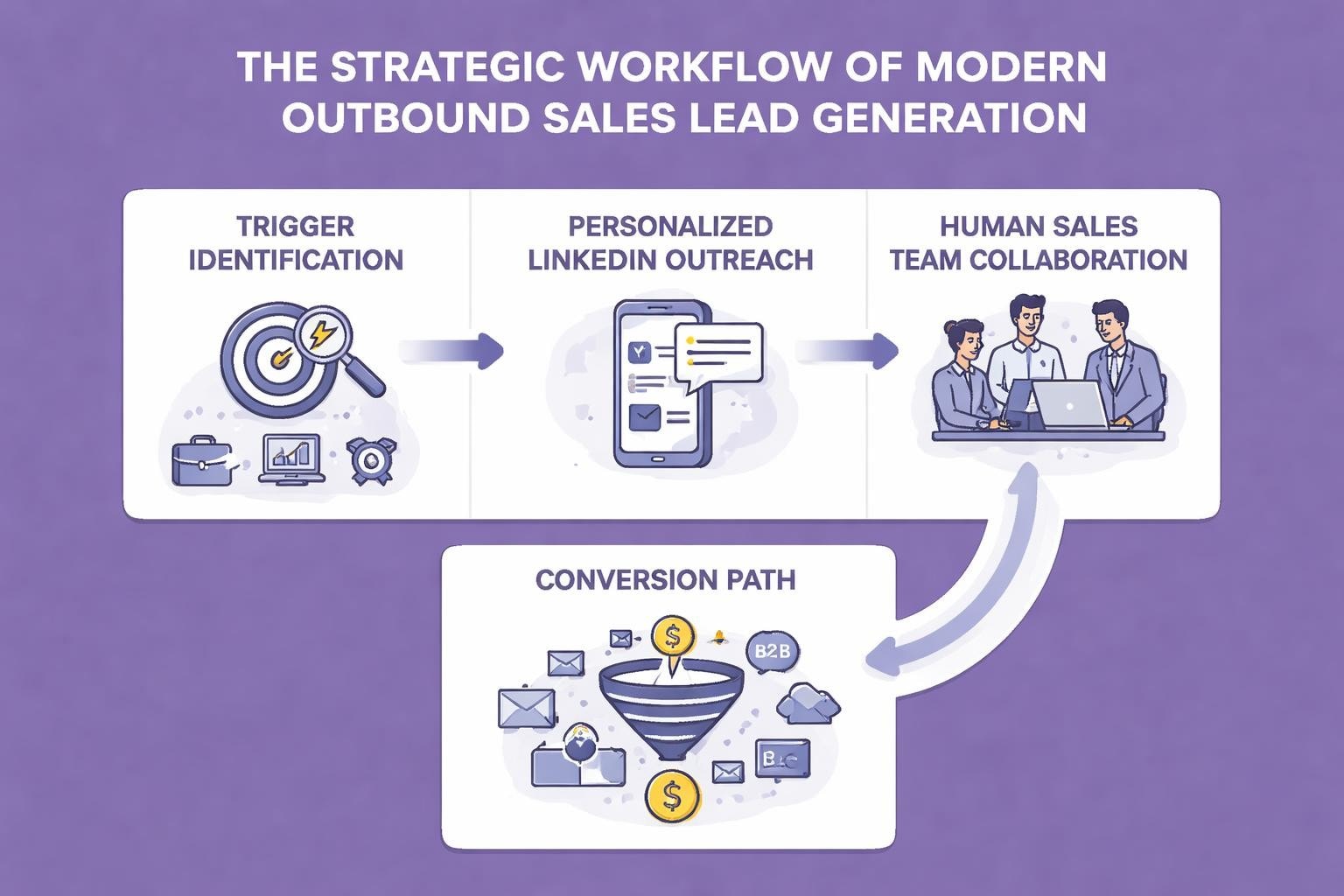
A typical workflow looks like this:
- Sales teams receive a daily feed of hot prospects flagged by recent triggers.
- AI suggests messaging that references the specific trigger event.
- Reps approve, edit, and launch outreach at the optimal time.
This approach maximizes relevance and boosts response rates. By acting on timely triggers, b2b outbound sales teams consistently outperform those using outdated spray and pray methods. According to AI's Role in Outbound Sales, AI-driven automation is a game-changer for identifying and acting on buyer intent.
The real advantage is quality over quantity. No more wasted effort on indifferent prospects. Instead, every outreach is impactful, empowering your team to build a stronger pipeline and close more deals in the competitive b2b outbound sales landscape.
The Benefits of Modern B2B Outbound Sales
Modern B2B outbound sales strategies are reshaping how companies connect, engage, and convert high-value prospects. By embracing advanced technology and human-centric approaches, sales teams unlock new levels of targeting, efficiency, and impact.

Targeting and Personalization at Scale
B2B outbound sales now allow teams to reach their ideal customer profiles with laser precision. AI and automation enable micro-segmentation, helping reps craft messages that speak directly to each prospect's needs. According to Predictive Analytics in B2B Sales, teams leveraging predictive analytics consistently outperform generic campaigns.
- Hyper-targeted outreach increases relevance
- Personalized messages improve response rates
- AI tools surface high-intent prospects for timely engagement
Focusing on personalization at scale helps companies achieve up to 40% more revenue compared to less tailored approaches.
Shortening the Sales Cycle
Initiating conversations early through B2B outbound sales empowers teams to accelerate deals. Proactive outreach gives reps a chance to address objections and provide value before competitors enter the picture.
AI-driven insights help optimize timing and messaging, reducing back-and-forth and moving prospects through the funnel faster. As a result, sales cycles become shorter and more predictable.
Boosting Inbound and Content Marketing
Outbound efforts amplify inbound strategies by driving targeted traffic to your website and content. Direct feedback from outbound interactions reveals the topics that resonate most with your audience.
- Outbound insights inform blog and resource topics
- Higher engagement rates on content shared via outbound
- Feedback loops improve overall marketing strategy
B2B outbound sales and inbound work together to create a more robust pipeline.
Maximizing Sales Team Productivity
Automation in B2B outbound sales frees up reps to focus on high-value tasks like demos and closing deals. Human-in-the-loop systems ensure messaging stays authentic and relevant, blending efficiency with personal touch.
With AI handling research and routine tasks, sales teams achieve more with less manual effort, ultimately closing more deals and scaling revenue.
Overcoming Digital Noise and Fatigue
In a world full of digital clutter, personalized and trigger-based outreach stands out. B2B outbound sales teams who act on timely signals—such as funding events or company news—see higher response rates and greater engagement.
- Timely outreach cuts through inbox noise
- Contextual messages show prospects you understand their business
- Quality interactions replace quantity-based tactics
This approach ensures your message lands when prospects are most receptive, maximizing your impact.
Step-by-Step B2B Outbound Sales Strategy for 2026
A winning b2b outbound sales strategy in 2026 is all about precision, timing, and relevance. Modern sales teams rely on clear processes, smart automation, and targeted outreach to consistently fill the pipeline. Let’s break down each step you need to follow to outperform the competition.
Step 1: Define Your Ideal Customer Profile (ICP) and Buyer Personas
Every successful b2b outbound sales program starts with a crystal-clear ICP and well-defined buyer personas. Analyze your best customers by industry, company size, geography, and key pain points. Use CRM data to spot trends and refine your target audience.
Avoid common mistakes like being too broad or missing hidden segments. For a deeper dive, check out the Defining Your Ideal Customer Profile guide for actionable tips.
Example: A SaaS company targets Series B fintech startups with 100-500 employees, focusing on those expanding into new markets.
Step 2: Build and Enrich Prospect Lists
Once your ICP is set, build prospect lists using tools like LinkedIn Sales Navigator, trigger-based platforms, and data enrichment services. Go beyond static lists: continuously add prospects based on real-time signals such as new hires, funding rounds, or product launches.
Enrich each contact with job title, decision-making authority, and recent company news. This foundation is crucial for high-impact b2b outbound sales outreach.
Example: Add prospects who recently appeared on a relevant industry podcast or published a thought leadership article.
Step 3: Identify Outreach Triggers and Timing
Modern b2b outbound sales is all about timing. Monitor for actionable triggers: fundraising, hiring sprees, new partnerships, awards, or media features. Set up alerts in your CRM or prospecting platform to react instantly.
A well-timed message, sent within 24 hours of a public announcement, dramatically increases response rates. See the table below for common triggers and optimal outreach timing.
<table>
  <thead>
    <tr>
      <th>Trigger Event</th>
      <th>Recommended Outreach Timing</th>
    </tr>
  </thead>
  <tbody>
    <tr>
      <td>Funding announcement</td>
      <td>Within 24 hours</td>
    </tr>
    <tr>
      <td>New executive hire</td>
      <td>Within 48 hours</td>
    </tr>
    <tr>
      <td>Product launch</td>
      <td>Immediately after launch</td>
    </tr>
    <tr>
      <td>Major media coverage</td>
      <td>Within 24-36 hours</td>
    </tr>
    <tr>
      <td>Industry award</td>
      <td>Within 1 week</td>
    </tr>
  </tbody>
</table>
Step 4: Craft Personalized, Value-Driven Messaging
Personalization is non-negotiable for b2b outbound sales in 2026. Reference specific triggers, company context, and pain points in every message. Use AI to draft initial outreach, but always add a human touch to ensure authenticity.
A/B test subject lines, greetings, and value propositions. The goal is to sound relevant and helpful, never generic or automated.
Example: “Congrats on your recent funding round. Many fintechs in your stage struggle to scale sales ops—here’s how we can help.”
Step 5: Execute Multi-Channel Outreach
Don’t rely on a single channel. Combine cold email, LinkedIn DMs, phone calls, and even direct mail for a comprehensive b2b outbound sales approach. Sequence your outreach to maximize touchpoints: for example, a LinkedIn message after a press mention, followed by a personalized email, and then a phone call.
Use automation for scheduling and reminders, but monitor engagement closely to pivot when needed.
Example multi-channel sequence:
- Day 1: LinkedIn connection request referencing recent news
- Day 2: Personalized email with value proposition
- Day 4: Follow-up phone call
- Day 7: Direct mail for high-value prospects
Step 6: Qualify and Nurture Prospects
Not every lead is ready to buy. Qualify prospects based on engagement, trigger relevance, and fit with your ICP. Use your CRM to track every conversation and next step.
Nurture leads with targeted content, invite them to webinars, or share case studies. This keeps your b2b outbound sales funnel healthy and moving.
Example: After initial outreach, invite a prospect to an exclusive webinar on industry trends.
Step 7: Measure, Optimize, and Scale
Track key performance indicators (KPIs) like response rates, meetings booked, pipeline value, and close rates. Analyze which triggers, channels, and messages drive the best results.
Iterate on your b2b outbound sales approach: double down on what works, and refine what doesn’t. Use dashboards to visualize trends and share insights with your team.
<table>
  <thead>
    <tr>
      <th>KPI</th>
      <th>Description</th>
      <th>Target Value</th>
    </tr>
  </thead>
  <tbody>
    <tr>
      <td>Response Rate</td>
      <td>% of prospects responding to outreach</td>
      <td>15%+</td>
    </tr>
    <tr>
      <td>Meetings Booked</td>
      <td>Number of qualified meetings set</td>
      <td>50/month</td>
    </tr>
    <tr>
      <td>Pipeline Value</td>
      <td>Total value of deals in pipeline</td>
      <td>$1M+</td>
    </tr>
    <tr>
      <td>Close Rate</td>
      <td>% of deals closed from outreach</td>
      <td>20%+</td>
    </tr>
  </tbody>
</table>
A data-driven, agile b2b outbound sales process is your ticket to consistent pipeline growth and revenue in 2026.
Tools and Technologies Powering Outbound Sales in 2026
Staying competitive in b2b outbound sales requires the right mix of tools, tech, and human strategy. The 2026 landscape demands more than just automation—it takes an integrated stack, smart AI, and a human touch to drive results.
The Modern Outbound Tech Stack
Modern b2b outbound sales teams rely on a connected stack of best-in-class tools. At the core is a CRM that syncs with data enrichment sources, trigger monitoring platforms, and sales engagement solutions.
Key components include:
- CRM for contact management and pipeline visibility
- Data sources for real-time prospect enrichment
- Trigger monitoring to surface high-intent opportunities
- Sales engagement platforms for outreach and follow-up automation
Integration is essential. When your stack works seamlessly, sales reps get a full view of every prospect and can act quickly. For a deep dive into the latest stack recommendations, check out Tools and Technologies for Outbound Sales Teams.
Human-in-the-Loop Automation
Even as AI takes over repetitive tasks, human oversight remains critical for b2b outbound sales. AI SDRs research, draft, and schedule outreach, but humans approve messaging, personalize touchpoints, and adapt strategy.
This approach prevents generic, robotic communication and keeps outreach relevant. In fact, Gartner predicts 75% of B2B buyers will still prefer sales experiences with a human element by 2030.
Trigger-Based Prospecting Platforms
Trigger-based platforms are now central to b2b outbound sales. These tools scan for buying signals—like funding rounds, leadership changes, or press mentions—and alert reps in real time.
Sales teams can prioritize prospects who are most likely to engage, ensuring outreach is timely and relevant. This shift from static lists to dynamic, trigger-driven prospecting gives sales teams a critical edge.
Analytics and Optimization Tools
Analytics are indispensable for b2b outbound sales in 2026. Dashboards track KPIs like response rates, meetings booked, and channel performance.
Teams use these insights to optimize campaigns, test new triggers, and identify bottlenecks. Comparing performance by trigger type or channel helps teams double down on what works and scale pipeline predictably.
Security, Compliance, and Deliverability
Compliance is non-negotiable for b2b outbound sales. Every tool must support GDPR, CAN-SPAM, and other privacy regulations.
Key steps include:
- Using tools for email warmup and spam testing
- Monitoring domain reputation
- Ensuring secure data handling across the stack
By prioritizing security and compliance, you protect your brand and guarantee your messages reach the inbox.
Frequently Asked Questions: B2B Outbound Sales in 2026
What is the difference between inbound and outbound sales in 2026?
Inbound attracts leads through content and SEO, while b2b outbound sales proactively reach targets using personalized, data-driven outreach.
How important is AI and automation for outbound sales success?
AI and automation are essential for scaling, personalization, and efficiency. For the latest tools, see this guide on AI Tools for B2B Lead Generation.
What triggers are most effective for timely outreach?
Funding rounds, new hires, product launches, and media mentions are high-impact triggers.
How can I avoid my outbound efforts being marked as spam?
Maintain healthy sender domains, personalize messages, and follow compliance regulations.
What KPIs should I track for outbound sales effectiveness?
Monitor response rates, meetings booked, pipeline value, and close rates.
How do I balance automation with human personalization?
Use AI for research and drafts, then review messaging for authenticity and relevance.
Where can I find more resources and tools for outbound sales?
Check out expert guides and platforms mentioned throughout this article for deeper learning.