Reaching high level executives requires a fundamentally different approach than traditional outbound sales tactics. These decision makers operate in a world where their time is their most valuable asset, where every interaction must deliver measurable strategic value, and where generic outreach gets deleted without a second glance. Understanding what drives C-suite engagement is no longer optional for B2B organizations pursuing enterprise accounts with high annual contract values. The landscape has shifted dramatically, and the organizations that win executive attention are those that recognize the unique pressures, priorities, and preferences that shape how high level executives consume information and make purchasing decisions.
The Changing Landscape of Executive Engagement
High level executives have fundamentally altered how they research solutions and engage with vendors. Gone are the days when cold calls and mass email campaigns could penetrate the C-suite. Today's executive landscape demands precision, relevance, and impeccable timing.
What Research Reveals About Executive Content Consumption
Senior leaders consume information differently than mid-level managers or individual contributors. According to research on content formats preferred by senior executives, C-suite decision makers gravitate toward thought leadership materials that demonstrate deep industry expertise and provide actionable strategic insights.
The data shows clear preferences:
- White papers and research reports that present original data and analysis
- Case studies featuring peer organizations and measurable outcomes
- Executive briefings that respect time constraints with concise, high-value information
- Video content from recognized industry authorities and fellow executives
- Podcasts and webinars that can be consumed during commutes or travel
This shift toward authoritative, substantive content reflects a broader trend. High level executives are inundated with superficial outreach, making them increasingly selective about which messages warrant their attention.
The Authority Imperative
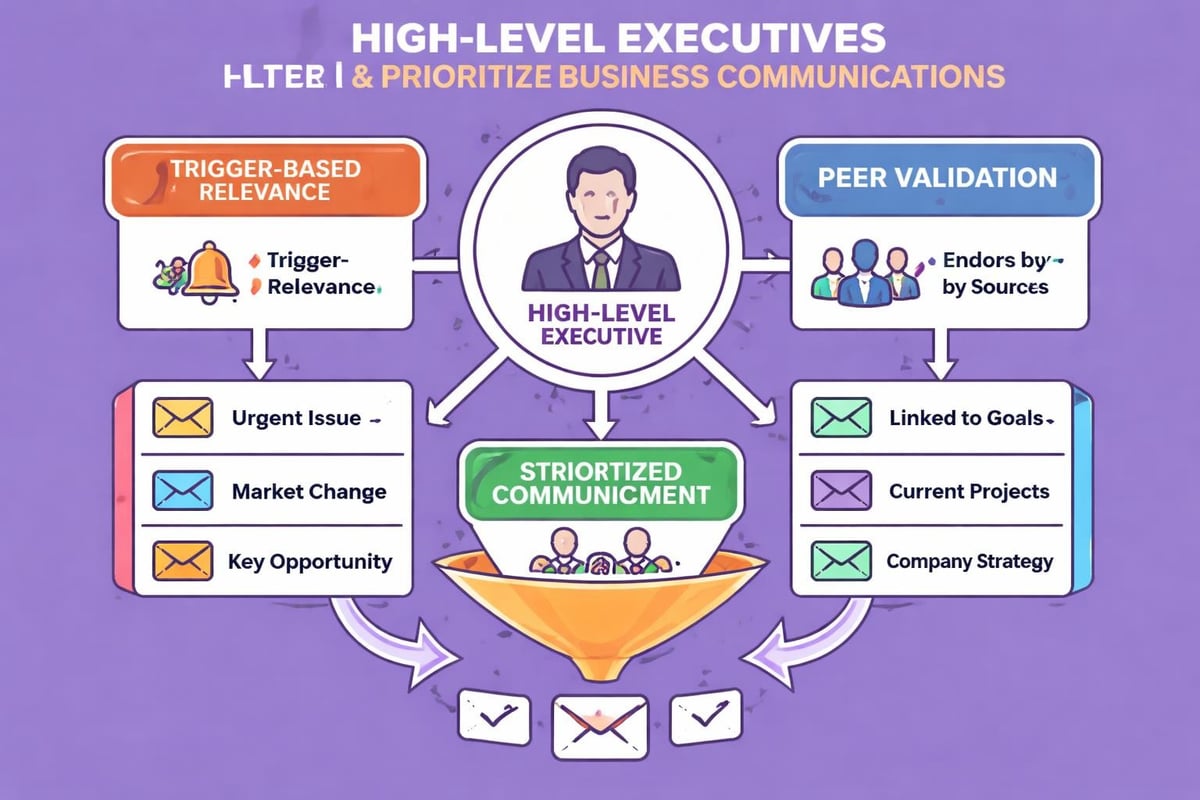
Establishing authority has become non-negotiable when targeting executive buyers. High level executives make decisions based on trust, and trust begins with demonstrated expertise. Understanding how to position your organization as an authoritative source directly impacts whether executives take your outreach seriously.
The authoritative approach requires several foundational elements:
| Authority Component | Executive Expectation | Implementation Strategy |
|---|---|---|
| Industry Expertise | Deep domain knowledge | Publish original research and insights |
| Proven Track Record | Peer validation | Showcase relevant case studies |
| Thought Leadership | Forward-thinking perspective | Contribute to industry conversations |
| Strategic Alignment | Understanding of business context | Reference specific company initiatives |
Building this authority takes time and consistency. High level executives rarely engage with unknown entities unless a compelling trigger event creates urgency or a trusted referral source makes an introduction.
Trigger-Based Prospecting: The Executive Engagement Game-Changer
The most effective way to break through executive defenses is through relevance powered by timing. Trigger-based prospecting identifies moments when high level executives are most receptive to new solutions.
Identifying High-Value Triggers
Not all triggers carry equal weight with C-suite decision makers. The most impactful triggers signal strategic shifts or operational pressures that create genuine urgency:
Fundraising announcements indicate capital availability and growth initiatives. When a company secures Series B funding, executives are actively planning how to deploy that capital. Your solution becomes relevant if it accelerates growth or solves scaling challenges.
Leadership changes create windows of opportunity. New executives often bring fresh mandates to transform operations, making them more open to vendor partnerships that support their vision.
Market expansion signals such as new office openings or geographic launches suggest infrastructure needs. High level executives overseeing expansion initiatives actively seek partners who can support rapid scaling.
Podcast appearances and publications reveal executive priorities. When a CEO discusses operational challenges in a podcast interview, they're essentially broadcasting their current pain points. Personalizing outreach at scale becomes possible when you reference these specific insights.
Hiring announcements for critical roles indicate strategic priorities. A VP of Sales hire suggests revenue growth focus. A Chief Technology Officer search signals digital transformation initiatives.
Timing Your Executive Outreach
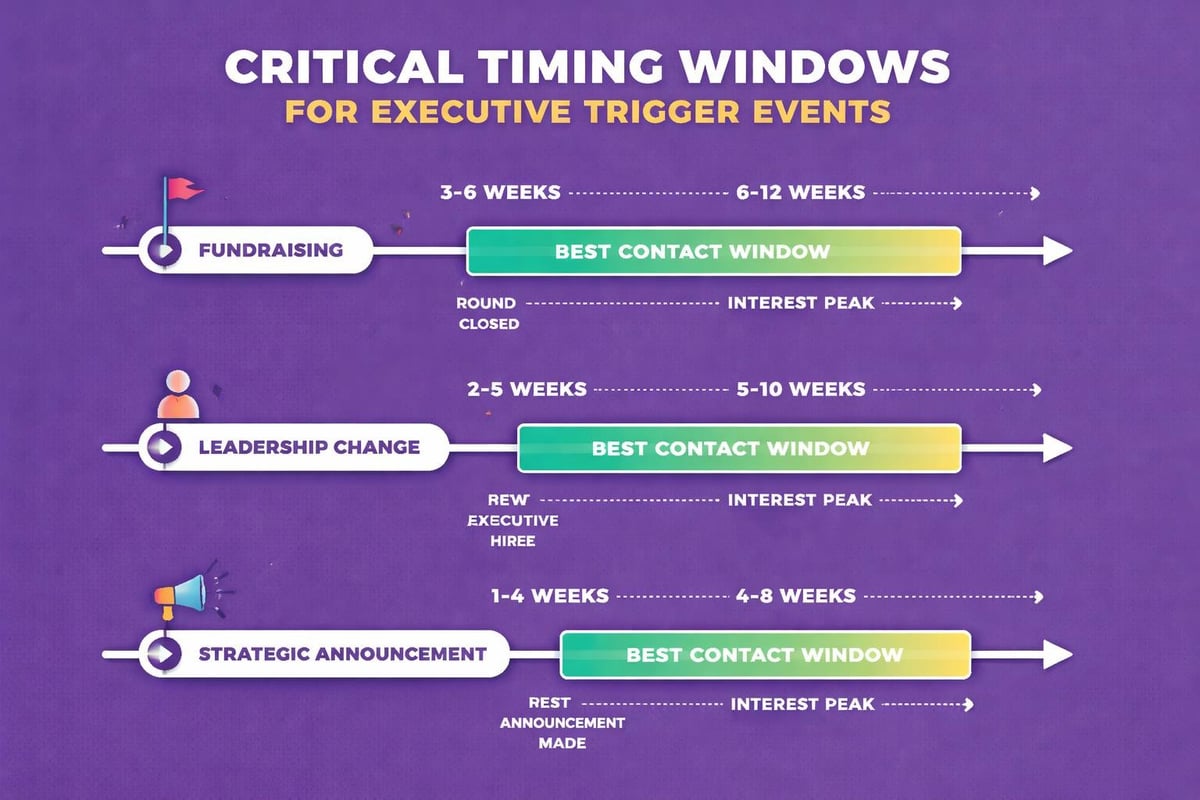
The difference between ignored and engaged often comes down to hours, not days. When a trigger event occurs, high level executives are already having internal conversations about related challenges and solutions.
Optimal timing windows vary by trigger type:
- Fundraising: Reach out within 48-72 hours of the announcement
- Leadership changes: Wait 30-45 days for new executives to settle in
- Product launches: Contact within one week while momentum is high
- Conference speaking engagements: Follow up within 24 hours of their presentation
- Earnings calls: Respond within 48 hours when specific challenges are mentioned
This strategic approach to high-ticket sales respects the executive's context while demonstrating that you're paying attention to their business.
The Human-in-the-Loop Philosophy for Executive Sales
While AI has transformed sales development, high level executives still value human intelligence, nuance, and relationship building. The most successful executive outreach strategies use technology to enhance human capabilities rather than replace them.
Why Executives Resist Pure AI Outreach
C-suite leaders can immediately identify automated messages that lack genuine personalization. They've seen thousands of poorly executed "AI-personalized" emails that reference surface-level details without demonstrating real understanding.
The executive expectation includes:
- Contextual understanding that goes beyond company name and industry
- Strategic thinking that connects your solution to their specific challenges
- Relationship investment that signals long-term partnership potential
- Authentic communication that reflects genuine human interest
This doesn't mean abandoning automation. It means using technology intelligently to identify opportunities while maintaining human oversight and customization at critical touchpoints.
Empowering Sales Teams to Engage Executives
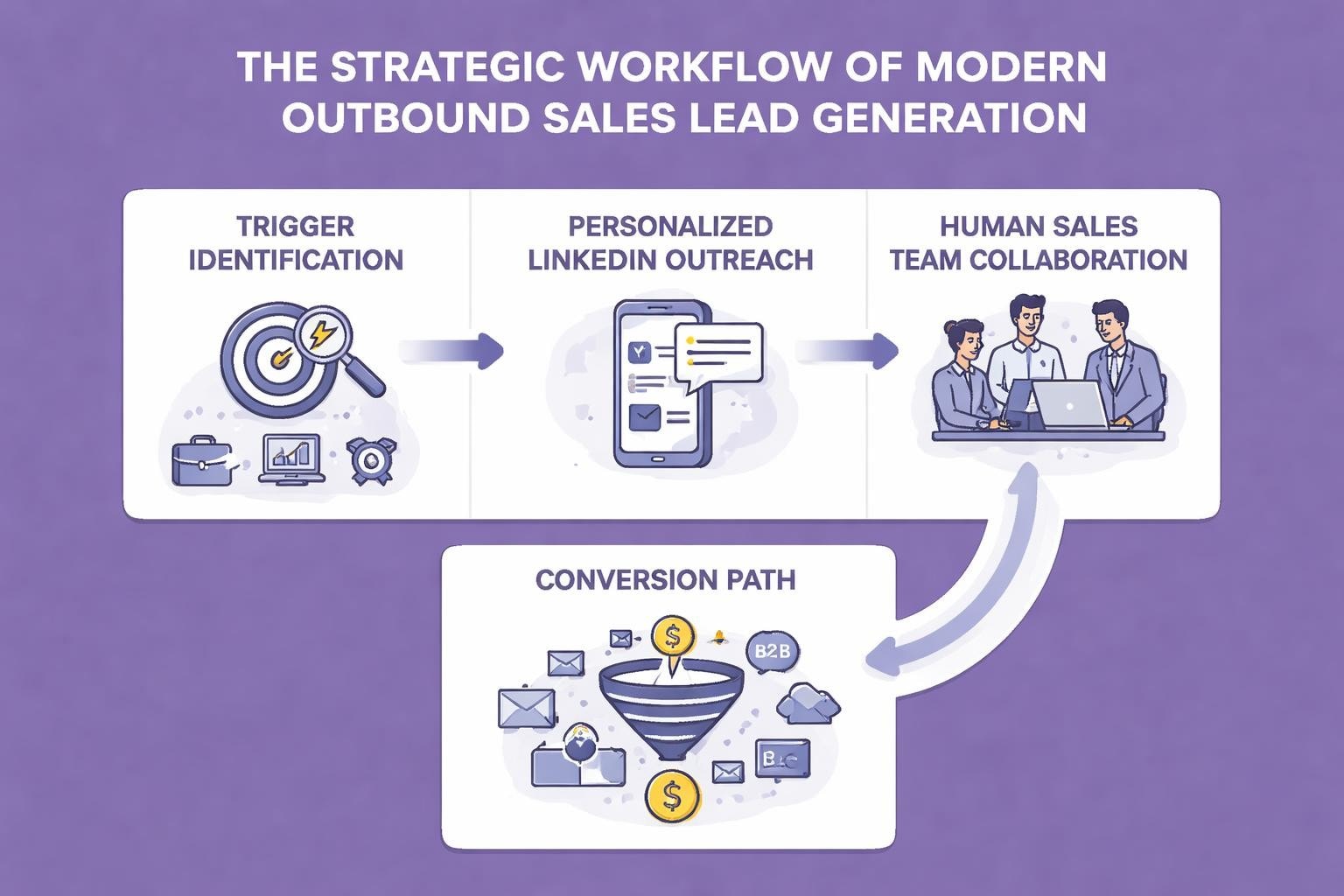
The most effective executive engagement strategies combine automated intelligence gathering with human expertise in relationship building. Your sales team becomes more effective when technology handles research, trigger monitoring, and initial qualification.
Consider this workflow structure:
Step 1: Automated monitoring identifies trigger events across target accounts
Step 2: AI systems flag high-priority opportunities based on predefined criteria
Step 3: Sales professionals review context and craft personalized messages
Step 4: Human oversight approves outreach before sending
Step 5: Sales development representatives manage conversation flow and relationship nurturing
This approach maintains quality while achieving scale. High level executives receive messages that feel personally crafted because they are, even though technology enabled the research and opportunity identification.
Building Executive-Grade Thought Leadership
High level executives increasingly use thought leadership as a filter mechanism when evaluating potential vendors. Organizations that consistently publish valuable insights earn consideration before formal RFPs ever begin.
Creating Content That Commands Executive Attention
Thought leadership for C-suite audiences requires different standards than typical marketing content. High level executives expect:
- Original data and research that provides competitive intelligence
- Contrarian perspectives that challenge conventional wisdom with evidence
- Strategic frameworks applicable to their specific challenges
- Peer insights from other executives facing similar situations
- Actionable recommendations with clear implementation guidance
The content format matters less than the substance. A well-researched article outperforms a flashy infographic when targeting executive decision makers who prioritize depth over design.
Distributing Thought Leadership to Executive Audiences
Creating exceptional content means nothing if high level executives never see it. Distribution strategy determines impact:
| Distribution Channel | Executive Reach | Best Practices |
|---|---|---|
| LinkedIn Publishing | High | Post during business hours; tag relevant executives |
| Industry Publications | Very High | Target niche publications executives actually read |
| Conference Speaking | High | Choose events where target executives attend |
| Executive Briefings | Very High | Offer exclusive insights to select accounts |
| Podcast Appearances | Medium-High | Choose shows popular with your target audience |
Combining these channels creates multiple touchpoints. When a high level executive sees your thought leadership across three different channels, credibility compounds exponentially.
Leveraging Authoritative Leadership Styles in Sales
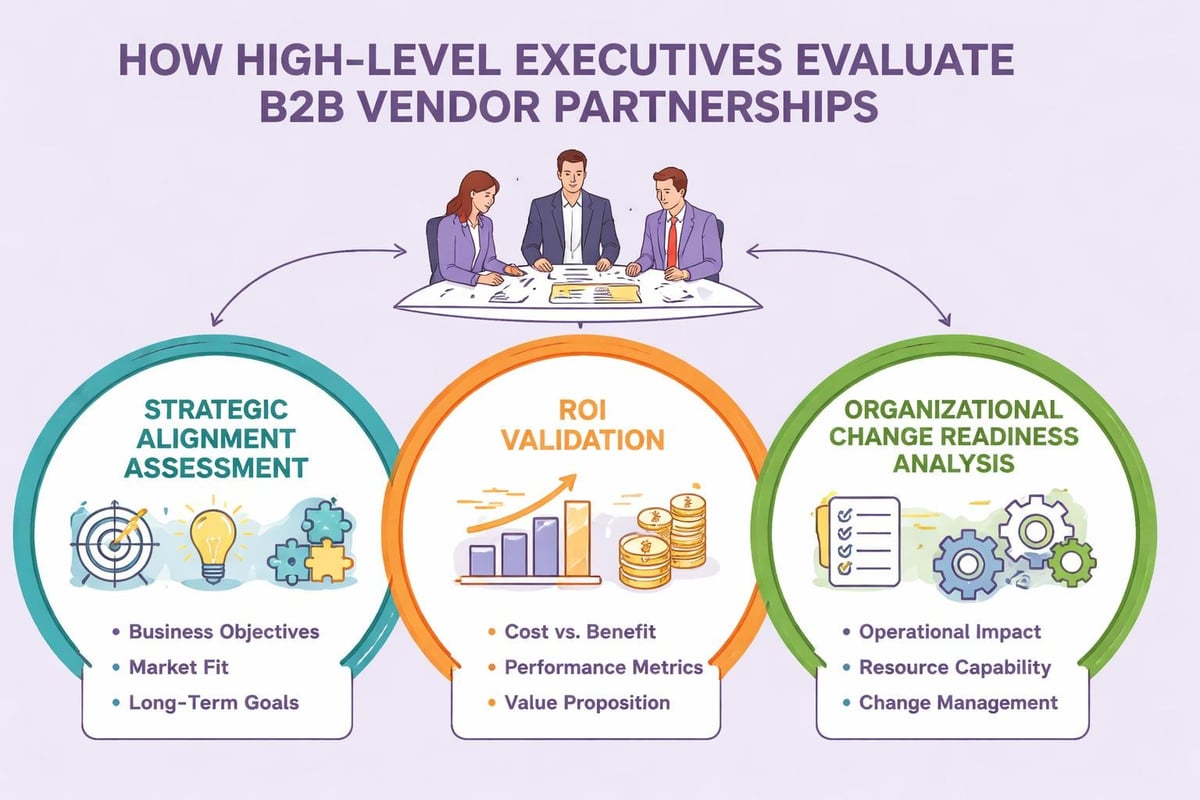
Understanding how high level executives lead their organizations provides insight into how they evaluate vendor partnerships. Authoritative leadership characteristics shape executive decision-making processes and vendor selection criteria.
How Executive Leadership Styles Impact Vendor Selection
Authoritative leaders prioritize vision alignment and strategic partnership over transactional vendor relationships. When selling to these executives, your pitch must connect to their broader organizational vision.
Visionary executives seek partners who understand where they're taking the company, not just what they need today. Your outreach should reference their stated vision and demonstrate how your solution accelerates progress toward those goals.
Results-oriented executives demand measurable outcomes and clear ROI. They respond to data-driven presentations that quantify impact in terms they care about: revenue growth, cost reduction, efficiency gains, or risk mitigation.
Collaborative executives value partner input and co-creation. They want vendors who bring strategic insights to the table, not just products. Your approach should position you as a strategic advisor rather than a simple solution provider.
Quality Over Quantity: The Executive Outreach Mandate
High level executives experience constant message bombardment. Standing out requires abandoning the spray-and-pray mentality that characterizes most outbound sales efforts.
Why Volume-Based Approaches Fail With Executives
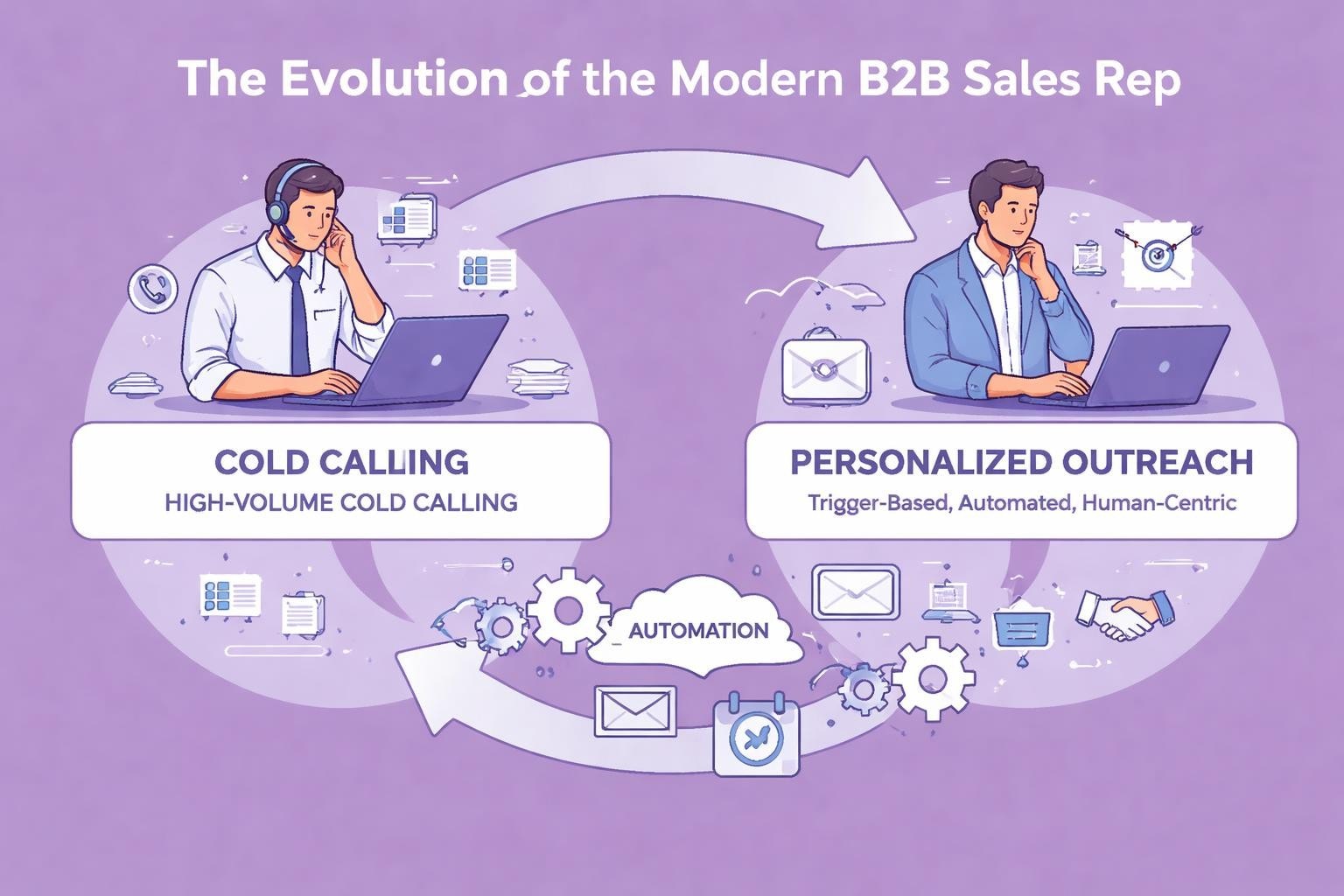
Traditional sales wisdom emphasizes activity metrics: calls made, emails sent, meetings booked. This volume-focused approach actively damages your chances with C-suite decision makers.
The math tells the story:
- Average executives receive 120+ emails daily
- C-suite leaders spend less than 30 seconds evaluating most messages
- Generic outreach has response rates below 1% at the executive level
- Personalized, trigger-based outreach achieves 15-25% response rates
The difference isn't marginal. It's transformational. One highly relevant, perfectly timed message outperforms one hundred generic touches.
Implementing Quality-Focused Executive Programs
Shifting from quantity to quality requires fundamental changes to sales processes and metrics. Successful outbound sales strategies for 2026 prioritize relevance and timing over raw volume.
Key components include:
- Strict account qualification ensuring you only target executives whose companies genuinely fit your ICP
- Deep research requirements mandating sales teams understand company context before outreach
- Trigger-based activation waiting for the right moment rather than forcing arbitrary contact schedules
- Message quality standards requiring approval processes that ensure executive-grade communication
- Relationship metrics tracking engagement quality and conversation progression rather than just activity volume
This approach requires patience and discipline. Your daily outreach numbers will decrease dramatically. Your results will improve even more dramatically.
Navigating the AI SDR Landscape as an Executive Buyer
High level executives increasingly encounter AI-powered sales development representatives. Understanding how executives perceive and respond to these tools helps position your outreach appropriately.
Executive Skepticism Toward Full Automation
C-suite leaders recognize AI's potential while remaining skeptical of fully automated sales approaches. They've experienced too many poorly executed AI interactions that prioritize efficiency over effectiveness.
Common executive concerns include:
- Lack of nuance in understanding complex business challenges
- Generic personalization that feels algorithmic rather than authentic
- Inability to adapt when conversations move beyond scripted scenarios
- Missing strategic thinking that only human experience provides
- Relationship superficiality that prevents genuine partnership development
These concerns don't mean executives reject technology entirely. They mean successful approaches must demonstrate thoughtful technology integration that enhances rather than replaces human judgment.
The Human-Enhanced Technology Advantage
Organizations that keep humans in the loop while leveraging AI capabilities win executive trust. This hybrid approach combines technological efficiency with human authenticity.
The optimal model includes:
- AI-powered research that identifies trigger events and enriches account data
- Automated monitoring that tracks executive activities across digital channels
- Human message crafting that incorporates research into genuinely personalized outreach
- Sales professional oversight that ensures quality and appropriateness
- Relationship management handled by skilled humans who build trust over time
This philosophy recognizes that technology should empower sales teams, not replace them. High level executives appreciate the efficiency gains while receiving the authentic engagement they require.
Measuring Success in Executive Engagement Programs
Traditional sales metrics often miss what matters when targeting C-suite decision makers. High level executives move through longer, more complex buying journeys that require different success indicators.
Beyond Activity Metrics
Measuring executive engagement success requires looking past simple activity counts. More meaningful metrics include:
Engagement depth tracks how executives interact with your content and communications. Are they reading your emails completely? Clicking through to additional resources? Downloading your research? These behaviors signal genuine interest.
Conversation quality measures the substance of interactions. A fifteen-minute phone call where an executive asks strategic questions indicates more progress than ten brief email exchanges.
Buying committee expansion shows pipeline health. When an executive introduces you to other stakeholders, they're signaling serious consideration.
Deal velocity for executive-initiated opportunities typically accelerates because C-suite champions remove internal obstacles.
| Traditional Metric | Executive-Focused Alternative | Why It Matters More |
|---|---|---|
| Emails sent | Trigger-based messages delivered | Relevance over volume |
| Response rate | Executive engagement rate | Quality of responses matters |
| Meetings booked | Strategic conversations held | Depth trumps quantity |
| Pipeline value | Executive-championed deals | Higher close rates |
| Sales cycle length | Decision timeframe from executive interest | True buying cycle measurement |
Attribution in Complex Executive Sales
High level executives rarely convert through linear paths. They encounter your organization across multiple touchpoints before ever responding to outreach.
An executive might attend your webinar three months before receiving a trigger-based message that prompts response. They may have read your thought leadership article six months prior. Attribution models must account for this complexity.
Multi-touch attribution specifically designed for executive buyers should track:
- First awareness touchpoint that introduced your brand
- Engagement touchpoints where executives consumed content or attended events
- Trigger activation that prompted direct outreach
- Conversion touchpoint where serious conversation began
- Deal acceleration touchpoints that moved opportunities forward
This comprehensive view reveals which investments actually influence executive decision making versus which generate vanity metrics.
Engaging high level executives successfully requires abandoning outdated volume-based tactics in favor of strategic, trigger-based outreach that respects executive time while delivering genuine value. The organizations that win C-suite attention combine technological intelligence with human expertise, creating perfectly timed touchpoints that demonstrate deep understanding of business context. Samplead empowers your sales team with automated trigger-based prospecting that identifies the exact moments when high level executives are most receptive to conversation, ensuring your outreach happens when it matters most while maintaining the human intelligence that executives demand.