Business in 2026 is more complex, fast-paced, and competitive than ever before. To thrive, organizations must understand and master every company function, from HR to technology. Sustainable growth and resilience depend on a strategic approach to each company function, ensuring teams adapt to change and seize new opportunities. This guide delivers actionable success strategies tailored for the realities of modern business, helping you unlock the full potential of every company function. Get ready to future-proof your organization with proven insights, real-world examples, and data-driven guidance covering HR, marketing, sales, operations, finance, technology, and cross-functional collaboration.
Understanding Core Company Functions in 2026
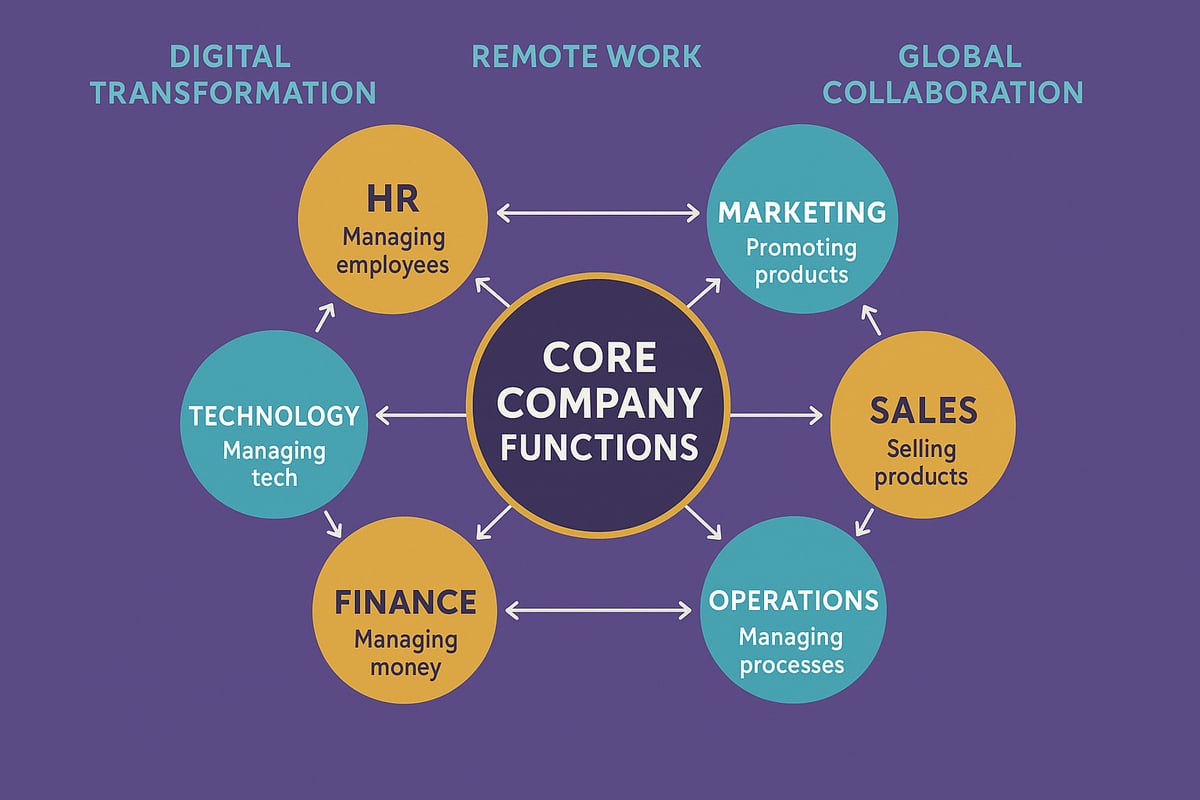
In 2026, the business landscape is a complex ecosystem where each company function is a vital organ supporting organizational health. Companies that master these functions—human resources, marketing, sales, operations, finance, and technology—are best equipped to thrive in an era shaped by digital transformation, global shifts, and rapid innovation. Understanding how each company function operates and interrelates is the first step toward building a resilient, forward-thinking business.
Defining Core Business Functions
The backbone of every successful organization lies in its core company functions. Human resources (HR) is responsible for talent management, recruitment, and fostering a positive workplace culture. Marketing drives brand awareness and customer engagement, while sales converts prospects into loyal clients. Operations ensure products and services are delivered efficiently, and finance manages the resources that keep everything running smoothly. Technology, now more than ever, acts as the enabler for all these areas, powering everything from automation to customer insights.
These company functions do not operate in isolation. Instead, they form a dynamic network where success in one area amplifies the effectiveness of others. For instance, marketing and sales must align closely to maximize revenue opportunities, while HR and operations collaborate to ensure teams are equipped for growth. In 2026, the scope of each company function has evolved. HR is now focused on remote workforce management and digital onboarding. Marketing leverages AI for hyper-personalized campaigns. Sales teams use virtual tools to connect with clients globally. Operations deploy IoT and automation for efficiency, and finance relies on real-time analytics for agile decision-making.
Globalization has also reshaped traditional business roles. Remote work is standard, requiring new policies and tools for collaboration. Leading companies like Microsoft and Salesforce exemplify this shift, structuring their company functions to prioritize agility, inclusivity, and digital-first processes. This integrated approach ensures organizations remain competitive in a fast-changing world.
Strategic Impact of Each Function
Each company function plays a pivotal role in shaping the organization's trajectory. HR is no longer just about hiring; it drives culture, diversity, and innovation. A strong HR function attracts top talent and nurtures employee engagement, directly impacting productivity and retention.
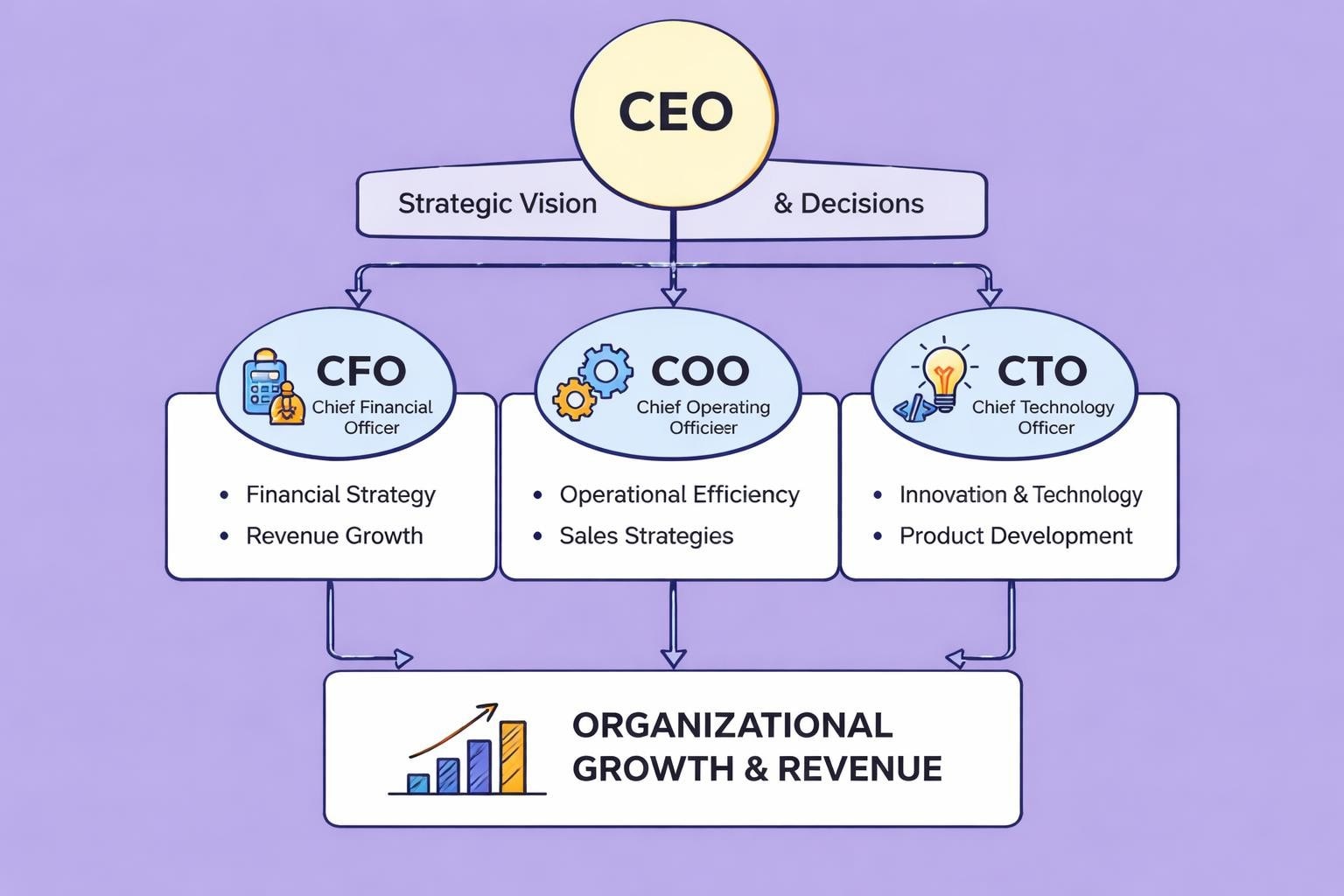
Marketing shapes how customers perceive the brand and influences long-term loyalty. According to McKinsey, companies that tightly align marketing with overall business strategy see up to 20% higher ROI. Sales, as the revenue engine, expands market reach and cultivates relationships that fuel growth. Operations underpin scalability and resilience, ensuring the business can adapt to market shifts. Finance manages risk, allocates capital, and supports sustainable growth, while technology accelerates transformation and maintains organizational agility.
| Function | Strategic Role | Example of Impact |
|---|---|---|
| HR | Talent & Culture | Google’s data-driven hiring and retention |
| Marketing | Brand & Customer Value | Apple’s integrated brand strategy |
| Sales | Revenue & Expansion | Amazon’s global sales infrastructure |
| Operations | Efficiency & Scalability | Toyota’s Lean Manufacturing |
| Finance | Risk & Investment | IBM’s real-time financial analytics |
| Technology | Agility & Innovation | Salesforce’s AI-powered platforms |
Harvard Business Review reports that companies optimizing each company function outperform peers in profitability, adaptability, and innovation. The interplay of these strategic roles is what separates industry leaders from the rest.
Trends Shaping Company Functions in 2026
Several transformative trends are redefining what it means to excel in every company function by 2026. First, AI and automation are streamlining workflows, reducing manual tasks, and enabling faster, smarter decisions. Data-driven decision-making is on the rise, with organizations leveraging advanced analytics to anticipate market trends and customer needs. For a deeper dive into this evolution, see how leveraging data impacts the effectiveness of sales, operations, and cross-functional collaboration.
Sustainability and ESG (Environmental, Social, and Governance) are now core to every company function, influencing everything from sourcing to marketing messages. Adaptability and continuous learning are crucial, as businesses face rapid technological change and shifting customer expectations.
Case studies highlight these innovations. IBM has pioneered tech-driven training programs to upskill staff. Toyota’s operational excellence is a benchmark for process optimization. Salesforce leads in building inclusive cultures that drive both innovation and resilience.
In summary, the company function landscape of 2026 is defined by interconnection, strategic focus, and the ability to adapt. Organizations that invest in evolving each company function—and foster collaboration between them—will set the standard for success in the years ahead.
Human Resources: Building a Future-Ready Workforce
The company function of human resources is at the heart of every organization’s ability to adapt and thrive in 2026. As the business landscape shifts, HR leaders are reimagining how to attract, develop, and retain talent for a digital-first era. Mastering this company function means building a workforce that is agile, empowered, and ready to meet tomorrow’s challenges.
Talent Acquisition and Retention in 2026
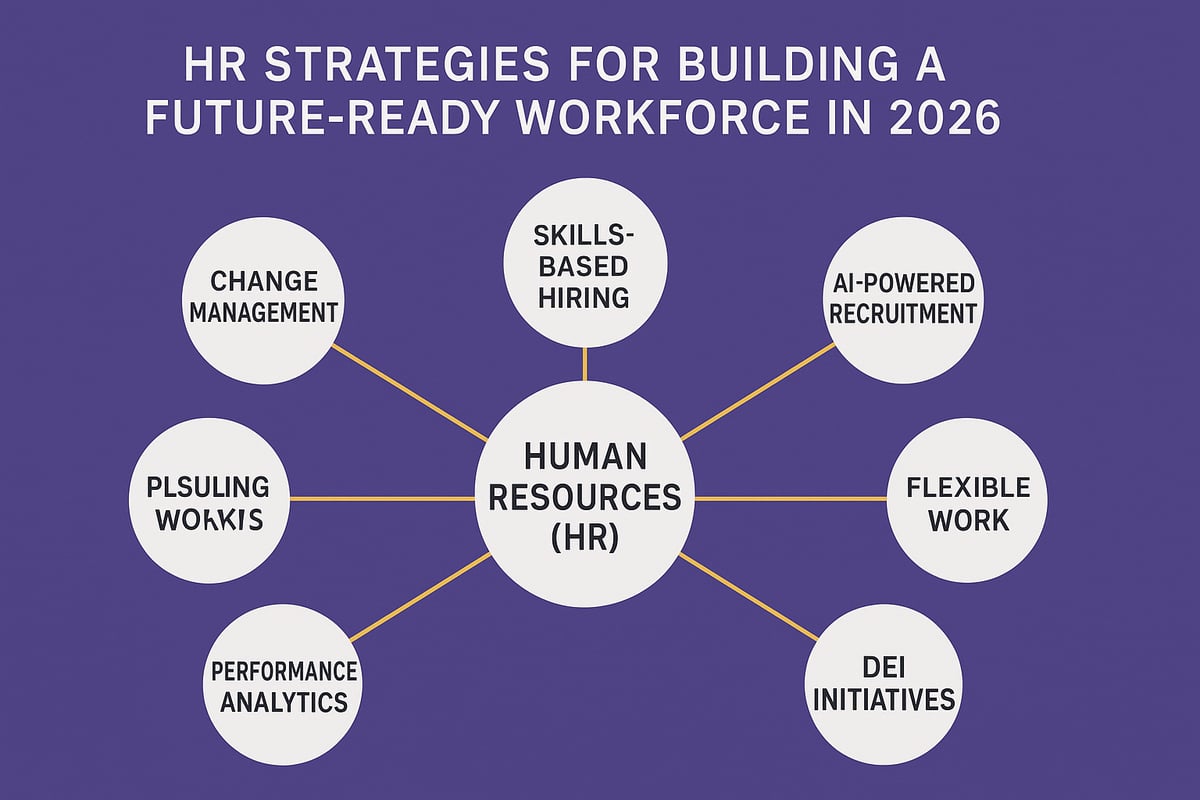
Talent acquisition in 2026 is not just about filling roles, it is about aligning the company function of HR with long-term business goals. Skills-based hiring has replaced traditional degree requirements, enabling organizations to tap into more diverse talent pools. Employer branding is now a top priority, as job seekers value purpose-driven workplaces and flexible arrangements.
Leaders in this space leverage AI and data analytics to source, screen, and engage candidates more efficiently. Google, for example, uses machine learning to match candidates with roles, reducing bias and improving fit. Retention strategies are evolving, focusing on flexibility, diversity, equity, and inclusion (DEI), and fostering a sense of belonging.
According to Gallup, companies that prioritize engagement and well-being see a 21% boost in productivity and a sharp drop in turnover. The company function of HR must continuously adapt, ensuring employees feel valued and motivated to contribute to the organization’s mission.
- Skills-based hiring attracts broader talent.
- AI tools streamline recruitment and reduce bias.
- Retention hinges on purposeful culture and flexibility.
Training, Development, and Performance Management
In 2026, the company function of HR extends far beyond hiring, encompassing lifelong learning and performance management. Upskilling and reskilling are essential as technology reshapes job requirements. Personalized learning paths and microlearning modules allow employees to develop new competencies at their own pace.
IBM is a prime example, offering tech-driven training programs that use analytics to identify skills gaps and recommend targeted courses. Performance management has also evolved, with frequent check-ins replacing annual reviews. Objectives are now closely aligned with business strategy, and data-driven insights help managers support employee growth.
Measuring engagement is critical. HR teams use pulse surveys and analytics dashboards to track sentiment and identify areas for improvement. By integrating learning and performance, the company function of HR empowers teams to innovate and stay ahead of change.
- Microlearning delivers just-in-time knowledge.
- Analytics measure impact and guide improvement.
- Continuous feedback aligns performance with goals.
Diversity, Inclusion, and Change Management
The company function of HR is central to building inclusive, innovative cultures that drive business results. Diversity, equity, and inclusion (DEI) are no longer optional; they are strategic imperatives. Research from McKinsey's 2023 Diversity Report shows that companies in the top quartile for diversity are 39% more likely to outperform peers on profitability.
HR leaders must champion DEI at every level, from recruitment to leadership development. Salesforce, for instance, has embedded DEI into its core values, resulting in higher innovation and employee satisfaction. Navigating change—whether mergers, reorganizations, or digital transformation—requires transparent communication and robust change management frameworks.
Building a resilient workforce means preparing employees for uncertainty and empowering them to embrace new ways of working. The company function of HR drives this transformation, ensuring organizations remain agile and competitive.
- Inclusive cultures fuel creativity and resilience.
- Transparent change management builds trust.
- DEI initiatives deliver measurable business value.
Marketing’s Strategic Influence: Winning in a Customer-Driven Era
The modern marketplace is defined by rapid change and empowered consumers. In 2026, marketing is not just a standalone company function—it is the nucleus of brand value, customer engagement, and long-term growth.
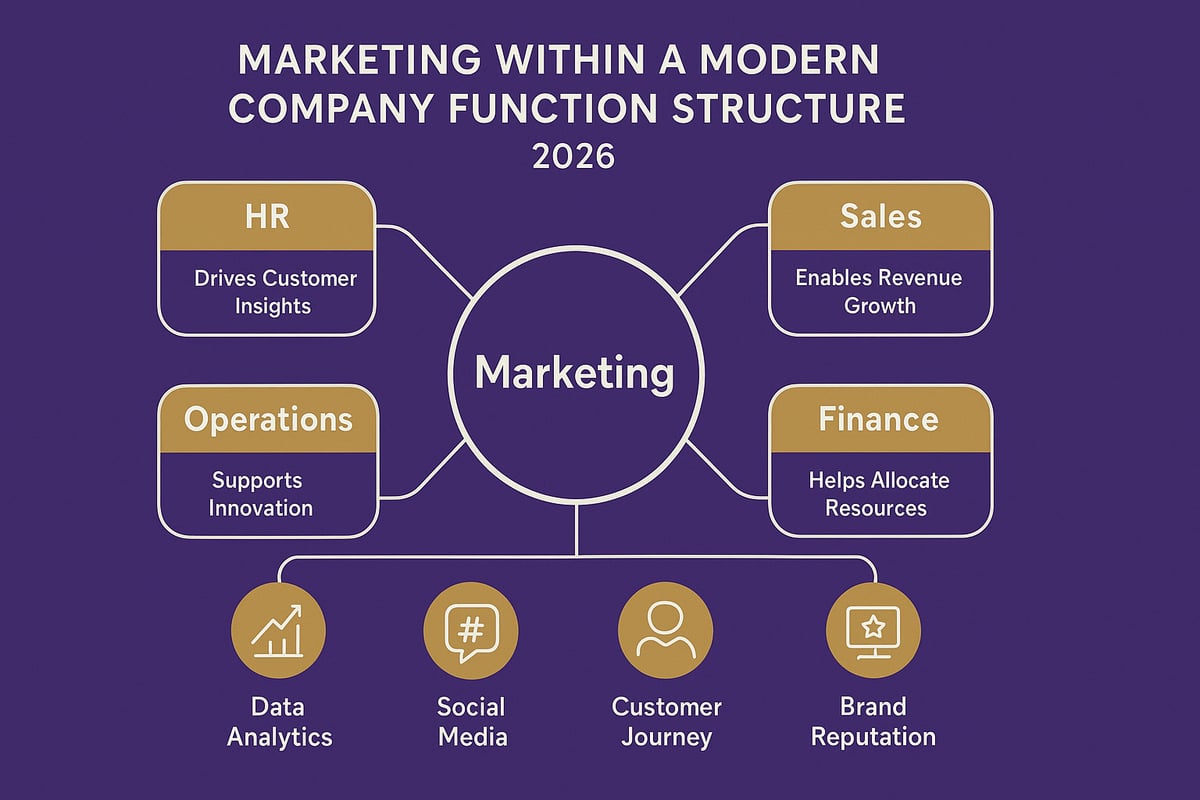
Forward-thinking organizations understand that marketing’s influence extends far beyond ad campaigns. It is the bridge connecting product, sales, technology, and culture. Let’s explore how leading businesses turn marketing into a powerhouse company function that drives results.
Aligning Marketing with Corporate Strategy
Aligning marketing with corporate strategy is now essential for any successful company function. When marketing operates in sync with company goals, every campaign, message, and touchpoint supports the broader mission.
According to McKinsey, organizations that tightly align marketing with business objectives see up to 20 percent higher ROI. This alignment enables better resource allocation and ensures that customer insights shape both product development and market positioning.
Apple’s brand strategy is a textbook example. By making customer experience central to its entire company function, Apple fosters intense loyalty and sets industry standards. The lesson is clear—integrated marketing and business strategy amplify each other’s impact.
Unified strategies also build resilience. When market conditions shift, a cohesive company function can pivot quickly, maintaining momentum and seizing new opportunities.
Data-Driven and Customer-Centric Marketing
Data-driven marketing is transforming how every company function interacts with customers. The rise of analytics and AI allows brands to personalize experiences, predict trends, and optimize investments.
Customer journey mapping and segmentation are now core marketing tactics. By understanding each touchpoint, companies can deliver relevant messages that increase engagement and retention. Gartner predicts that by 2026, analytics-driven marketing strategies will be a top priority for CMOs. For deeper insights on leveraging analytics, explore Gartner's 2024 Marketing Analytics Insights.
Leading firms like Amazon use real-time data to refine every interaction, turning the company function of marketing into a continual feedback loop. This approach leads to more effective campaigns and higher customer satisfaction.
Customer-centricity, fueled by data, is no longer optional. It is the backbone of sustainable competitive advantage for any company function.
Social Media and Brand Reputation Management
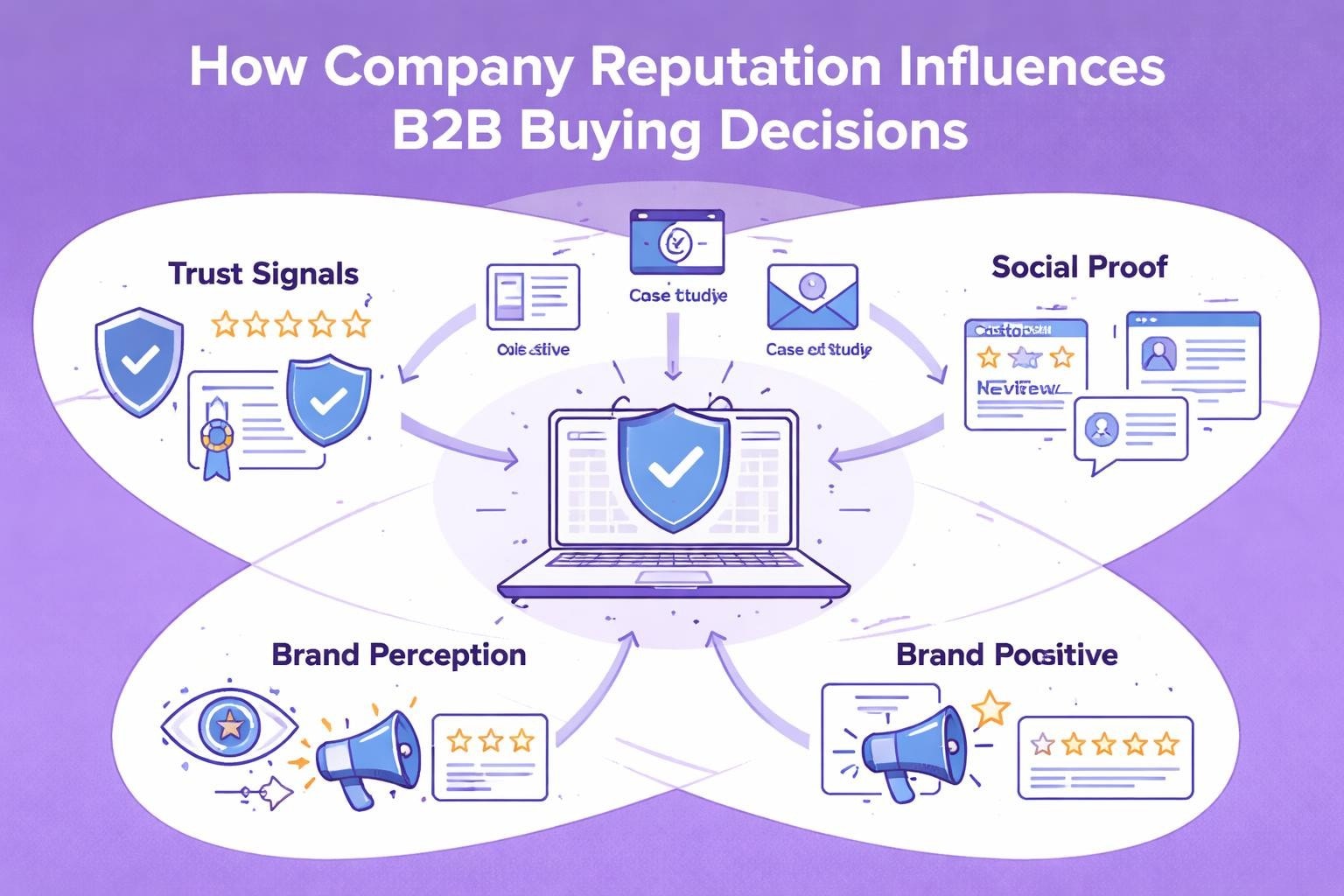
Social media has revolutionized the company function of marketing. Platforms like Instagram, LinkedIn, and TikTok are now where brand reputations are built—or broken.
According to Sprout Social, 55 percent of consumers discover new brands through social media. This means that marketing teams must monitor conversations, respond quickly, and manage crises with precision.
Nike’s experience with viral social media controversies highlights the stakes. When handled well, a transparent response can actually strengthen brand loyalty. However, missteps in this company function can lead to long-term damage.
Effective brand reputation management requires clear policies, trained teams, and the ability to adapt messaging in real time. Social media is both an opportunity and a risk for every company function in 2026.
Building Trust and Loyalty
Building trust and loyalty is the ultimate goal of any marketing company function. Customer-centric strategies drive profitability and create advocates who promote the brand organically.
Deloitte’s research shows that companies prioritizing customer-centric marketing achieve higher margins and retention rates. Techniques such as personalized outreach, value-driven content, and transparent communication foster long-term relationships.
Success stories abound. Brands that invest in loyalty programs and community engagement see measurable returns. As marketing becomes more integrated with other company functions, trust-building efforts are amplified.
In the end, a trusted brand is a resilient brand. Investing in trust pays dividends across every company function, setting the stage for growth in 2026.
Sales Functions: Driving Revenue and Strategic Growth
In 2026, the sales company function stands at the intersection of technology, data, and human relationships. To drive revenue and strategic growth, organizations must rethink traditional sales models and embrace innovation. Let’s break down how sales teams are evolving and which strategies are propelling businesses forward.
Modern Sales Strategies and Technologies
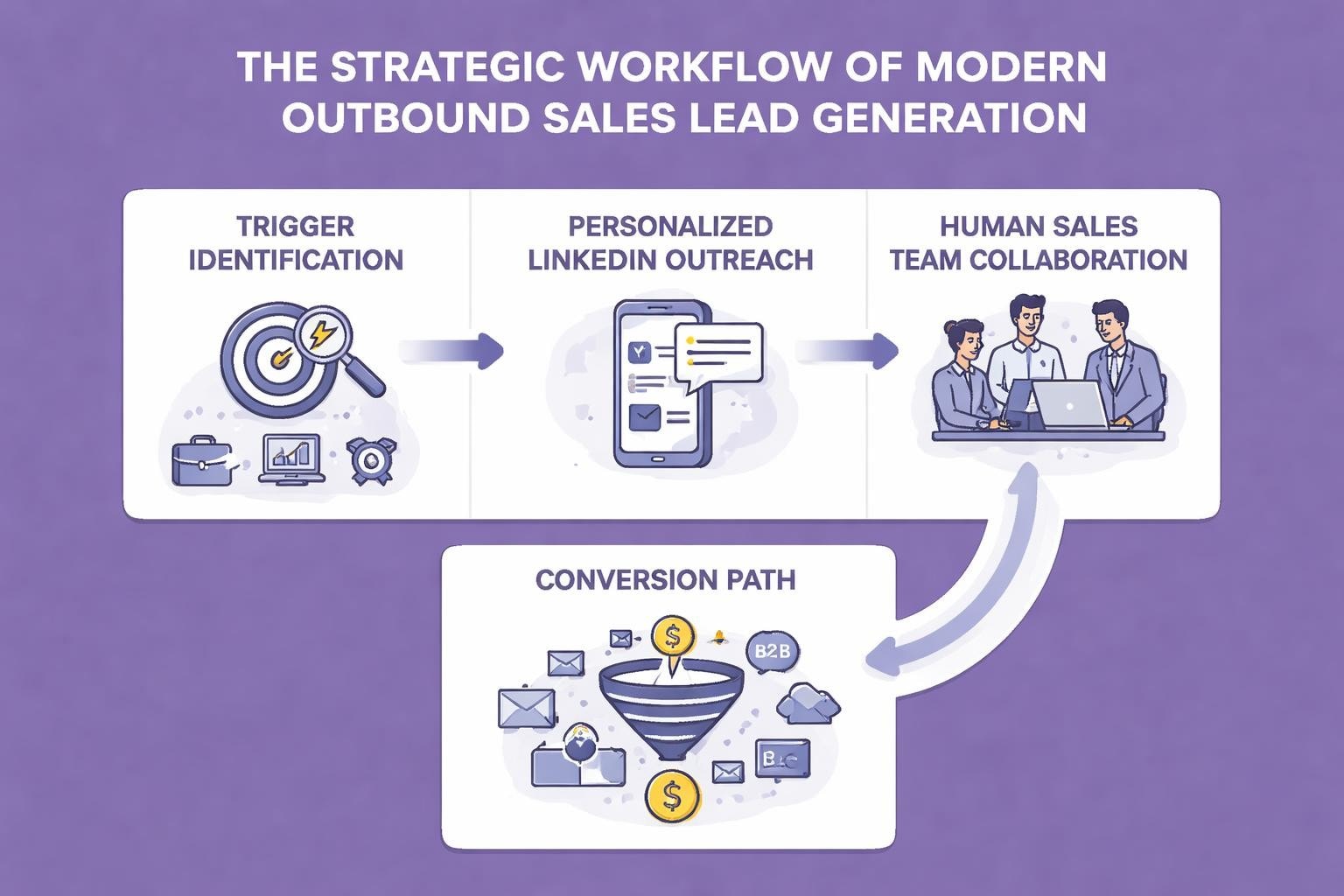
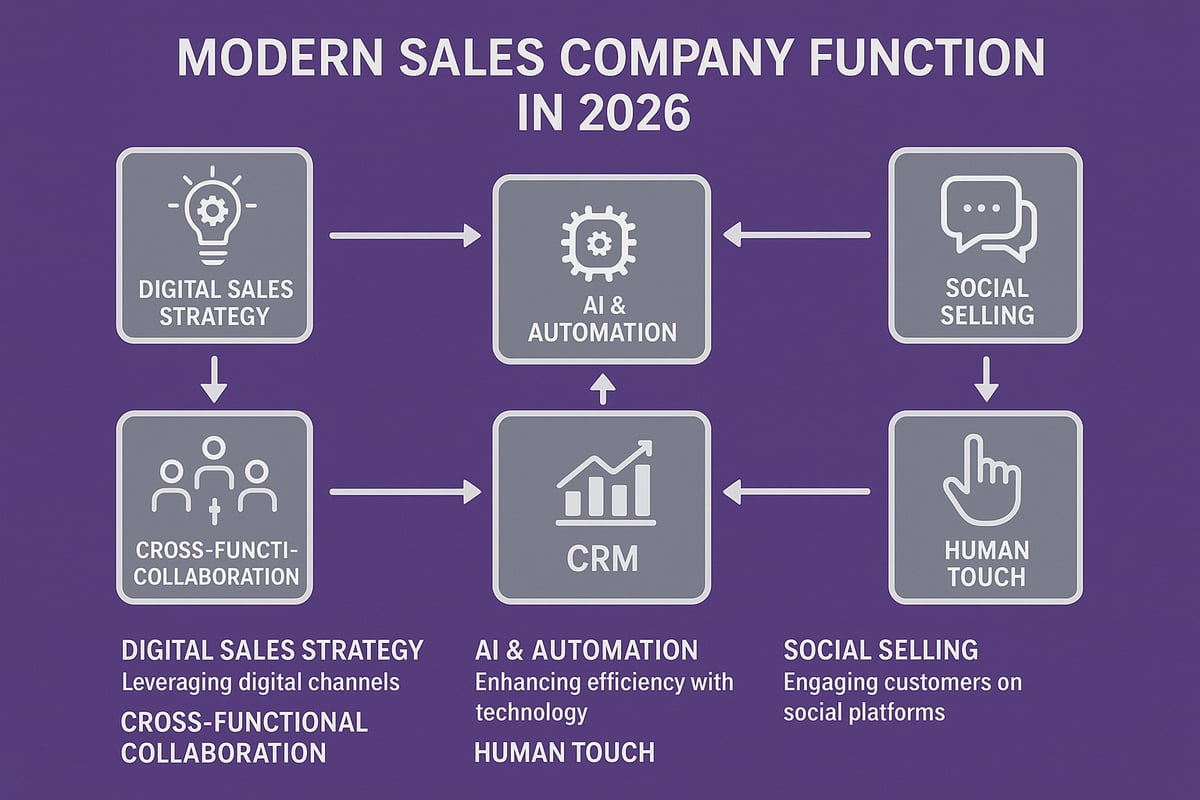
The modern sales company function is powered by digital-first strategies and advanced technology. Sales teams now rely on CRM platforms, sales analytics, and automation tools to streamline processes and boost productivity. Forrester reports that 70% of companies leverage analytics to enhance their sales strategy, underscoring the critical role of data in decision-making.
Key advancements include:
- AI-driven lead scoring and pipeline management
- Automated follow-ups and personalized outreach
- Real-time sales dashboards for performance tracking
To stay ahead, organizations must continuously refine their approaches. For actionable insights, explore Outbound sales strategies for 2026, which details forward-thinking methods for the evolving sales landscape.
This digital transformation ensures the sales company function remains agile and competitive.
Social Selling and Personalized Outreach
Social selling has become a cornerstone of the company function in sales. Platforms like LinkedIn empower reps to build authentic relationships and tailor outreach, with 78% of social sellers outperforming traditional peers. The ability to connect, engage, and nurture leads on social media is now a non-negotiable skill.
Best practices for social selling include:
- Sharing relevant content to establish expertise
- Engaging in meaningful conversations with prospects
- Leveraging analytics to time messages for maximum impact
Personalization is key. By mapping customer journeys and segmenting audiences, sales teams can deliver value at every touchpoint. The company function in sales thrives when every interaction feels bespoke, not generic.
Cross-Functional Collaboration in Sales
Success in the sales company function increasingly depends on cross-functional collaboration. Teams that align with marketing, HR, and product units see up to a 36% higher success rate, according to Deloitte. Collaboration breaks down silos, ensures message consistency, and accelerates market response.
Key elements of effective collaboration:
- Shared goals and KPIs across departments
- Regular joint strategy sessions
- Integrated CRM and marketing automation tools
Consider HubSpot’s integrated sales and marketing approach, which exemplifies how the company function can drive revenue by uniting internal resources. When sales works alongside other functions, the whole organization wins.
Balancing Automation with Human Touch
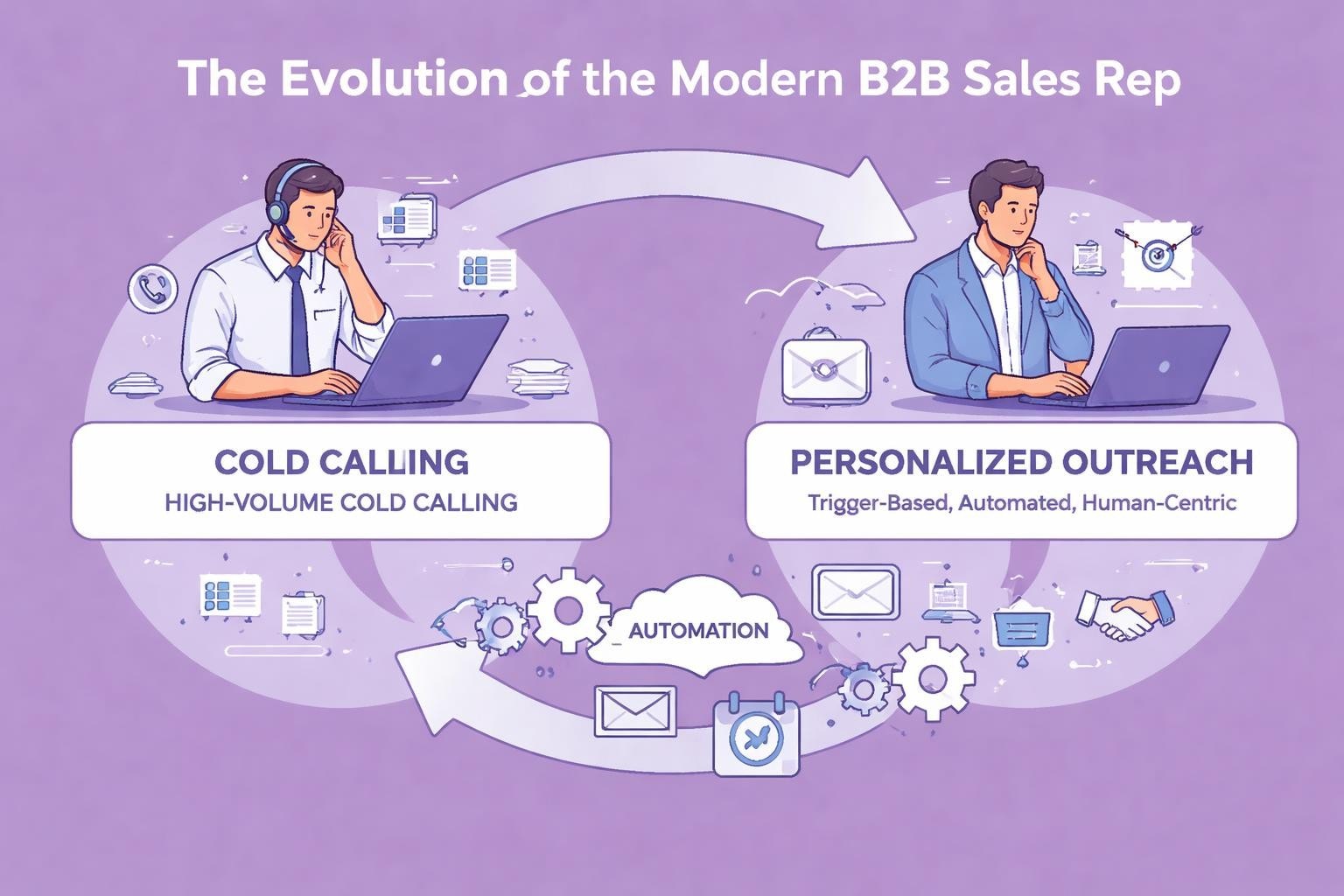
While automation is reshaping the sales company function, the human element remains irreplaceable. High-value B2B transactions still require trust, empathy, and nuanced negotiation. Over-automation risks alienating customers and eroding relationships.
To strike the right balance:
- Deploy automation for repetitive tasks and data entry
- Empower reps to focus on consultative selling and relationship-building
- Provide ongoing training to blend technology with soft skills
Sales leaders must remember that technology is an enabler, not a replacement. The most effective company function in sales harnesses both digital tools and human expertise to deliver exceptional results.
Operational Excellence: The Backbone of Strategic Success
Operational excellence is the foundation of every successful company function. In 2026, companies must rethink traditional operations to stay agile and competitive. Organizations that prioritize operational excellence within each company function set the stage for resilience and long-term growth.
Streamlining Processes for Efficiency
Achieving operational excellence starts with streamlining processes for maximum efficiency. Every company function benefits from clear workflows, reduced waste, and continuous improvement. Process optimization not only cuts costs but also boosts agility in responding to market shifts.
Consider the impact of Lean Manufacturing, famously adopted by Toyota. This approach has driven significant productivity gains, with McKinsey reporting 30 to 40 percent improvements. Companies that embed Lean principles into each company function can deliver consistent value and adapt quickly.
- Identify bottlenecks and eliminate redundant steps
- Foster a culture of continuous improvement
- Standardize best practices across teams
Operational excellence in this area ensures every company function operates at peak performance.
Technology-Driven Operations
Technology is revolutionizing operational excellence across every company function. Automation, IoT, and real-time data monitoring are now essential for maintaining efficiency and visibility. Digital twins and predictive analytics enable organizations to anticipate challenges and optimize resources.
Amazon is a standout example—its fulfillment centers use robotics and data-driven systems to deliver unmatched speed and accuracy. Companies embracing AI and machine learning are transforming how they manage operations. For a deep dive into how artificial intelligence is streamlining workflows, see AI transforming sales processes.
When technology is leveraged effectively, each company function becomes more responsive, scalable, and innovative.
Measuring and Sustaining Operational Performance
Sustaining operational excellence means tracking the right metrics. Each company function requires tailored key performance indicators (KPIs) to gauge efficiency and spot opportunities for improvement. Benchmarking against industry leaders drives accountability and progress.
Sample KPIs Table:
| Company Function | Key KPI Example |
|---|---|
| HR | Time-to-hire |
| Marketing | Campaign ROI |
| Sales | Conversion rate |
| Operations | Order fulfillment speed |
| Finance | Cost-to-revenue ratio |
| Technology | System uptime |
Utilizing modern tools and frameworks, organizations can set targets, monitor trends, and drive continuous improvement throughout each company function.
Overcoming Operational Challenges
Operational challenges can threaten any company function, especially in a volatile global landscape. Supply chain disruptions, regulatory shifts, and resource constraints test organizational resilience. The COVID-19 pandemic highlighted the necessity of adaptable operations that can withstand sudden shocks.
Building resilience starts with proactive risk management, scenario planning, and cross-functional collaboration. Organizations that invest in flexibility and learning can navigate uncertainty and emerge stronger. By embedding these principles into every company function, businesses set themselves up for sustainable success.
Financial Management: Ensuring Stability and Growth
Financial management remains a core company function that underpins stability and long-term growth. In 2026, the landscape is shaped by rapid change, increased complexity, and heightened expectations for transparency. Leaders must orchestrate strategic planning, risk mitigation, and technological innovation to keep their organizations resilient and competitive.
Strategic Financial Planning and Budgeting
Strategic financial planning is a foundational company function, aligning resources with business goals and market shifts. In 2026, planning goes beyond annual budgets, embracing scenario planning and real-time data to foster agility.
Key best practices include:
- Linking budgets directly to strategic objectives
- Using rolling forecasts to adapt quickly
- Involving cross-functional teams for accurate projections
The company function of financial planning also incorporates sustainability and ESG targets, ensuring growth is responsible and future-focused. Organizations that master this are better equipped to seize opportunities and weather uncertainty.
Risk Management and Resource Allocation
Effective risk management is essential within every company function, especially as volatility and disruption become the norm. Identifying, assessing, and mitigating financial risks is now a dynamic, continuous process.
Resource allocation strategies prioritize investments in innovation, talent, and resilience. Notably, organizations that embrace diversity and inclusion see tangible financial benefits, as highlighted in IndustryWeek on DE&I's Financial Impact. A diverse workforce enhances decision-making and innovation, directly influencing financial outcomes.
Leveraging Technology for Financial Insights
Technology is revolutionizing every company function, and finance is no exception. AI, automation, and advanced analytics deliver real-time insights, enabling leaders to make informed decisions faster than ever.
Consider this comparison:
| Aspect | Traditional Finance | Tech-Driven Finance |
|---|---|---|
| Data Processing | Manual, slow | Automated, instant |
| Reporting | Periodic | Real-time dashboards |
| Forecasting | Historical trends | Predictive analytics |
By leveraging these tools, the company function of finance becomes more agile, scalable, and proactive in driving business success.
Financial Governance and Compliance
Financial governance anchors every company function, promoting transparency, accountability, and trust. In 2026, compliance requirements are evolving rapidly, demanding robust controls and a culture of responsibility.
Effective governance means:
- Clear policies and procedures
- Regular audits and reviews
- Ongoing training for all staff
Embedding financial responsibility across all company function areas ensures organizations remain compliant, avoid costly penalties, and build lasting stakeholder confidence.
Cross-Functional Collaboration and Strategic Alignment
Cross-functional collaboration is now essential for any company function aiming to thrive in 2026. The rapid pace of business change, digital transformation, and global competition means no team can operate in isolation. Instead, unified strategies and seamless communication are the backbone of innovation and agility.
Breaking Down Silos for Unified Strategy
Silos are a major obstacle for any company function, stifling innovation and slowing progress. Leading organizations now prioritize cross-functional teams to foster creativity and rapid problem-solving. According to Deloitte, businesses that embrace collaboration see significant improvements in project outcomes and time-to-market.
Tech giants like Google and Spotify have adopted squad models, bringing together diverse roles to launch products faster and more efficiently. Key techniques include open communication channels, shared objectives, and regular cross-departmental meetings. This approach ensures every company function understands its role within the broader strategy.
Technology as a Collaboration Enabler
Technology is transforming how company function teams connect and work together. Communication platforms like Microsoft Teams and Slack are now essential, enabling real-time collaboration across departments and geographies. The rise of virtual teams and global collaboration tools makes it possible to break down barriers and drive innovation at scale.
Project management software, virtual whiteboards, and cloud-based document sharing streamline workflows and keep everyone aligned. As highlighted in Gartner's 2021 Marketing Predictions, digital tools will continue to reshape how cross-functional teams operate, making adaptability a key success factor.
Leadership and Change Management
Effective leadership is the glue that holds cross-functional company function teams together. Leaders must foster a culture of trust, open feedback, and shared accountability. This means modeling collaborative behaviors and setting clear expectations for teamwork.
Managing resistance to change is also vital. Leaders should communicate the benefits of alignment and provide support during transitions. By championing collaboration and addressing concerns early, organizations can ensure buy-in and maintain momentum during transformation initiatives.
Measuring Success in Collaboration
To optimize cross-functional collaboration, organizations must track the right metrics. Key performance indicators (KPIs) such as project completion times, customer satisfaction, and innovation rates reveal the impact of unified company function efforts.
Continuous improvement relies on regular feedback and iteration. Case studies show that companies prioritizing measurable collaboration achieve strategic breakthroughs and outperform their peers. By making success visible and actionable, teams remain motivated to push boundaries and deliver results.