The landscape of out bound sales has fundamentally transformed in 2026, yet many businesses still operate with outdated assumptions. The spray-and-pray methodology that defined earlier approaches has given way to precision-driven strategies that respect both the seller's resources and the buyer's attention. Modern out bound success hinges on intelligent timing, relevance, and the strategic integration of automation with human expertise. For high average contract value (ACV) B2B companies, this evolution isn't just beneficial-it's essential for survival in an increasingly competitive marketplace.
The Evolution of Out Bound in the AI Era
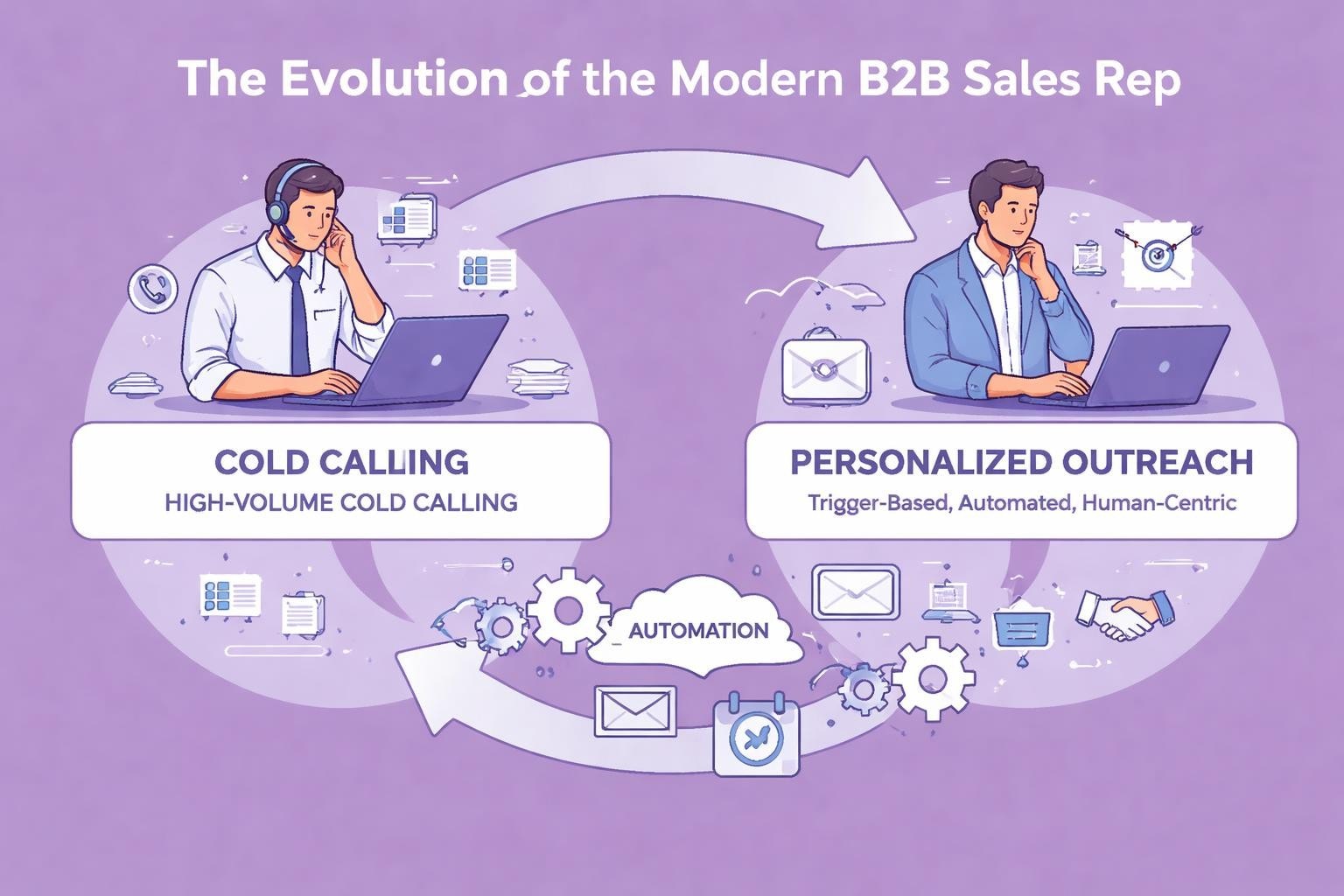
Traditional out bound sales relied on volume metrics: more calls, more emails, more touches. This quantitative approach created inefficiencies that high ACV businesses could no longer justify. The cost of wasted effort on unqualified prospects, combined with diminishing response rates from oversaturated buyers, demanded a new framework.
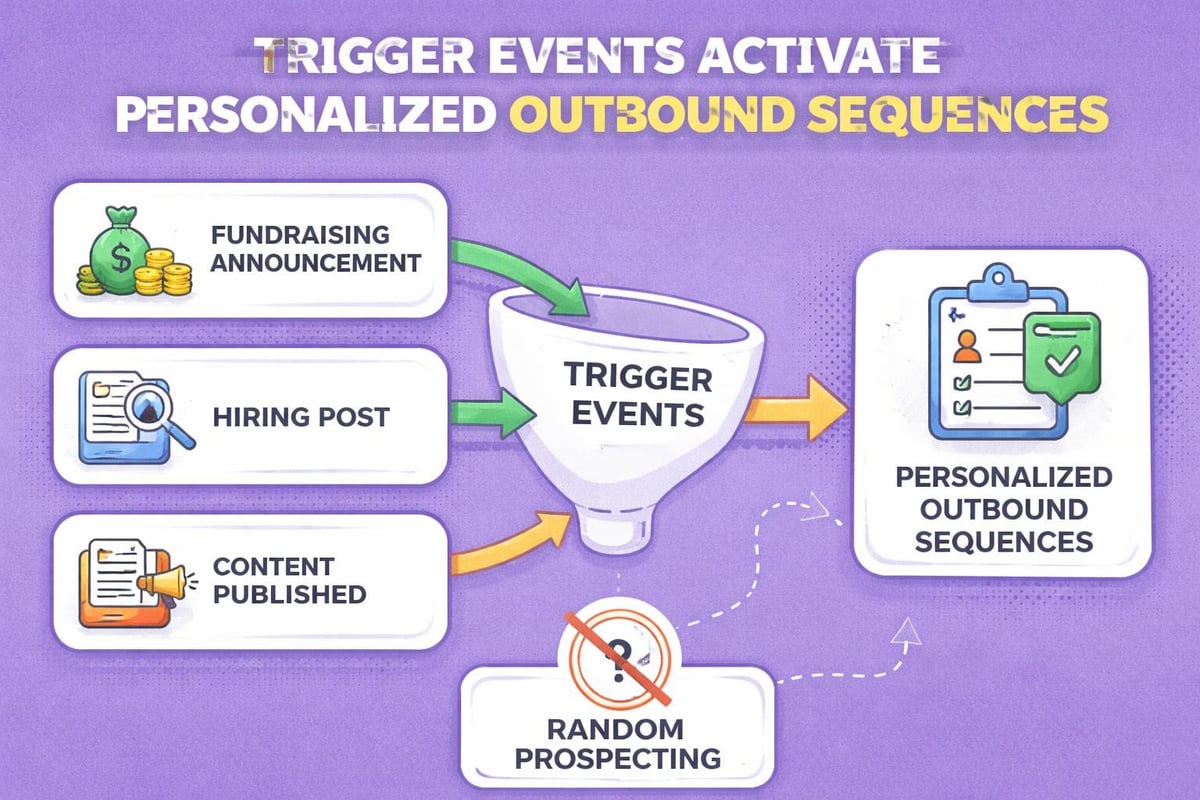
Today's most effective out bound strategies center on signal detection. Rather than targeting prospects based solely on static criteria, forward-thinking organizations identify behavioral triggers that indicate genuine opportunity. These signals include:
- Recent funding announcements that suggest budget availability
- Leadership changes that create reevaluation periods
- Public speaking engagements that reveal strategic priorities
- Hiring patterns that indicate growth initiatives
- Technology stack changes that suggest specific pain points
The critical shift is from interruption-based outreach to relevance-based engagement. When your out bound effort arrives precisely when a prospect faces a challenge you solve, you transform from unwanted noise into valuable resource. Understanding outbound sales techniques becomes crucial for implementing this modern approach effectively.
Trigger-Based Prospecting: The Quality Imperative
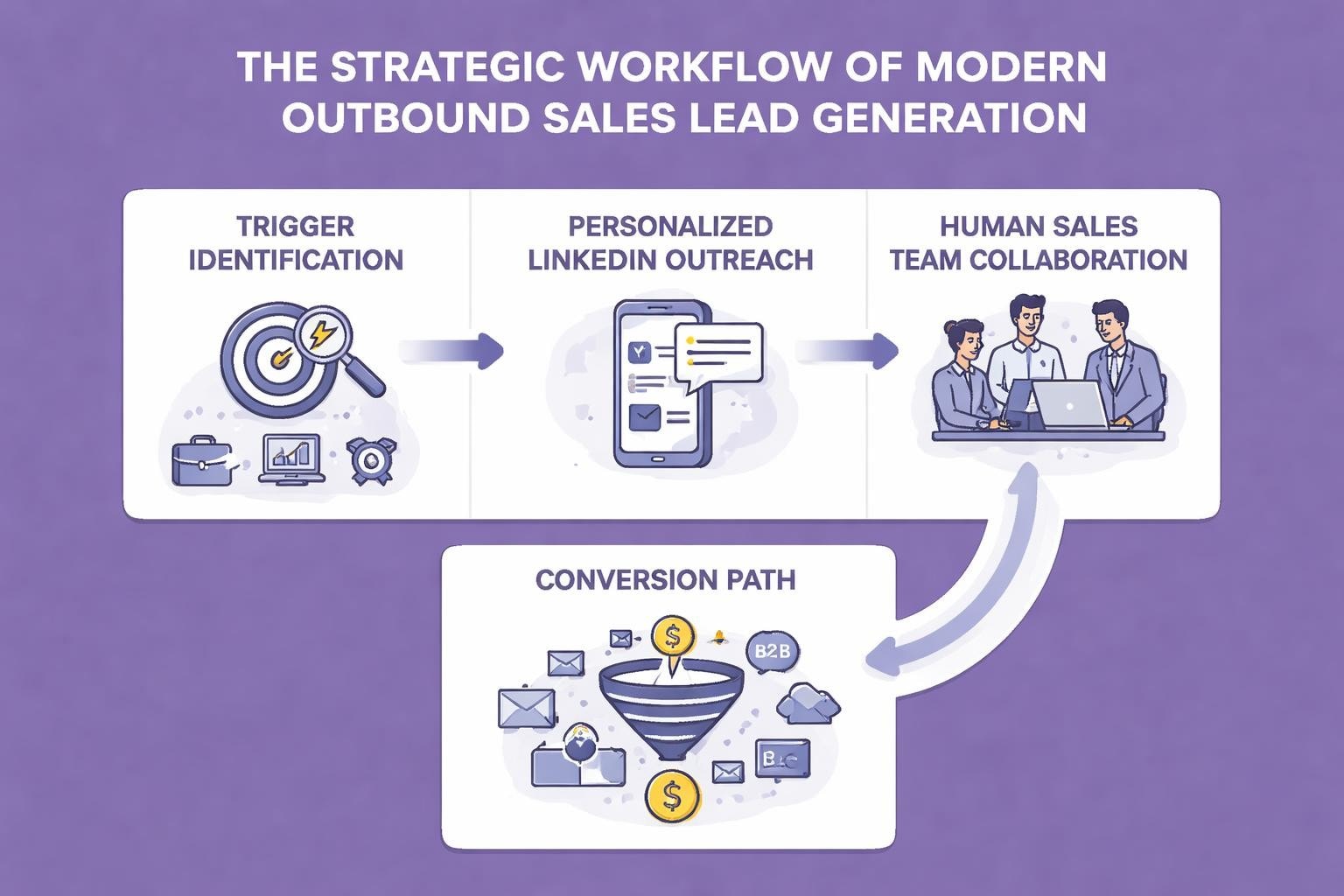
Trigger-based prospecting represents the maturation of out bound methodology. Instead of arbitrary outreach schedules, this approach activates sequences based on observable events that correlate with buying readiness. The philosophy centers on a simple truth: timing matters as much as message.
Consider the difference in impact between these scenarios:
| Traditional Out Bound | Trigger-Based Out Bound |
|---|---|
| Random cold outreach to VP Sales | Outreach triggered by company's Series B announcement |
| Generic value proposition | Message acknowledging recent podcast where prospect discussed specific challenges |
| Pitch sent Monday at 9 AM because "best practice" | Connection request sent hours after prospect publishes article on relevant topic |
| Follow-up based on arbitrary cadence | Follow-up references hiring announcement for roles your solution supports |
This contextual approach dramatically improves response rates while reducing wasted effort. Your sales team focuses energy where genuine opportunity exists, rather than grinding through lists of marginally qualified contacts.
Human-Empowered Automation: Finding the Balance
The market has flooded with AI SDR solutions promising complete automation of the out bound process. While automation delivers undeniable efficiency gains, fully autonomous systems often sacrifice the nuance that distinguishes exceptional from mediocre outreach.
The optimal approach maintains humans in the decision-making loop while automating research, monitoring, and routine tasks. This hybrid model delivers:
Research automation that continuously scans data sources for trigger events across hundreds or thousands of target accounts. Manual monitoring at this scale is impossible, but automated systems excel at pattern recognition and signal detection.
Personalization at scale through AI-assisted message customization that references specific triggers while preserving authentic voice. The technology handles variable insertion and context incorporation; humans ensure strategic alignment and emotional resonance.
Workflow optimization that routes qualified opportunities to the right sales team members at the right moment, eliminating administrative friction while preserving human judgment for relationship-building.
LinkedIn as the Primary Out Bound Channel
For B2B organizations, LinkedIn has emerged as the dominant platform for out bound engagement. The professional context, rich behavioral data, and direct access to decision-makers create advantages no other channel matches. However, LinkedIn success requires sophistication beyond simply sending connection requests.
Effective LinkedIn out bound strategies incorporate:
- Profile optimization that positions sellers as knowledgeable resources rather than quota-driven vendors
- Content engagement that builds familiarity before direct outreach attempts
- Value-first messaging that offers insights before asking for meetings
- Multi-touch sequences that respect the platform's professional norms
The key differentiator in LinkedIn outbound approaches is patience. Unlike email, where immediate conversion attempts are standard, LinkedIn rewards relationship cultivation over time. When combined with trigger-based timing, this creates powerful synergies.
Crafting Out Bound Messages That Resonate
Message quality determines whether sophisticated targeting translates into actual conversations. Even perfectly timed outreach fails when the message itself lacks relevance, clarity, or value. High ACV sales demand high-quality communication.
The most effective out bound messages share common characteristics:
- Specific trigger references that demonstrate research and create context
- Problem focus rather than product features
- Concise value articulation that respects the prospect's time
- Clear next steps that remove friction from engagement
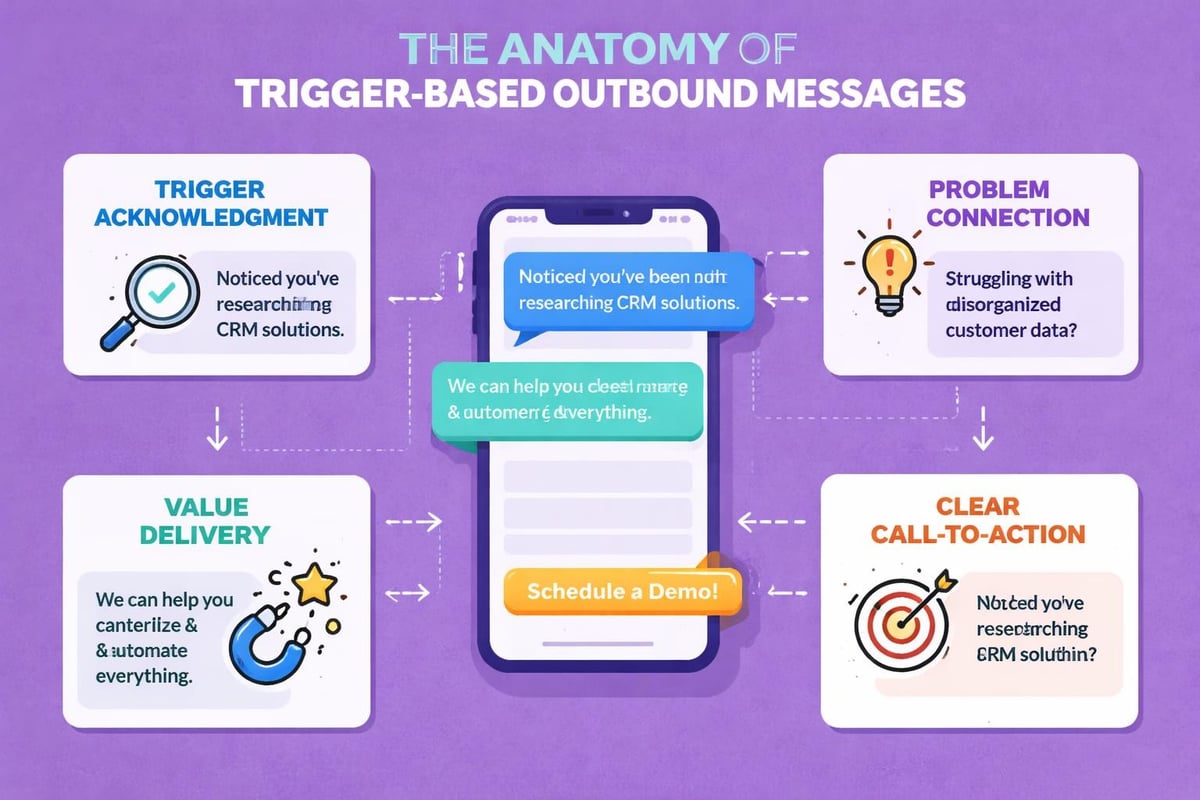
Consider this framework for trigger-based messaging:
Opening: Acknowledge the specific trigger event
Bridge: Connect the trigger to likely implications or challenges
Value: Offer relevant insight, resource, or perspective
Ask: Suggest low-friction next step
This structure ensures your out bound effort delivers immediate value while creating natural pathways toward deeper conversation. Personalizing outreach at scale requires systems that support customization without sacrificing efficiency.
Metrics That Matter for Out Bound Performance
Traditional out bound metrics-dials per day, emails sent, connection requests submitted-measure activity rather than effectiveness. High ACV businesses require outcome-focused metrics that correlate with revenue impact.
Primary Performance Indicators
The metrics that truly matter for modern out bound programs include:
| Metric | Why It Matters | Target Range |
|---|---|---|
| Trigger-to-Outreach Time | Measures speed of opportunity capture | Under 24 hours |
| Response Rate | Indicates message quality and relevance | 15-30% for trigger-based |
| Meeting Conversion | Shows qualification accuracy | 40-60% of responses |
| Pipeline Value Generated | Connects activity to revenue | Varies by ACV |
| Cost Per Qualified Opportunity | Measures efficiency | 70-80% lower than traditional |
Response rate deserves particular attention. While traditional cold out bound might generate 2-5% response rates, trigger-based approaches regularly achieve 15-30% when executed properly. This dramatic improvement reflects both better timing and higher relevance.
Tracking trigger-to-outreach time ensures your systems capitalize on opportunity windows. Research shows that outreach within 24 hours of a trigger event generates significantly higher engagement than delayed contact. The prospect's attention remains focused on the topic your solution addresses.
Building Out Bound Systems for Enterprise Scale
Individual out bound excellence matters, but sustainable success requires systematized processes that scale across growing sales teams. Enterprise-grade out bound programs incorporate several critical components.
Trigger monitoring infrastructure that automatically identifies relevant events across target account universe. This might include:
- Funding databases integration
- Social media monitoring
- News aggregation and filtering
- Job posting trackers
- Technology adoption signals
Territory assignment logic that routes opportunities based on account ownership, rep specialization, or workload balancing. Clear rules prevent conflicts and ensure appropriate follow-through.
Message template libraries organized by trigger type, buyer persona, and sales stage. Templates provide consistency while allowing customization for specific contexts. Proven outbound sales agency strategies often emphasize this systematized approach.
Multi-Channel Integration
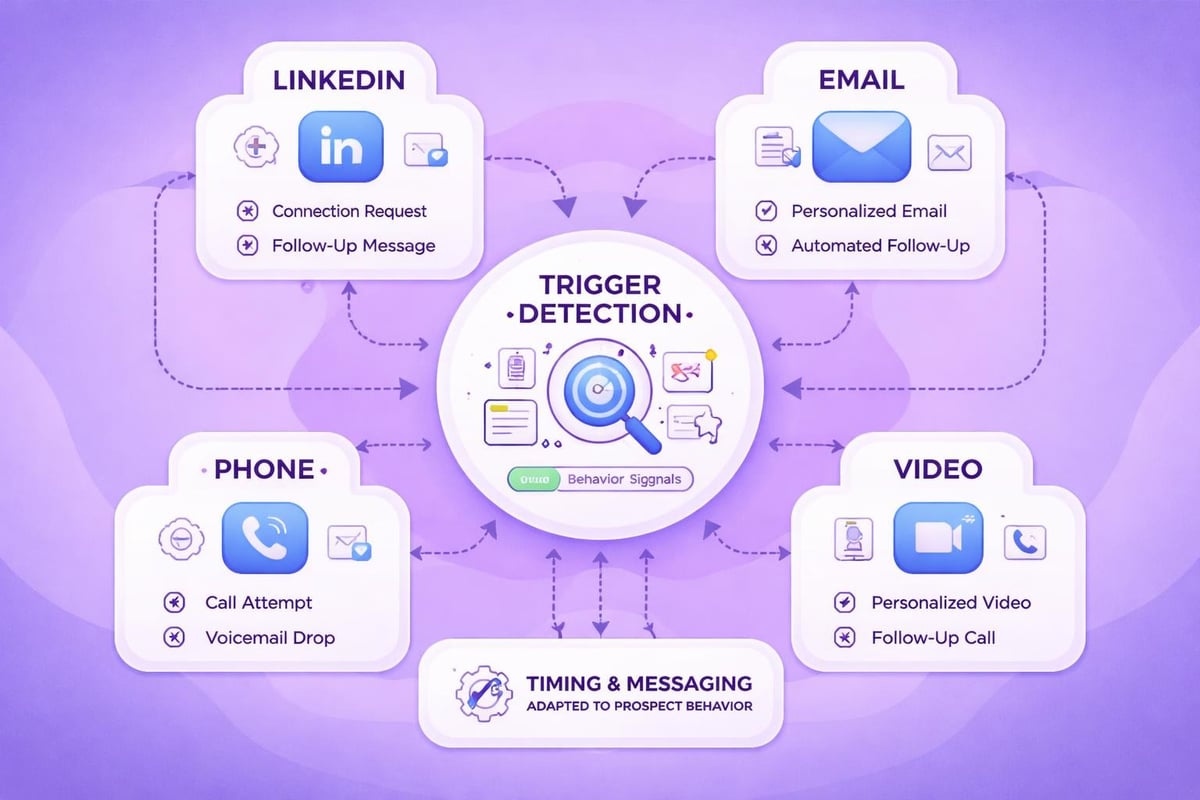
While LinkedIn dominates B2B out bound, the most sophisticated programs orchestrate touchpoints across multiple channels. A comprehensive sequence might include:
- LinkedIn connection request with trigger reference
- Profile engagement (comment on recent post)
- Follow-up LinkedIn message if connection accepted
- Email to business address with additional value
- Phone call for high-priority opportunities
- Video message for executive-level prospects
This multi-channel approach recognizes that different prospects prefer different communication modes. Outbound sales strategies increasingly emphasize channel diversification for maximum reach and effectiveness.
Common Out Bound Pitfalls and How to Avoid Them
Even organizations with sophisticated strategies encounter predictable challenges that undermine out bound effectiveness. Awareness of these pitfalls enables proactive mitigation.
Trigger misinterpretation occurs when teams detect signals without understanding their implications. A hiring announcement might indicate growth opportunity-or desperation. Context matters enormously. Training teams to analyze triggers rather than simply react to them improves outreach quality.
Automation over-reliance creates generic, obviously templated messages that destroy credibility. The goal is human-quality outreach at scale, not robotic spam at volume. Regular message audits ensure automation enhances rather than replaces authentic communication.
Inadequate follow-up systems waste initial outreach investments. Increasing LinkedIn response rates requires persistent, value-adding follow-up that most teams execute inconsistently.
Misaligned incentives that reward activity over outcomes encourage quantity-over-quality behaviors. Compensation structures should emphasize qualified opportunities and closed revenue, not contact volume.
The Future of Out Bound: Predictions for 2026 and Beyond
Out bound sales continues evolving as technology capabilities expand and buyer expectations shift. Several trends will shape the landscape through the remainder of 2026 and beyond.
Predictive Trigger Modeling
Advanced analytics will move beyond reactive trigger identification to predictive modeling that anticipates likely trigger events. Machine learning algorithms analyzing historical patterns might predict which companies will announce funding rounds, leadership changes, or expansion initiatives before public disclosure.
Conversational AI Integration
While maintaining humans in the loop remains critical for relationship building, AI will increasingly handle initial qualification conversations. Natural language processing capabilities now enable sophisticated dialogue that identifies genuine opportunity without human intervention at every step.
Privacy-Compliant Data Strategies
Evolving privacy regulations will require more sophisticated data acquisition and management practices. Successful out bound programs will balance comprehensive prospect intelligence with rigorous compliance frameworks. Effective outbound sales performance will increasingly depend on ethical data practices.
Measuring Out Bound ROI for High ACV Sales
High average contract value sales cycles extend across months or even years, complicating traditional ROI calculations. However, out bound investments still require financial justification.
The most accurate ROI frameworks for high ACV out bound track:
- Pipeline creation velocity: How quickly does out bound generate qualified pipeline compared to inbound channels?
- Pipeline quality: What percentage of out bound opportunities advance to late stages versus stalling early?
- Win rate differential: Do out bound deals close at comparable rates to other sources?
- Time-to-close analysis: Does out bound accelerate or extend sales cycles?
- Customer lifetime value: Do out bound customers exhibit different retention or expansion patterns?
These metrics provide comprehensive understanding beyond simplistic cost-per-lead calculations. A high ticket sales playbook should incorporate these sophisticated measurement approaches.
Training Sales Teams for Modern Out Bound
Technology enables sophisticated out bound strategies, but execution still depends on skilled sales professionals. Training programs must evolve beyond traditional cold calling techniques.
Modern out bound training should develop:
Research competency that enables reps to quickly understand prospect context, competitive landscape, and strategic priorities. Surface-level personalization no longer suffices; buyers expect genuine insight.
Message crafting skills that transform trigger observations into compelling narrative hooks. This requires understanding buyer psychology, pain point prioritization, and value articulation.
Channel expertise across LinkedIn, email, phone, and emerging platforms. Each channel demands different approaches, pacing, and messaging styles.
Objection handling updated for sophisticated buyers who've encountered countless out bound attempts. Generic responses to "not interested" fail; nuanced value reframing succeeds.
Investment in sales development pays compounding returns as skilled practitioners generate consistently higher performance across all out bound metrics. Understanding best practices for outbound lead generation provides foundational knowledge teams can build upon.
Technology Stack Considerations
Effective out bound at scale requires integrated technology infrastructure. The core components include:
CRM systems that serve as central data repositories and workflow engines. Salesforce, HubSpot, or similar platforms provide foundational capabilities most organizations require.
Sales engagement platforms that orchestrate multi-channel sequences, track activity, and measure performance. These tools transform manual processes into systematized operations.
Data enrichment services that provide current contact information, firmographic details, and technographic intelligence. Quality data determines whether sophisticated targeting strategies can execute.
Trigger monitoring solutions that identify relevant events across target accounts. This capability separates reactive from proactive out bound approaches.
Analytics platforms that transform activity data into actionable insights about what's working, what's not, and where opportunities exist for optimization.
The specific vendors matter less than ensuring seamless integration across tools. Data should flow effortlessly between systems, creating unified views of prospect interactions and campaign performance.
Modern out bound success demands strategic sophistication that balances automation efficiency with human judgment, leverages behavioral triggers for precision timing, and prioritizes quality engagement over volume metrics. The organizations that embrace these principles generate pipeline more efficiently while building stronger prospect relationships. Samplead empowers high ACV B2B sales teams with trigger-based prospecting automation that keeps humans in the loop, ensuring every out bound interaction arrives at the perfect moment with maximum relevance-quality over quantity, always.