Achieving business success in 2026 requires more than just ambition. Today’s rapidly evolving landscape means that organizations must define target objectives clearly to drive meaningful results and maintain a competitive edge.
Many leaders want actionable strategies to set, refine, and achieve their goals efficiently. This guide delivers exactly that, offering step-by-step strategies, real-world examples, and proven frameworks to help you define target outcomes for lasting success.
Explore the fundamentals of target definition, discover the latest strategic frameworks, and learn how data, technology, and practical execution can turn your 2026 vision into reality.
Understanding the Importance of Defining Your Target
In today’s fast-paced business landscape, the ability to define target objectives is the cornerstone of long-term success. A well-defined target acts as a compass, guiding every decision and resource allocation. According to Harvard Business Review, 78% of high-performing organizations set clear, measurable objectives, highlighting just how critical it is to establish clarity from the outset. For a deeper dive into the benefits of clear goal-setting, explore this Importance of Clear Business Goals resource.
When you define target outcomes with precision, you ensure that every team member and resource is moving in the same direction. This alignment maximizes efficiency and reduces wasted effort. Teams with a shared understanding of their targets are more agile, respond faster to change, and outperform competitors who lack this clarity.
Failing to define target goals can lead to costly consequences. Vague or shifting objectives often result in wasted resources, miscommunication, and missed opportunities. Organizations that do not prioritize target clarity struggle to adapt, lose their competitive edge, and may find themselves outpaced by more focused rivals.
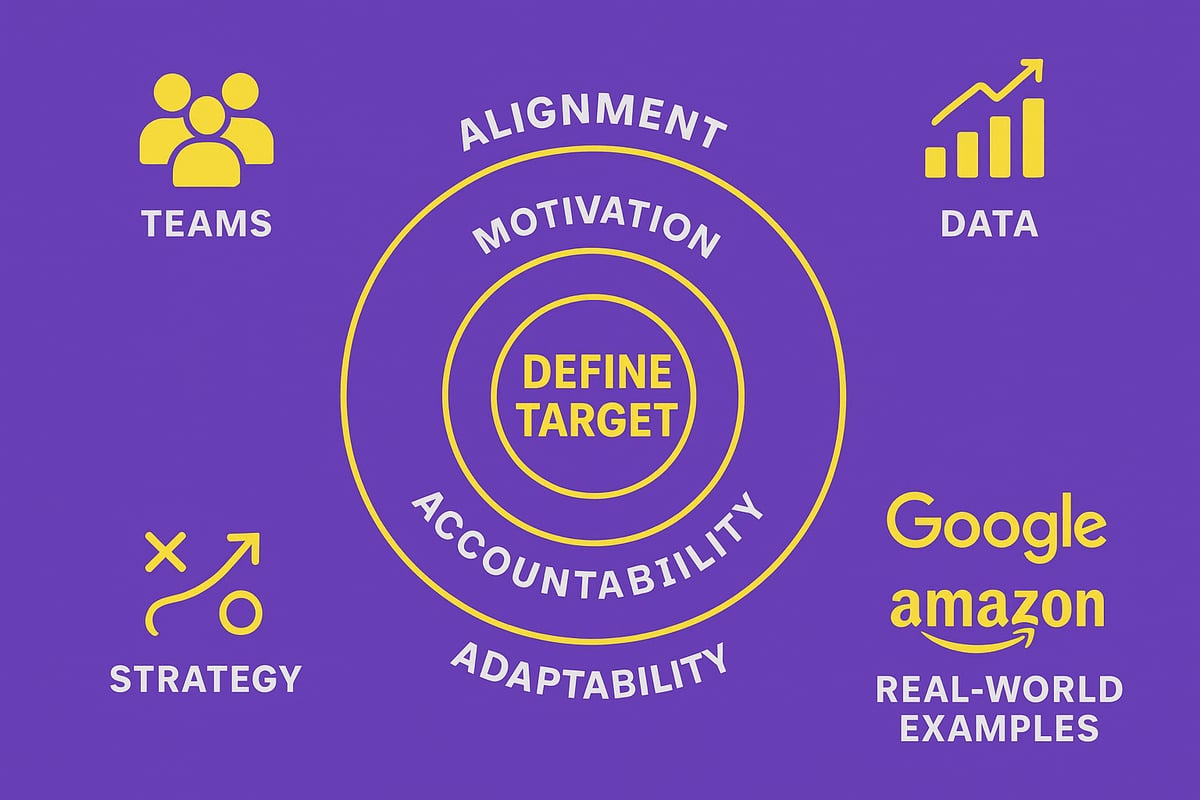
Industry giants like Google and Amazon showcase the power of precise target-setting. Google’s use of OKRs (Objectives and Key Results) and Amazon’s relentless focus on customer-centric targets demonstrate how to define target strategies that drive growth and innovation. These companies consistently outperform peers by ensuring every initiative is tied to a clear, measurable goal.
The psychological impact of taking time to define target ambitions cannot be overstated. Clear targets increase motivation, foster accountability, and sharpen focus at every organizational level. Importantly, target definition is not a one-time event but an ongoing, adaptive process that must evolve as market dynamics and business needs change.
Step-by-Step Framework: How to Define Your Target for 2026
In today’s fast-changing business world, a clear framework is crucial if you want to define target effectively for 2026. Without structure, even the best intentions can lead you off course. Use this step-by-step process to map your path, align your team, and set yourself up for measurable success.
Step 1: Assess Your Current Position
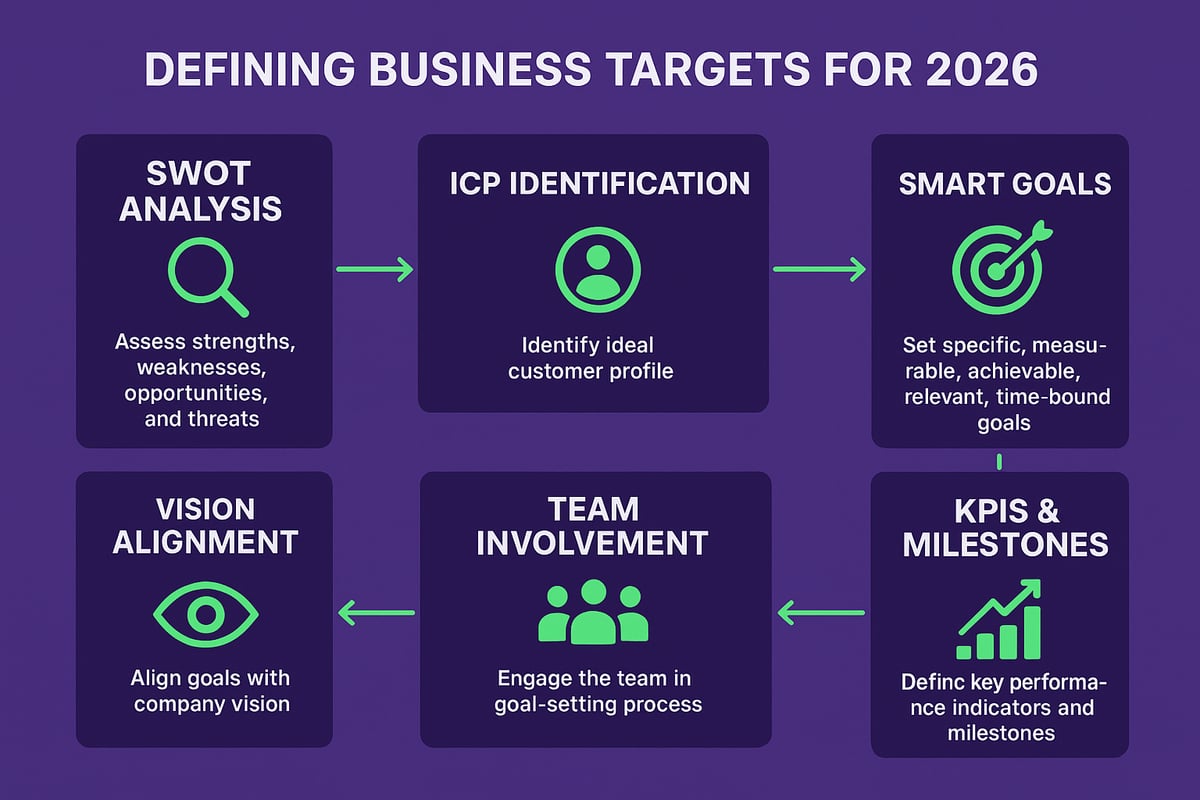
Start by examining where you stand. To define target accurately, you must know your strengths, weaknesses, opportunities, and threats. Use a simple SWOT analysis. Review competitor benchmarks and conduct a fresh market analysis. This clarity helps you spot gaps and areas for growth.
- List your company’s unique strengths and weaknesses.
- Identify market opportunities and potential threats.
- Compare your current status with industry leaders.
A thorough assessment grounds your ambitions in reality and ensures your define target process begins with solid data.
Step 2: Identify Your Ideal Customer Profile and Core Market Segments
Next, pinpoint who you want to serve. Define target audiences by creating a detailed Ideal Customer Profile (ICP). Segment your market based on needs, behaviors, and value. This step prevents wasted effort on the wrong prospects.
If you need more actionable strategies, check out ways to find your target audience for practical tips. Remember, the more precisely you define target customers, the better your results.
Step 3: Set SMART Goals Tailored to 2026 Trends
With your audience clear, define target objectives using the SMART framework: Specific, Measurable, Achievable, Relevant, and Time-bound. Factor in emerging trends for 2026, such as AI, sustainability, or remote work. Avoid vague ambitions; instead, set clear, quantifiable milestones that drive action.
- Be specific about what you want to achieve.
- Measure progress with concrete metrics.
- Ensure goals are realistic and relevant.
- Set a clear deadline.
SMART goal-setting gives your define target process structure and accountability.
Step 4: Align Targets with Vision, Mission, and Values
To truly define target in a way that sticks, align every goal with your organization’s vision, mission, and values. This ensures that every target supports your broader purpose, not just short-term gains.
- Review your mission statement.
- Cross-check that each target advances your vision.
- Make sure your values are reflected in your goals.
Alignment at this stage creates buy-in and keeps teams motivated.
Step 5: Involve Cross-Functional Teams for Buy-In
No one succeeds in a vacuum. Involve leaders from sales, marketing, product, and operations to define target collaboratively. Diverse perspectives highlight risks, uncover opportunities, and foster ownership.
- Hold workshops or brainstorming sessions.
- Encourage open feedback and discussion.
- Assign clear roles and responsibilities.
When everyone contributes, your define target plan is stronger and execution is smoother.
Step 6: Establish KPIs and Milestones
Now, turn targets into action by setting key performance indicators (KPIs) and milestones. Choose metrics that truly reflect progress toward your goals. Break big objectives into smaller, trackable steps.
| Step | Action | Example KPI |
|---|---|---|
| Sales Growth | Increase revenue by 20% | Monthly sales |
| Engagement | Boost customer NPS by 10% | NPS survey scores |
| Efficiency | Cut costs by 8% | Cost per project |
Track each KPI regularly. This will help you define target achievements and spot issues early.
Step 7: Build in Agility—Plan for Regular Review and Adjustment
The world never stands still. To define target for 2026, you must be ready to adapt. Schedule regular reviews—quarterly or even monthly. Use performance data to adjust your course as markets shift.
- Set up recurring check-ins.
- Analyze results and gather feedback.
- Pivot strategies as needed.
Agility ensures your define target approach remains relevant, actionable, and successful.
Final Thoughts: Make the Framework Work for You
By following these steps, you create a living roadmap. To define target is not a one-time task, but an ongoing commitment. Stay disciplined, keep your eyes on the data, and adapt as 2026 unfolds. This is how you turn ambition into achievement.
Leveraging Data and Analytics in Target Setting
In today’s fast-moving business world, relying on gut instinct is no longer enough to define target objectives that drive real results. Data and analytics are now the foundation for organizations that want to stay ahead in 2026. By putting robust data at the heart of your target-setting process, you can transform vague ambitions into measurable, evidence-based goals.
Why Data is Essential to Define Target
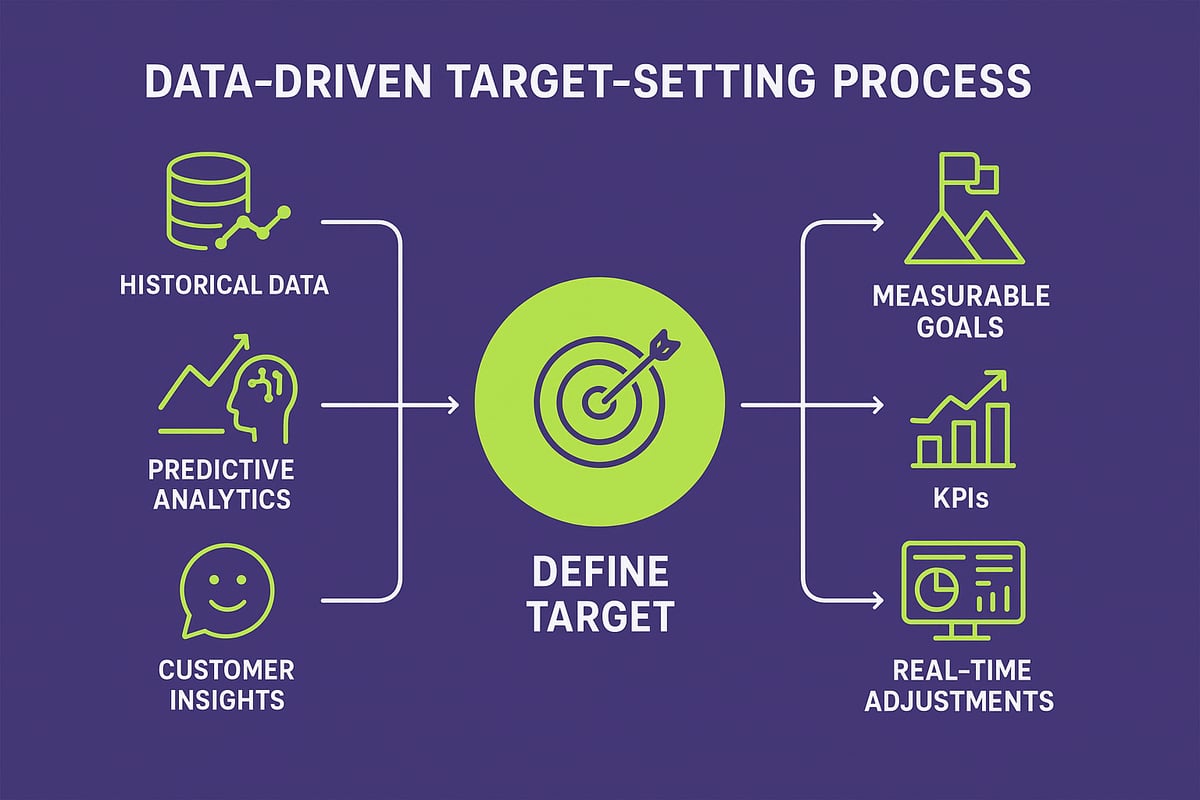
Data is the backbone of any effort to define target outcomes that actually matter. High-performing organizations rely on data to move beyond guesswork, ensuring their objectives reflect real market conditions and internal capabilities. According to McKinsey, companies using analytics-driven targets are 2.5 times more likely to exceed their goals.
With access to the right data, you can spot opportunities, avoid risks, and set priorities that align with your vision for 2026. Data also brings transparency to the process, making it easier to communicate goals across teams.
If you want a deeper dive into why data matters so much, check out this resource on the importance of building a data-driven sales strategy.
From Historical Data to Predictive Power
The journey to define target goals starts with understanding where you stand today. Historical performance data reveals patterns in revenue, customer behavior, and operational bottlenecks. By analyzing this information, you can set realistic benchmarks that are based on evidence, not assumptions.
But looking backward is only half the story. Predictive analytics and market forecasting tools help you anticipate trends and shifts for 2026. For example, AI-powered models can project sales growth under different scenarios, letting you adjust your targets proactively. This forward-looking approach ensures your goals stay relevant, even as the market evolves.
Customer Insights: The Human Element
Numbers alone can’t define target success. Customer insights, Net Promoter Score (NPS), and behavioral data add a human dimension to analytics. By integrating feedback and preferences, you can set targets that truly resonate with your audience.
Consider a retailer that uses AI-driven analytics to monitor customer buying patterns in real time. Midway through the year, they notice a shift in demand and adjust their sales targets instantly. This agility wouldn’t be possible without a data-rich approach, showing how analytics empower businesses to pivot when it matters most.
Data-Driven Accountability for 2026 Success
When you define target objectives using data, accountability naturally follows. Teams know exactly what they’re aiming for, and progress can be tracked with clear key performance indicators (KPIs). Dashboards and automated reports provide instant visibility, making it easy to spot issues early and celebrate wins.
Data-driven target setting not only reduces guesswork but also boosts confidence across the organization. As you refine your approach for 2026, remember that the best strategies are rooted in facts, not hunches. Embrace analytics, and you’ll be better equipped to define target outcomes that deliver lasting results.
Integrating Technology and Automation for Target Achievement
Adapting to 2026 means companies must redefine how they define target objectives and execute plans. Technology has moved from a supporting role to a central driver in goal achievement. Businesses that embrace digital transformation are not just keeping up—they are outpacing the competition.
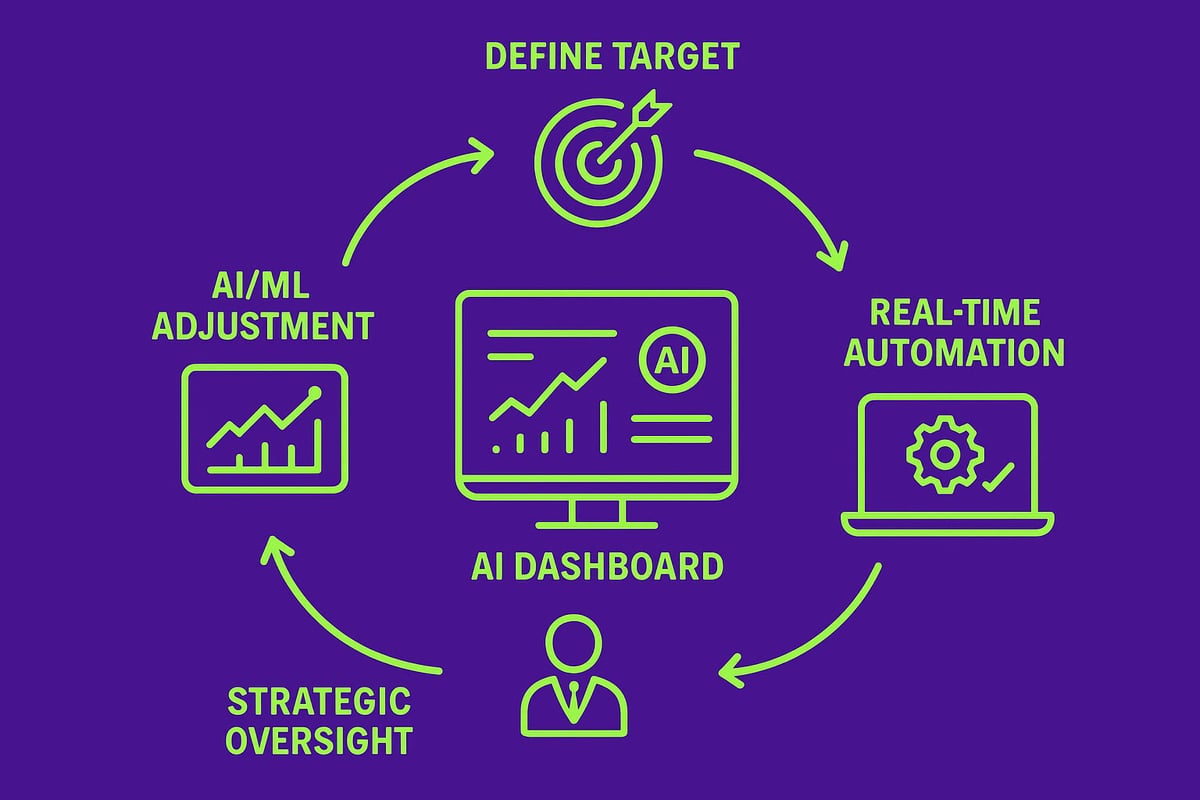
AI and machine learning have revolutionized how organizations define target benchmarks and adapt to new data. These technologies process vast datasets, uncover trends, and predict shifts before they happen. They empower leaders to pivot quickly, making decisions based on predictive analytics instead of gut feelings. By automating target adjustments, AI reduces human error and boosts accuracy.
Automation tools are now essential for tracking progress in real time. Platforms like workflow automation software and KPI dashboards centralize information, making it easy to spot issues and opportunities instantly. For a deeper dive into how strategic frameworks and automation align to achieve business targets, check out these effective outbound sales strategies for 2026. These solutions make it simple to define target milestones, assign accountability, and keep teams aligned.
Yet, technology is only as powerful as the people guiding it. While AI and automation streamline workflows, human judgment remains critical. Leaders must interpret data, set priorities, and ensure that tech-driven insights match organizational values. The ability to define target outcomes with both data and intuition is what separates top performers from the rest.
Consider the case of a global enterprise that automated its KPI monitoring. By integrating workflow automation, managers received instant updates on progress, allowing for immediate interventions when targets lagged. This approach did more than just define target success—it created a culture of agility and accountability that drove sustained results.
Technology accelerates the journey to goal achievement, but strategic oversight ensures you stay on course. As you define target strategies for 2026, blend digital tools with human expertise for the best possible outcomes.
Practical Strategies for Sustaining Target Success
Achieving your goals is only half the battle. To truly define target success in 2026, you need sustainable strategies that keep your team focused, accountable, and adaptable. The journey does not end when you set objectives—it evolves as your business landscape shifts. Let us explore actionable ways to maintain momentum and ensure your targets drive real results.
Build Accountability Into Every Step
Accountability is the backbone of any effort to define target success. Set up regular reviews to track progress and identify obstacles early. Use transparent dashboards to make data visible to all stakeholders, encouraging ownership and clarity. Establish clear communication channels so everyone knows their role in achieving your defined target.
| Accountability Tool | Purpose | Benefit |
|---|---|---|
| Progress Dashboards | Visualize performance | Immediate transparency |
| Scheduled Reviews | Assess and realign | Early course correction |
| Open Communication | Share updates | Prevent misalignment |
Studies show that 65% of organizations miss their targets due to lack of follow-through (Gartner, 2023). When you define target milestones and review them consistently, you keep your team engaged and motivated.
Incentivize and Recognize Achievement
People thrive when their efforts are noticed. To define target achievement in a way that lasts, link progress to recognition and rewards. This can be as simple as public acknowledgment in meetings or as structured as a performance-based bonus.
Consider how goal setting impacts employee engagement—organizations with clear, measurable targets see higher commitment and better outcomes. Regularly celebrate wins, both big and small, to reinforce the value of reaching each defined target.
Adapt Targets as Conditions Change
No plan survives unchanged. The most effective way to define target success is to remain agile and ready to pivot. Monitor market trends, customer feedback, and internal performance data to spot when a shift is needed.
If market disruptions arise, be prepared to update your defined target and communicate these changes swiftly. Use feedback loops and scenario planning to stay ahead of the curve, ensuring your strategy remains relevant and actionable.
Foster Collaboration Across Teams
Breaking down silos is crucial when you define target objectives that require input from multiple departments. Encourage cross-functional teams to work together, share insights, and align their efforts toward the same goals.
Regular joint meetings, collaborative tools, and shared KPIs help unify the organization. When everyone understands and contributes to the defined target, collective accountability and innovation flourish.
Case Example: Healthcare Provider Pivot
Consider a healthcare provider facing sudden regulatory changes. Their initial plan to define target growth was disrupted, but by quickly gathering cross-departmental input and reviewing their objectives, they adapted. The team realigned their priorities, updated KPIs, and communicated transparently, ensuring everyone understood the new direction. This proactive approach allowed them to not only survive the shift but uncover new opportunities for growth.
In summary, to define target success in 2026 and beyond, combine discipline with flexibility. Build strong accountability structures, reward achievement, adapt to change, and foster collaboration. When you weave these practices into your culture, your targets become more than numbers—they become a roadmap to lasting success.