TL;DR
- The outbound sales process in 2026 is driven by AI, automation, and real-time trigger-based prospecting.
- Success depends on defining your ICP, leveraging data, and personalizing at scale.
- Multi-channel outreach (LinkedIn, email, video, phone) is essential for engagement.
- Automation tools streamline tasks, but human oversight and compliance remain critical.
- Personalization, compliance with regulations, and continuous optimization are key.
- Actionable resources and expert answers to common questions are provided below.
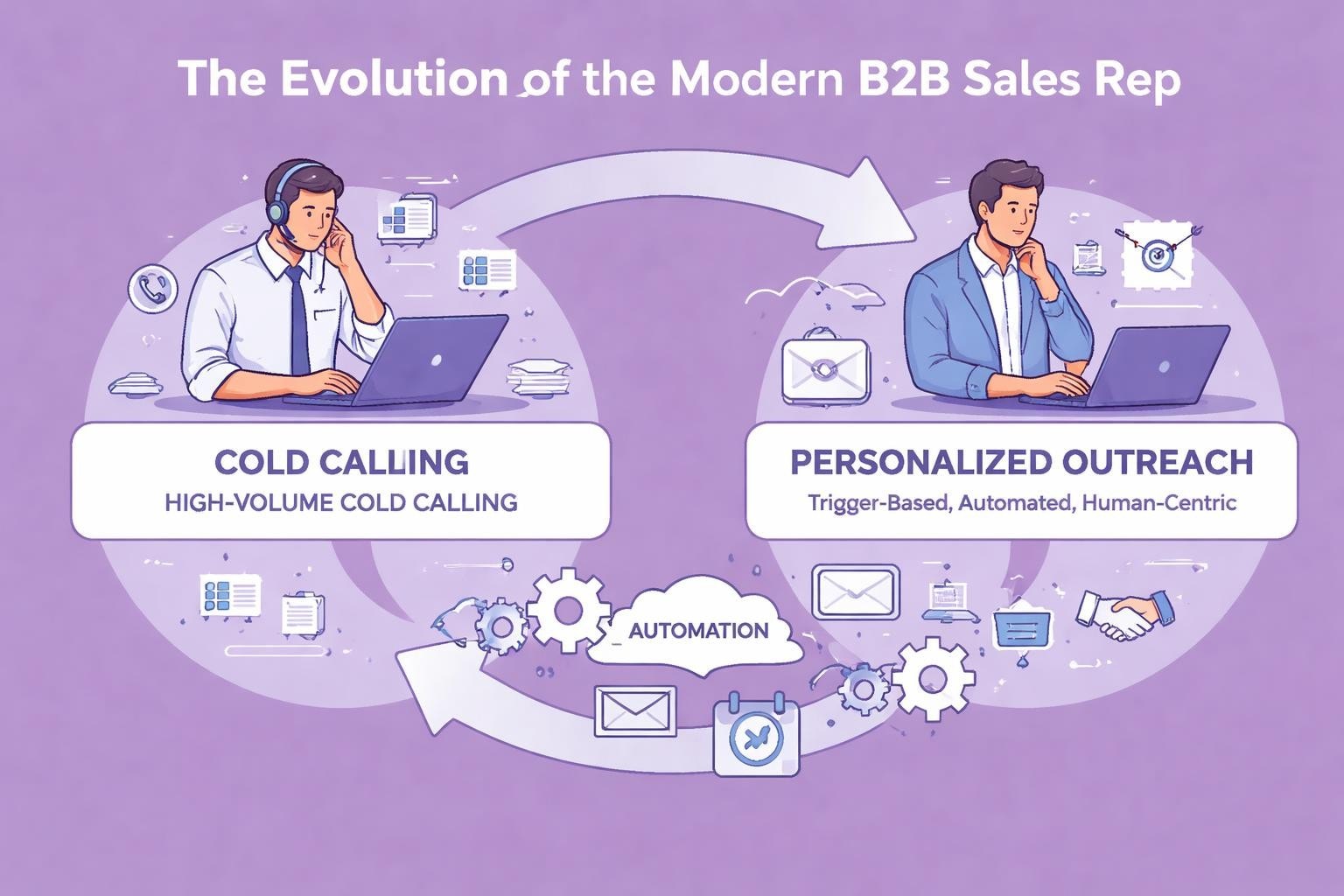
Outbound sales is transforming faster than ever, and by 2026, teams that adapt will lead the pack. The outbound sales process is no longer about mass emails or cold calls—it's about leveraging AI, real-time triggers, and hyper-personalization to break through the noise. In this guide, you'll learn every step of the modern outbound sales process, from defining your ideal customer to using automation and data-driven strategies for better results. We'll unpack the latest tools, compliance essentials, and expert tactics you need to stay ahead. For a deeper dive on what's changing, check out the outbound sales trends for 2026 shaping the future of B2B success.

Understanding the 2026 Outbound Sales Landscape
The outbound sales process is undergoing a rapid transformation as new technologies, buyer expectations, and regulations reshape the industry. To stay ahead in 2026, sales teams must understand the emerging landscape and adapt their outbound sales process for sustained growth.

Key Trends Shaping Outbound Sales
Several major trends are redefining the outbound sales process for 2026. AI and automation are at the forefront, allowing sales teams to scale outreach and improve targeting. According to AI adoption in sales statistics, 70% of sellers now rely on AI tools for tasks like email writing and prospect research.
Hyper-personalization is now essential, as buyers expect outreach to reflect their industry, role, and recent activities. Multi-channel engagement—combining LinkedIn, email, phone, and video—ensures higher response rates. Data privacy and compliance, including GDPR and CCPA, are non-negotiable as regulations tighten. Real-time intent data and actionable triggers have become central to identifying the right prospects at the right moment.
- Rise of AI and automation in outreach
- Shift toward hyper-personalization
- Multi-channel engagement strategies
- Data privacy and compliance focus
- Real-time intent and trigger integration
These trends are making the outbound sales process more dynamic and effective.
The Importance of Trigger-Based Prospecting
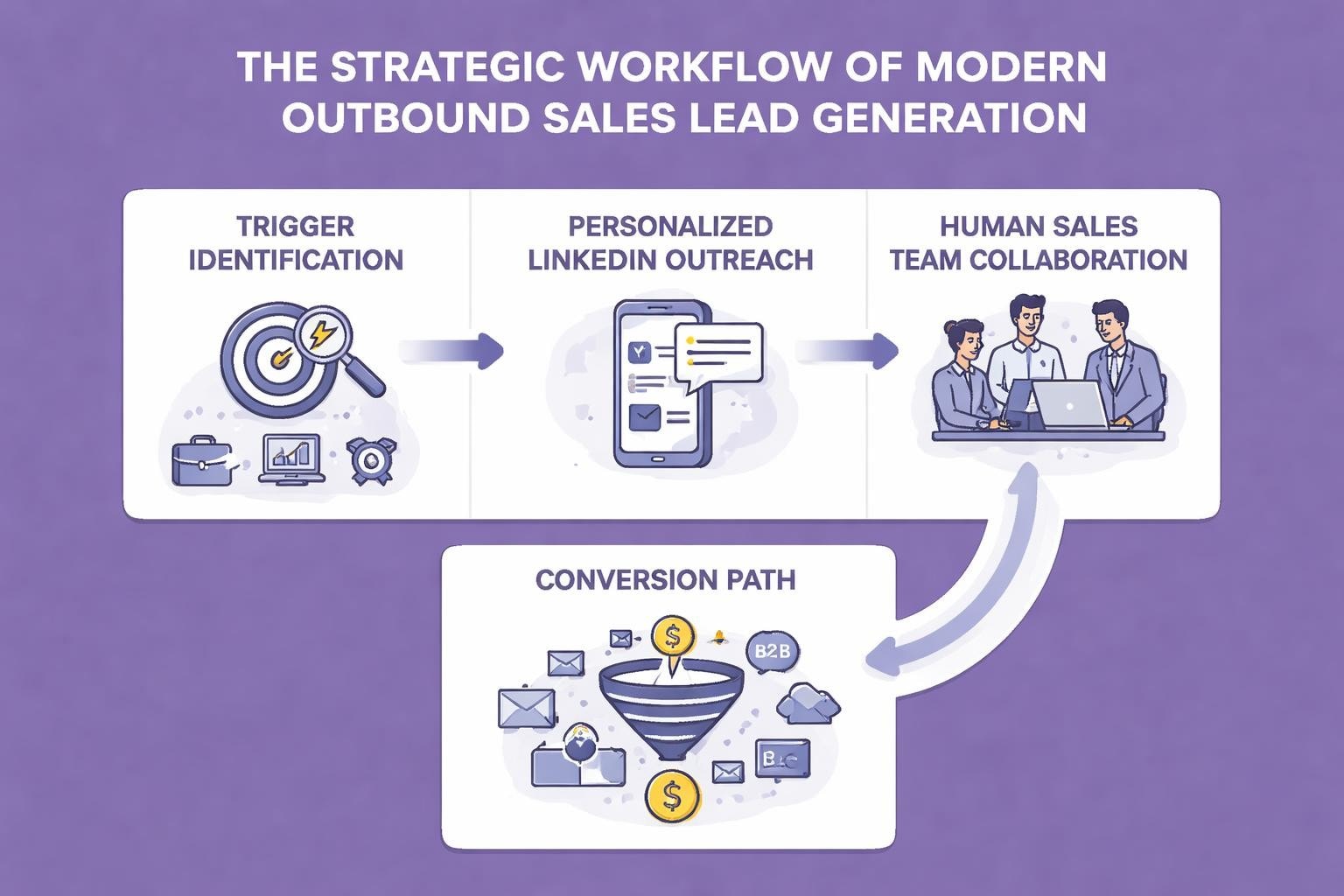
Trigger-based prospecting is a cornerstone of the modern outbound sales process. It involves reaching out to prospects based on timely, relevant events—such as funding rounds, leadership changes, news mentions, or content engagement.
Types of triggers include:
- Company funding or acquisitions
- Significant hiring activity
- Executive job changes
- Engagement with company content
Using triggers leads to more relevant outreach, higher response rates, and faster pipeline velocity. For example, triggered emails see three times higher open rates compared to static outreach. By focusing on real-time events, sales teams can ensure their outbound sales process stands out from competitors using outdated, static lists.
Challenges and Opportunities for B2B Sales Teams
B2B sales teams face new challenges in the 2026 outbound sales process. Digital noise and buyer fatigue make it harder to capture attention. Balancing automation with a personal touch is crucial, as buyers value authentic interactions. Longer, more complex buying cycles require persistent, thoughtful engagement.
However, these challenges come with opportunities. AI-human collaboration unlocks efficiency and creativity. Teams that master both data-driven automation and relationship-building will thrive.
| Challenge | Opportunity |
|---|---|
| Buyer fatigue | Personalization at scale |
| Compliance requirements | Trust-building through transparency |
| Longer buying cycles | Consistent, multi-channel nurture |
To maximize results, sales teams must refine their outbound sales process, embrace new tools, and stay agile as the landscape evolves.
Step 1: Defining Your Ideal Customer Profile (ICP) and Target Market
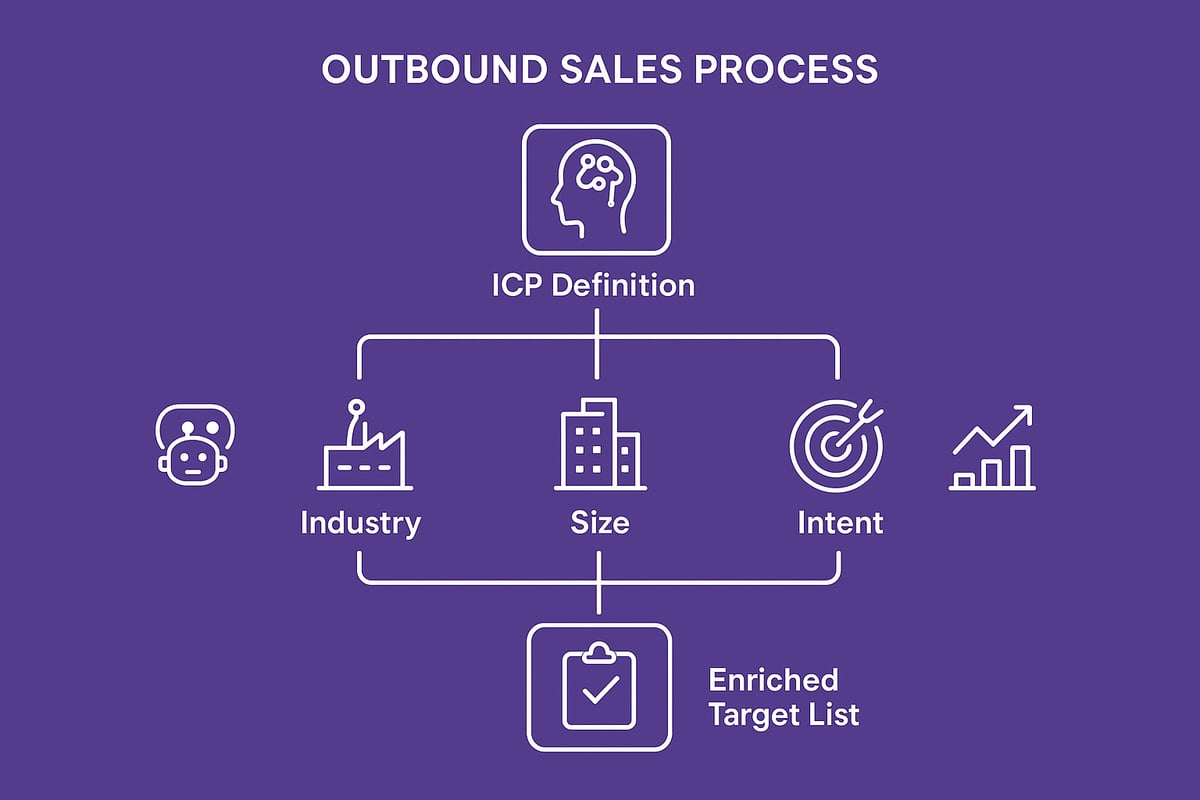
Defining your ideal customer profile is the cornerstone of a high-performing outbound sales process. Without a clear ICP and targeted approach, your outreach can waste time and resources. In 2026, data-driven strategies and AI tools make it easier than ever to pinpoint, segment, and reach the right prospects with precision.
Building a Data-Driven ICP
A robust outbound sales process begins with a well-defined ICP. Analyze your historical win and loss data to uncover patterns among your best customers. Look for key firmographics, such as company size, industry, and location, as well as technographics like tech stack or digital maturity.
Leverage AI and predictive analytics to refine your ICP further. Modern platforms can surface hidden attributes and buying signals that manual analysis might miss. For example, a SaaS provider improved its close rate by 20 percent after using AI to adjust its ICP based on real-time data.
Avoid common pitfalls by reviewing Defining your ideal customer profile for expert tips and mistakes to sidestep. By grounding your outbound sales process in data and continuous learning, you maximize your chances of reaching high-value prospects.
Segmentation and Personalization at Scale
Once your ICP is set, segment your target market to personalize outreach at scale. Use advanced segmentation based on industry, company size, buyer intent, or relevant trigger events. Dynamic segmentation tools like Apollo and ZoomInfo allow you to update lists in real time as new data emerges.
Personalized outreach is crucial for a successful outbound sales process. Tailor your messaging to each segment’s unique pain points and goals. For example, LinkedIn data shows that personalized InMails outperform generic ones by 112 percent, highlighting the power of relevance.
When you align segmentation with your ICP, you ensure that every message resonates, building trust from the very first touchpoint.
Sourcing and Enriching Target Lists
The final step in preparing your outbound sales process is sourcing and enriching your target lists. Start with reputable data providers and keep your lists clean with regular data hygiene practices. Enrich your records using intent data platforms, which reveal when prospects are actively researching solutions like yours.
Always prioritize compliance. Make sure your data sourcing aligns with GDPR and CCPA requirements. This not only protects your organization from fines but also builds trust with prospects.
For a deeper dive into account-based marketing and enrichment, check out the Gartner Guide to Account-Based Marketing.
Step 2: Trigger-Based Prospecting and Outreach Strategies
Trigger-based prospecting has become a game-changer in the outbound sales process, equipping B2B teams with the ability to reach prospects at precisely the right moment. By leveraging real-time data, sales teams can transform generic outreach into timely, relevant conversations that drive better results.
Leveraging Real-Time Triggers for Outreach
In the modern outbound sales process, real-time triggers are essential for high-impact prospecting. These triggers can include funding announcements, executive hires, product launches, or increased engagement with your content. By monitoring these signals, teams can prioritize outreach to prospects when they are most likely to respond.
Leading tools like LinkedIn Sales Navigator and Crunchbase deliver instant alerts about relevant events. For example, when a target account secures new funding, your outbound sales process can immediately pivot to offer tailored solutions. Companies that implement trigger-based outreach have reported a 40% increase in meetings booked, proving that timing is everything in sales.
Personalization vs. Automation: Finding the Balance
Striking the right balance between personalization and automation is vital for a high-performing outbound sales process. AI-powered platforms can suggest message templates and personalize details at scale, but human oversight is crucial to maintain authenticity and context.
Sales reps should use AI to identify intent signals and draft messages, then review and refine them to ensure relevance. This approach combines the efficiency of automation with the trust-building of genuine communication. Recent studies show that AI-personalized emails in the outbound sales process deliver a 6x ROI, but only when paired with a human touch.
Multi-Channel Prospecting Techniques
A successful outbound sales process uses a multi-channel approach, engaging prospects across LinkedIn, email, phone, and video. Sequencing outreach—starting with a LinkedIn connection, followed by a personalized email, and then a quick call—can dramatically increase reply rates.
Best practices include adjusting your outreach frequency based on prospect engagement and integrating social selling for added credibility. According to Outreach.io, multi-channel sequences improve reply rates by 58%. For more in-depth strategies, check out Enhancing outbound sales performance for actionable tips on optimizing your outbound sales process across every channel.
Samplead: Human-Centric, Trigger-Based Outbound Automation
Samplead exemplifies the future of the outbound sales process by blending AI-driven triggers with a human-in-the-loop approach. The platform delivers daily, high-quality prospect suggestions based on real-time signals and integrates seamlessly with existing sales workflows.
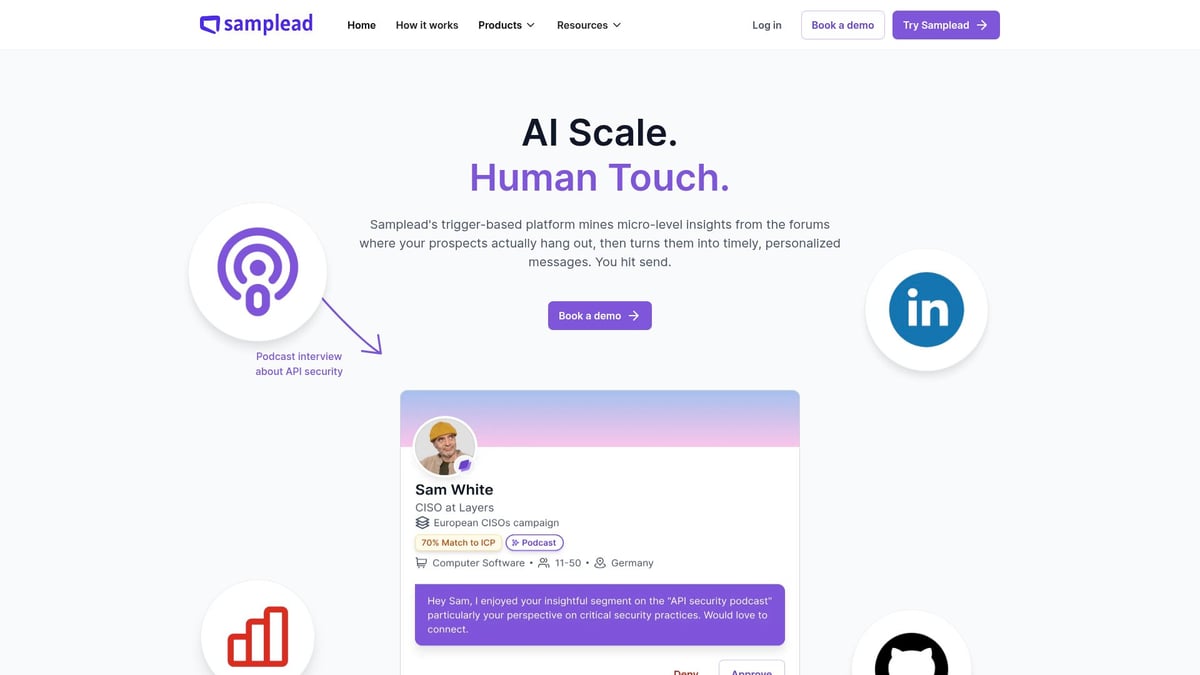
Sales teams benefit from reduced manual effort, improved engagement, and higher conversion rates. Samplead's focus on quality over quantity ensures that each outreach is timely and relevant. For high-ACV B2B organizations, adopting such a human-centric, trigger-based system is key to staying ahead in the evolving outbound sales process.
Step 3: Crafting High-Converting Messaging and Sequences
Creating high-converting messaging is the linchpin of any successful outbound sales process. In 2026, buyers demand relevance, value, and a human touch at every interaction. To stand out, your outbound sales process must combine data-driven insights, personalization, and tactical sequencing across every channel.
Anatomy of an Effective Outbound Message
Every high-performing outbound sales process starts with a message that commands attention. The ideal message is concise, relevant, and tailored to both the recipient's role and their current business context.
Key elements of an effective outbound sales message:
- Subject line: Personalized, timely, referencing a trigger event or insight
- Opener: Warm greeting, context for why you're reaching out
- Value proposition: Clear, specific benefit tied to the recipient's needs or pain points
- Call-to-action (CTA): Direct, action-oriented, and easy to respond to
For example, subject lines referencing recent company news or industry events can boost open rates by 47%. Personalization goes beyond just using a name—referencing a recent funding round or product launch shows attention to detail. For more practical advice, see this guide on crafting personalized sales messages.
A/B testing your outbound sales process messages is essential. Test different openers, value props, and CTAs to discover what resonates most with your target audience. Use analytics to refine your approach over time.
| Message Element | Generic Example | Personalized Example |
|---|---|---|
| Subject Line | Let's connect | Congrats on your Series B—quick idea |
| Opener | Hope this finds you well | Saw your team is expanding in EMEA—exciting times |
| Value Prop | We help companies grow | We helped Acme Inc. cut onboarding time by 30% in Q1 |
| CTA | Let me know if interested | Open to a 15-min call next week to share ideas? |
Sequencing for Maximum Engagement
A single touchpoint rarely moves the needle in the outbound sales process. Effective outreach relies on well-structured, multi-step sequences that combine various channels and message formats.
A high-performing sequence typically includes:
- Initial email or LinkedIn message: Personalized and trigger-based
- Follow-up email: Reference previous outreach, add new value or insight
- Phone call or voicemail: Brief, value-oriented, reinforces previous messages
- Video message or social touch: Adds a human element and differentiates you from competitors
Sequencing should be adaptive. Monitor prospect behavior—such as opens, clicks, or replies—and adjust timing and messaging accordingly. Integrating video or voice into your outbound sales process helps you stand out in crowded inboxes.
Research shows that six-touch sequences outperform single emails by three times in terms of response rates. Combining LinkedIn, email, and phone within your outbound sales process increases your likelihood of booking meetings and moving prospects down the funnel.
Here is a sample sequence breakdown:
| Step | Channel | Timing (Days) | Message Focus |
|---|---|---|---|
| 1 | 0 | Trigger-based intro | |
| 2 | 1 | Value-add insight | |
| 3 | 3 | Social proof or case study | |
| 4 | Phone | 5 | Personal follow-up |
| 5 | Video | 7 | Human touch, recap, strong CTA |
| 6 | 10 | Final nudge, open-ended CTA |
Overcoming Common Messaging Pitfalls
Even the most promising outbound sales process can falter if your messaging feels generic or spammy. Avoid common pitfalls by focusing on relevance, compliance, and credibility.
Pitfalls to avoid:
- Using spam-trigger words or clickbait subject lines
- Sending the same template to every prospect
- Ignoring compliance requirements like CAN-SPAM or GDPR
Instead, personalize every message with recent, relevant triggers. Always include a clear opt-out option and respect data privacy laws as part of your outbound sales process.
Leverage social proof, such as recent client wins or case studies, to boost credibility. Prospects are more likely to engage when they see real-world examples of your impact.
If you want inspiration, review templates from leaders in outbound sales process messaging and compare them to your own. Regularly audit your sequences for compliance and relevance to ensure you stay ahead of evolving regulations.
| Pitfall | Solution |
|---|---|
| Overused templates | Customize with segment-specific insights |
| Non-compliant messages | Include opt-out, review legal requirements |
| No social proof | Add case studies or client examples |
Using Data and AI for Message Optimization
Data and AI are transforming the outbound sales process by enabling real-time optimization of messaging. Use analytics to track open rates, reply rates, and sentiment.
AI tools can suggest optimal send times, analyze message sentiment, and recommend tweaks for better engagement. By integrating these insights into your outbound sales process, you can continually refine your approach and stay ahead of the competition.
Step 4: Managing Pipeline, Follow-Up, and Conversion
Sales success in 2026 hinges on mastering the outbound sales process from first touch to closed deal. Managing your pipeline, follow-up, and conversion efforts with precision is non-negotiable for top-performing B2B teams. Let's break down the essential tactics and tools you need to drive results at every stage.
Tracking Engagement and Pipeline Health
Effective pipeline management starts with tracking every interaction in the outbound sales process. Modern CRMs like Salesforce and HubSpot centralize prospect data, making it easy to monitor open rates, replies, meeting bookings, and pipeline velocity.
Leverage sales engagement tools that integrate AI-driven analytics for deeper insights. For example, teams using advanced engagement analytics report 20 percent higher close rates, as these tools highlight which prospects are most engaged and where deals are stalling. According to AI's impact on sales productivity, 56 percent of sales professionals now use AI daily, boosting target achievement and forecasting accuracy.
Here’s a summary of key pipeline metrics:
| Metric | What It Tracks | Why It Matters |
|---|---|---|
| Open Rate | Emails opened by prospects | Measures initial engagement |
| Reply Rate | Prospect responses | Indicates message effectiveness |
| Meetings Booked | Qualified appointments set | Tracks conversion readiness |
| Pipeline Velocity | Speed of deal progression | Reveals bottlenecks in outbound sales process |
Staying on top of these metrics ensures your outbound sales process is data-driven and primed for improvement.
Effective Follow-Up Strategies
Persistence is the backbone of the outbound sales process. Studies show 80 percent of deals require five or more follow-ups, yet many reps give up after two attempts. Timely, relevant follow-ups—tailored to prospect behavior—make all the difference.
Automate reminders using your CRM so no lead falls through the cracks. Use task management features to prioritize hot prospects and schedule multichannel follow-ups, mixing emails, calls, and LinkedIn touches. This structured approach keeps momentum alive and boosts response rates throughout your outbound sales process.
Consider segmenting follow-up messaging based on engagement signals. For instance, a prospect who opened your last email three times may warrant a quick call, while a cold lead might benefit from a value-driven case study. Consistency and personalization are key to moving prospects forward.
Handling Objections and Moving Deals Forward
Objections are a natural part of the outbound sales process, especially with more complex buying cycles in 2026. The most successful sales teams use proven frameworks like Feel-Felt-Found to empathize with concerns, share relatable experiences, and offer new insights.
Common objections include budget constraints, timing, or competing priorities. Address these head-on by connecting your solution to recent trigger events—such as a funding round or leadership change—to reignite interest. If a deal stalls, re-engage using relevant case studies or social proof.
Training your team on objection handling and providing scripts for common scenarios can dramatically improve win rates. For more detailed strategies, check out our internal resource: “How to Handle Sales Objections Like a Pro.” Mastering this stage ensures your outbound sales process consistently converts opportunities into revenue.
Step 5: Compliance, Ethics, and Human-Centric Sales
The outbound sales process in 2026 demands a balance between cutting-edge technology and unwavering ethical standards. As regulations tighten and automation expands, sales teams must place compliance, privacy, and authentic human connection at the core of every outreach.
Navigating Data Privacy and Compliance
Data privacy is central to the outbound sales process. Regulations like GDPR and CCPA have set new standards for how sales teams collect, store, and use prospect data. Non-compliance can result in fines up to €20 million, making consent and data management a top priority.
To maintain compliance, follow these best practices:
- Collect data only with clear consent
- Provide easy opt-out options in all outreach
- Regularly audit your data sources and enrichment tools
- Use platforms with built-in compliance features
With AI playing a larger role, it's crucial to stay updated on privacy rules. According to AI in sales industry statistics, AI has improved sales forecasting accuracy, but only when used within strict ethical boundaries. Ensuring compliance at every stage of your outbound sales process protects both your brand and your prospects.
Maintaining a Human Touch in an Automated World
While automation streamlines the outbound sales process, it cannot replace genuine human connection. Buyers are more likely to engage when they sense authenticity and empathy from sales reps. Human-reviewed messages have twice the response rate compared to those sent by bots alone.
Empower your sales team by:
- Allowing AI to suggest, but not send, personalized messages
- Training reps to add context and empathy to every touchpoint
- Encouraging conversations rather than one-way pitches
The outbound sales process thrives when technology augments, not replaces, your team's skills. By combining automation with human insight, you build trust and long-term relationships.
Measuring and Improving Outbound Sales Performance
Continuous improvement is critical for a successful outbound sales process. Leverage dashboards and KPIs to monitor key metrics like open rates, response rates, and conversions. Use regular coaching and feedback loops to drive growth.
Performance Benchmarks Table:
| Metric | 2026 Benchmark |
|---|---|
| Email Open Rate | 45% |
| Reply Rate | 15% |
| Meetings Booked | 8% of contacts |
FAQ
What is the outbound sales process in 2026?
The outbound sales process in 2026 is a data-driven, multi-channel approach using AI, real-time triggers, and hyper-personalization to engage prospects and drive conversions.
How do I build an effective outbound sequence?
Start with a defined ICP, leverage trigger-based outreach, mix channels like LinkedIn and email, and personalize every touchpoint for maximum impact.
What are the top tools for trigger-based prospecting?
Essential tools include LinkedIn Sales Navigator, Apollo, ZoomInfo, and Crunchbase for real-time alerts and data enrichment.
How do I ensure compliance with new regulations?
Use platforms with built-in GDPR and CCPA features, manage consent, and always provide easy opt-out options to stay compliant.
How does AI impact the outbound sales process?
AI boosts productivity and personalization, making prospecting smarter and more efficient. For deeper insights, see this Generative AI and firm productivity study.
Want more clarity on outbound vs. inbound sales?
Check out our full [FAQ: Outbound vs. Inbound Sales Explained] for a detailed breakdown.